


What are the most effective humane methods of keeping rodents off your boat? Chris Taylor explores the options
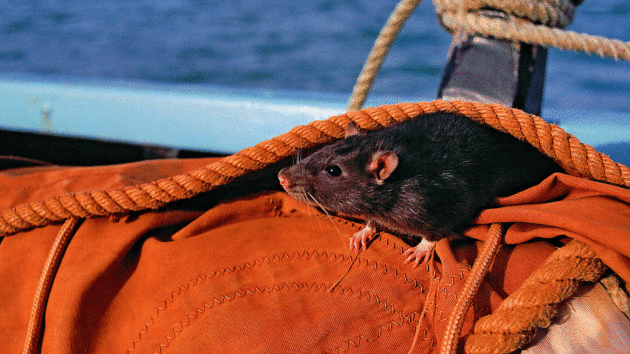
Among the many things that keep a skipper awake at night, few are as unwelcome as the pitter-patter of tiny feet scurrying across the deck. Discovering paw prints and droppings in the butter the next morning only confirms the worst. Rodents are bad news for both crew and boat.
They can transmit more than 35 diseases directly through bites, saliva, urine and faeces, or indirectly via parasites such as fleas and ticks. Their constant gnawing, used to wear down ever-growing teeth, can damage wiring and cause fires. In one memorable case they chewed a hole straight through my lifejacket.
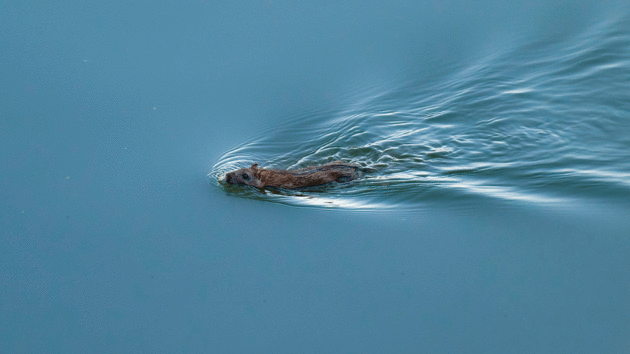
Rats are resilient and strong swimmers. Photo: Tierfotoagentur / Alamy Stock Photo
Humane pest control should always be the guiding principle. Devices such as glue traps are banned in Great Britain and many other countries because they cause prolonged suffering. Live capture traps can work although their success varies.
One of mine was an improvised contraption made from an angled plastic milk bottle baited at the top and bottom. It worked well enough, but once at sea the idea of making ratty walk the plank is not humane, and marooning a rodent ‘Robinson Crusoe’ on an uninhabited island could cause untold ecological damage.
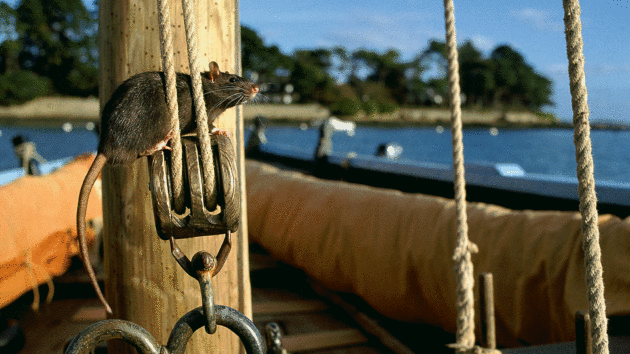
As the recent hantavirus outbreak aboard a Dutch cruiseship has proven, rodents can carry viruses that pose a deadly threat to humans. Photo: BSIP/Universal Images Group via Getty Images
The uncomfortable reality is that on a yacht the most practical solution is often to kill rodents quickly and cleanly. Break-back traps remain the tried and tested method, though at sea they introduce a certain slapstick element. A locker becomes a booby trap.
You reach for a spare line and suddenly find yourself hopping around the cabin with a trap clamped to your knuckles. These devices also migrate as the boat moves, so the trap you placed neatly in the corner can end up lying in ambush on the cabin sole.
Rodenticides provide another option. Products available to the public in the United Kingdom and the European Union usually require multiple feeds and use safer anticoagulant ingredients such as difenacoum or bromadiolone.
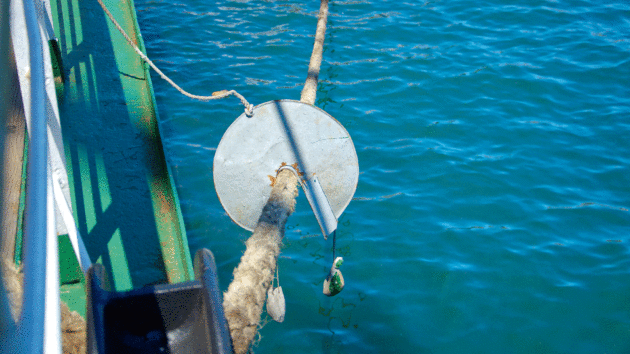
A rat guard attached to a line ashore will prevent rats using it as a tightrope to come aboard. Photo: Tatiana Sidorova, Getty Images
Some rodent populations have developed resistance to common poisons, which is similar in concept to antibiotic resistance and can reduce effectiveness. In other parts of the world far stronger poisons exist that would never be approved even for licensed professionals in the UK. Unknown products should always be treated with caution.
Poison should be placed in a lipped container to reduce the risk of spills and never used where it may contact food. This is especially important in a rolling sea where loose pellets might migrate toward the salad and vegetables stored in the cooler bilge. Always wash your hands after handling rodenticide and read the safety precautions.
Another drawback is unpredictability. You have no control over where a poisoned rat will die. Sometimes the first sign is an unexplained odour from a locker that is only opened during the spring clean, and for once the heads are not responsible.
A break-back trap is only effective if baited with food which is highly attractive. Contrary to the teachings of cartoons, cheese is not the best bait.
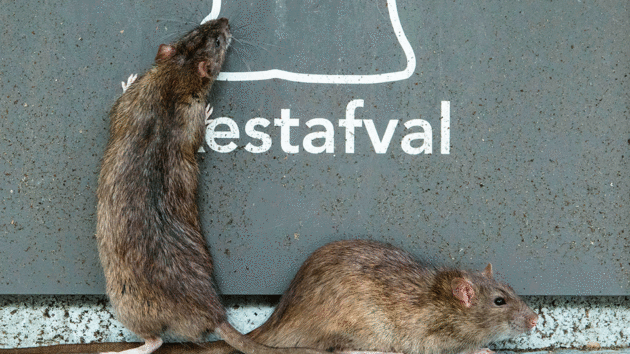
Keep rubbish locked down and change bins frequently. Photo: Frans Lemmens / Alamy Stock Photo
More successful choices include:
- Peanut butter, which is sticky, aromatic and extremely appealing.
- Chocolate which suits their surprisingly refined taste!
- Nuts and seeds are their usual snack.
- Cereal and granola, especially the expensive varieties bought in a moment of healthy optimism.
- Anything oily or sweet, because they are essentially tiny pirates raiding the galley!
A useful technique is pre-baiting. Rats in particular are cautious about new objects, including food. They often sample only a tiny amount at first to ensure it is safe. Leaving an unarmed trap or bait tray with appetising food for a day or two can significantly improve success when it is finally set
or rodenticide added.
Prevention remains far better than cure. Most rodents board while yachts are alongside. Mooring lines are their main access route, so fitting rat guards or improvising them from the necks of plastic bottles is sensible where risk of infestation is suspected. Every warp, cable or semi- permanent water hose should be protected. Remember that a rodent can squeeze through any opening large enough for its head.
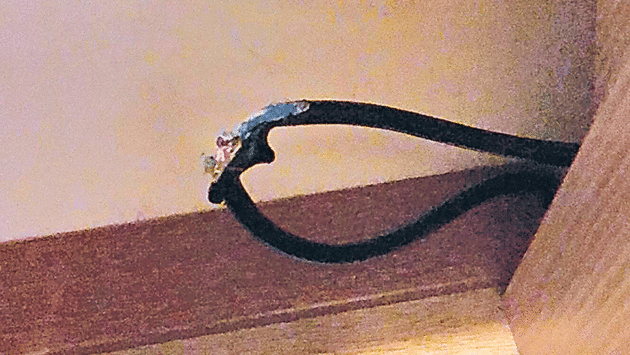
The rat had chewed through the cable to the gyrocompass, knocking out all of the boat’s instruments long after it had been evicted from the boat! Photo: Mike Morgan
Even fenders or an anchor chain can form an unintended bridge, and rats are strong swimmers. Rodents seek food and shelter. Keep dry stores in sealed containers, empty bins daily and avoid leaving rubbish on deck overnight. Consider nesting sites such as rope lockers, sail bags and any warm dark spaces.
A weekly walk-around inspection is invaluable. Check lazarettes, the anchor locker and the spaces beneath sole boards for droppings, gnawed packaging or damaged insulation. The earlier you spot the signs the easier the problem is to resolve.
Article continues below…
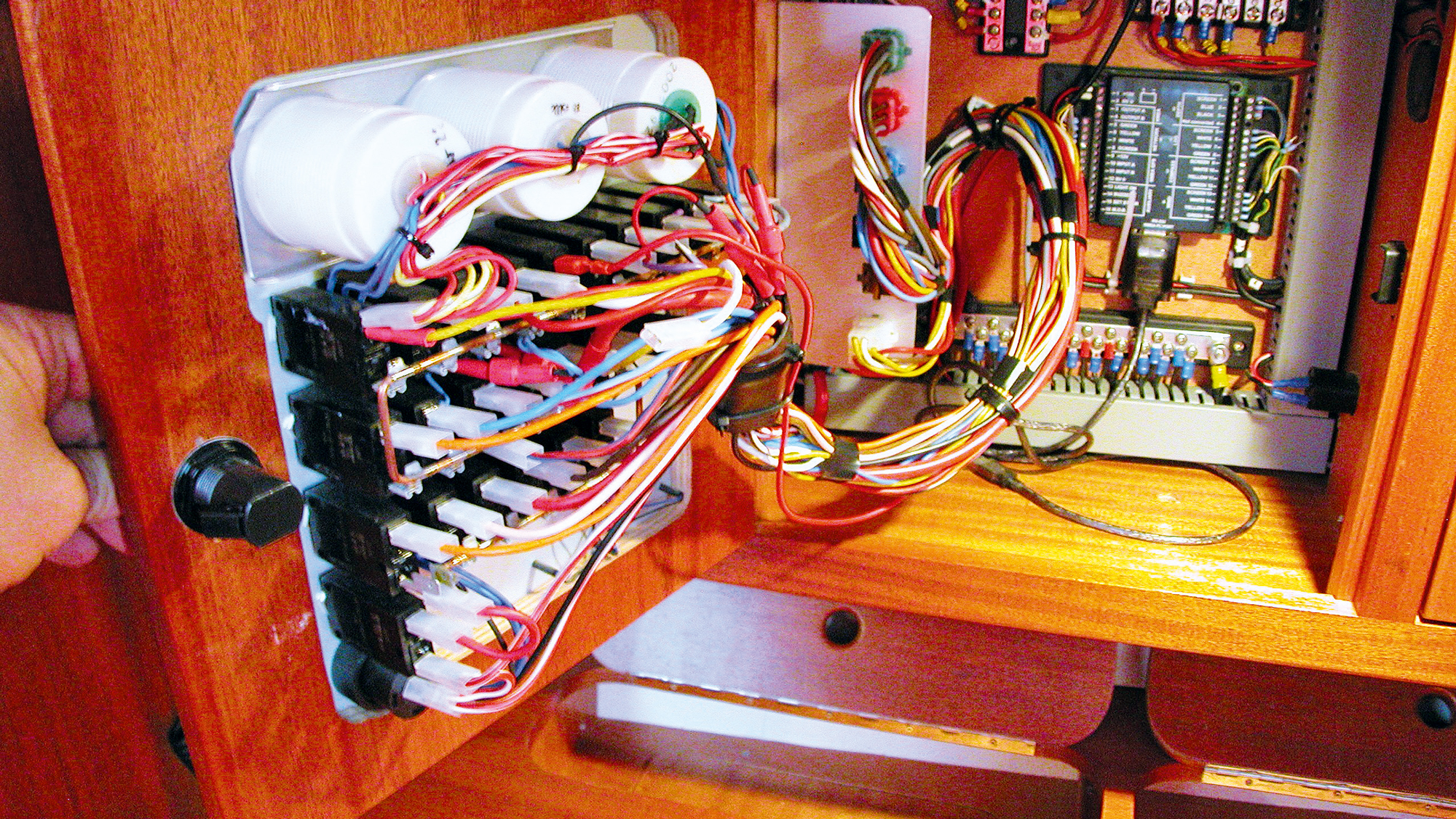
Stop using ‘automotive wire’ on your boat: The critical wiring mistake that makes remaking joints impossible
Electrical wire used on boats should be tinned (covered in solder) along its whole length. However, this is an expensive…

Should you enter this harbour with a navigation electronics malfunction?
Dave and three friends are sailing their 10m cruising yacht from the Solent to Brest. They were going to enter…
Lessons learned from having a rat on board
YM reader Mike Morgan stepped away from his Bavaria C57 Spirit for just a few hours alongside the dock at Mesolongi in Greece. Three days and multiple efforts later, he had dispatched the unwanted intruder, only to discover a severely chewed gyrocompass cable that had disabled his electronics! He devised the following rules in an attempt to prevent another one ever getting aboard…
1. Prevention
Firstly, if Roland wants to visit, I am not sure there is much you can do to prevent it. I have even heard that mooring-line prevention discs won’t stop them. My approach now is a simple process, which I follow rigorously whether at anchor or tied ashore.

Chris Taylor MBE is works in health for the Royal Navy. He has owned a Hustler 30 and a Sadler 34, and is refitting a Halmatic 30 for short‑ handed sailing.
2. Hatches and platforms
When leaving your boat ensure every hatch is closed, the companionway is shut and your transom platform is raised if you have one.
3. Passerelle
If you have a passerelle, devise a pulley system that raises it off the dock both when onboard or ashore.
4. Rubbish
Ensure internal bins are emptied every night and dispose of your rubbish either ashore or in a sealed bag in the cockpit if at anchor.
5. Food
Never leave food out. Always store in sealed lockers and use Tupperware for dried food stuffs such as pasta and rice.
6. Hygiene
Don’t leave the dishes until the following morning, always wash up and clean surfaces thoroughly before you hit the sack.
7. Nighttime
At night we always have mosquito nets pulled across open hatches and the companionway closed.
8. Morning checks
Boats are, by design, watertight and therefore rodent-proof. If Roland does get onboard, he will only have access to the deck, which I always check before opening up, especially when in a marina or tied to a town quay.
9. Act quickly
If you do find evidence of an unwelcome guest, act quickly. Always be sure to keep a range of traps and pest-control products onboard.
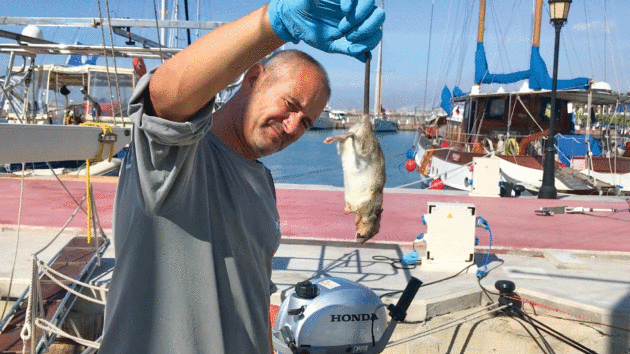
This rat evaded capture for days before crawling deep into the boat’s structure to die and decompose. Photo: Mothership Adrift, YouTube
Watch liveaboards track down a rat on board
Mothership Adrift is a great practical YouTube channel and Episode 30 shows all the efforts YM contributor Alan Wood and family made to evict a stowaway rat on board while they were staying at a marina in Spain.
They concluded that the rat had probably been poisoned before coming aboard and despite all their efforts, they only managed to track it down in the end from the smell after it had died! Here is the video: www.youtube.com/watch?v=MY4HDV5YnNs
Enjoyed reading this?
A subscription to Yachting Monthly magazine costs around 40% less than the cover price, so you can save money compared to buying single issues.
Print and digital editions are available through Magazines Direct – where you can also find the latest deals.
YM is packed with information to help you get the most from your time on the water.
-
-
- Take your seamanship to the next level with tips, advice and skills from our experts
- Impartial in-depth reviews of the latest yachts and equipment
- Cruising guides to help you reach those dream destinations
-
Follow us on Facebook, Twitter and Instagram.
Note: We may earn a commission when you buy through links on our site, at no extra cost to you. This doesn’t affect our editorial independence.