



Every month Yachting Monthly's resident skills expert, Rachael Sprot answers a reader's question. This month, what lifejackets should you have for offshore cruising
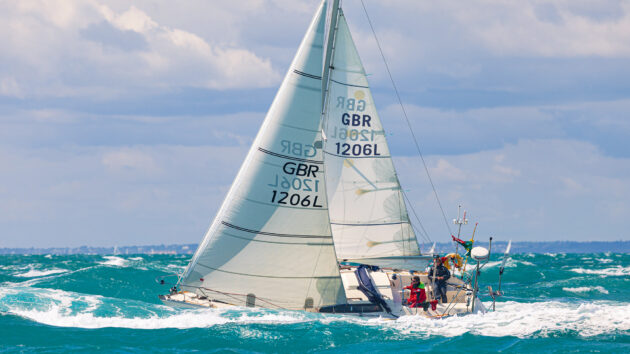
Father and daughter Richard and Lisa have recently bought a Sigma 33 to be kept on the east coast for North Sea cruising and club racing.
In time they’d like to do some offshore racing and Lisa has her eye on a Fastnet campaign. The boat came with four tired Lifejackets.
They have budgeted to replace them, but they can’t agree on what with. Richard has a knee issue and is not feeling as mobile as he once was. He says that an automatic lifejacket would make him feel safer, and that if they’re going to consider offshore racing they should go for maximum protection with 275N buoyancy.
Lisa tried one on and found them heavy and bulky. She’s also worried that, as the person who does most of the foredeck work, there’s a chance of an automatic lifejacket going off by accident. What’s the solution?
What lifejackets should you have for offshore cruising?
The easy answer here is that they don’t have to have the same lifejacket. We wouldn’t expect everyone on the boat to have the same waterproof jackets, and the fit of a lifejacket can be just as personal.
It makes for slightly more complicated lifejacket servicing and means carrying two sets of spares, but the best lifejacket is the one you actually want to wear.
However, there are a few things they should both consider. Any lifejacket for voyages beyond sheltered waters should have an inbuilt safety harness and strong point for a tether; a harness is the first line of defence. Surprisingly, not all 150N lifejackets have a strong point for this purpose, so that’s important to check.
I also consider a light, whistle, crotch strap and spray hood as essential. A personal AIS beacon would be high on the priority list for offshore sailing too, and is mandatory for the Fastnet. During YM trials, an MOB lifesaver long floating loop was also an invaluable help to actually getting connected to a casualty in the water.
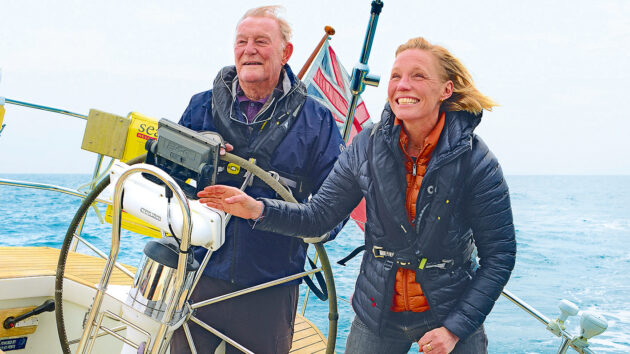
Racing as a father and daughter team
An automatic lifejacket gives the obvious advantage that if the casualty is incapacitated it will still go off. Anecdotally, incidents of a casualty actually entering the water unconscious seem to be rarer than those involving conscious casualties.
However, cold-water shock can set in with water temperatures below 14°C and this could seriously reduce someone’s ability to activate a lifejacket, especially in cold climates. However, automatic lifejackets do go off accidentally at inconvenient (and sometimes dangerous) moments. I’ve seen someone pinned between the guard wires by an inflated bladder after the boat ploughed through a wave, so it’s important to know how to deflate, as well as inflate, a lifejacket.
I’ve also known standard auto-inflation lifejackets to go off in a downpour. In a recent incident in the Mini Globe Race, skipper Eric Marsh went overboard whilst tethered on, and his lifejacket, which had automatically inflated, hampered his ability to get back on board.
Article continues below…
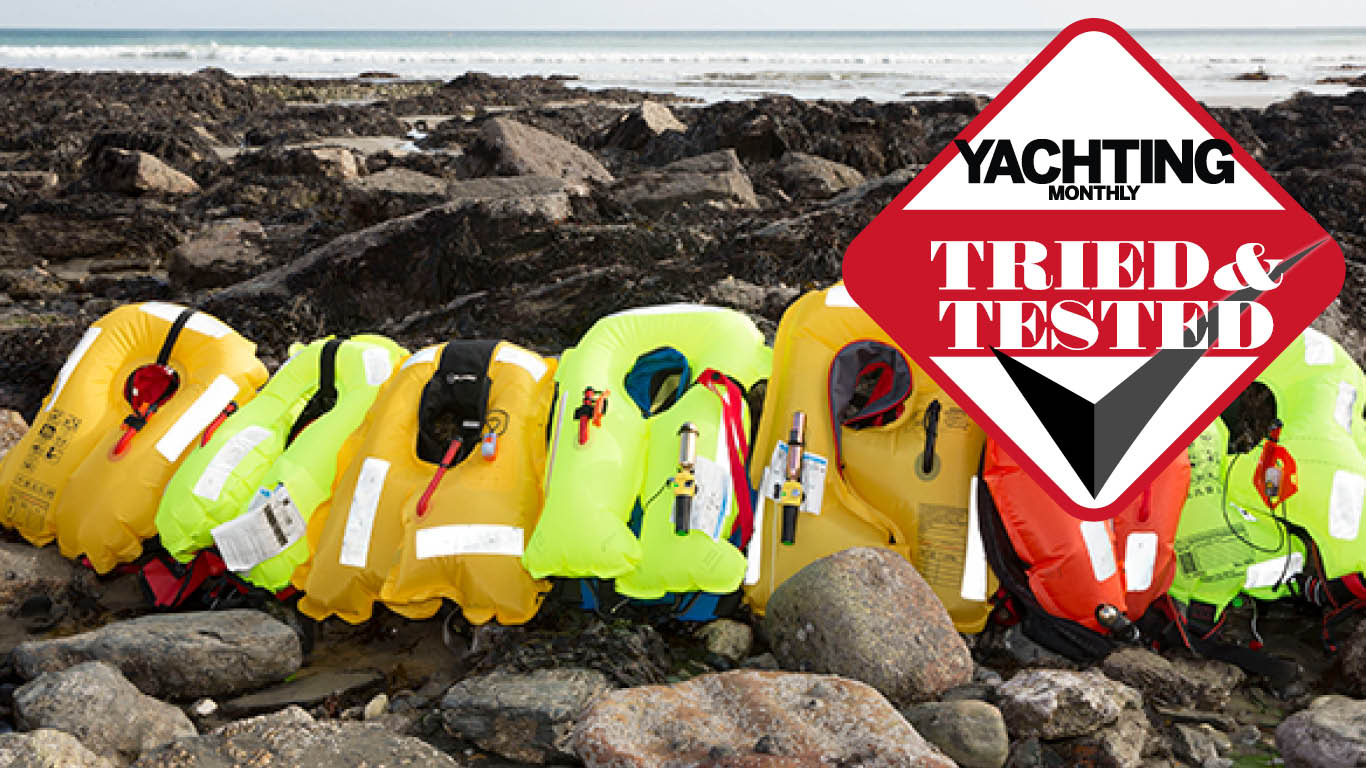
We Tested 2025’s Best Inflatable Lifejacket and PFD’s for Boating and Sailing
We all have lifejackets on board, but do you know what yours is actually like to use? We test 10…
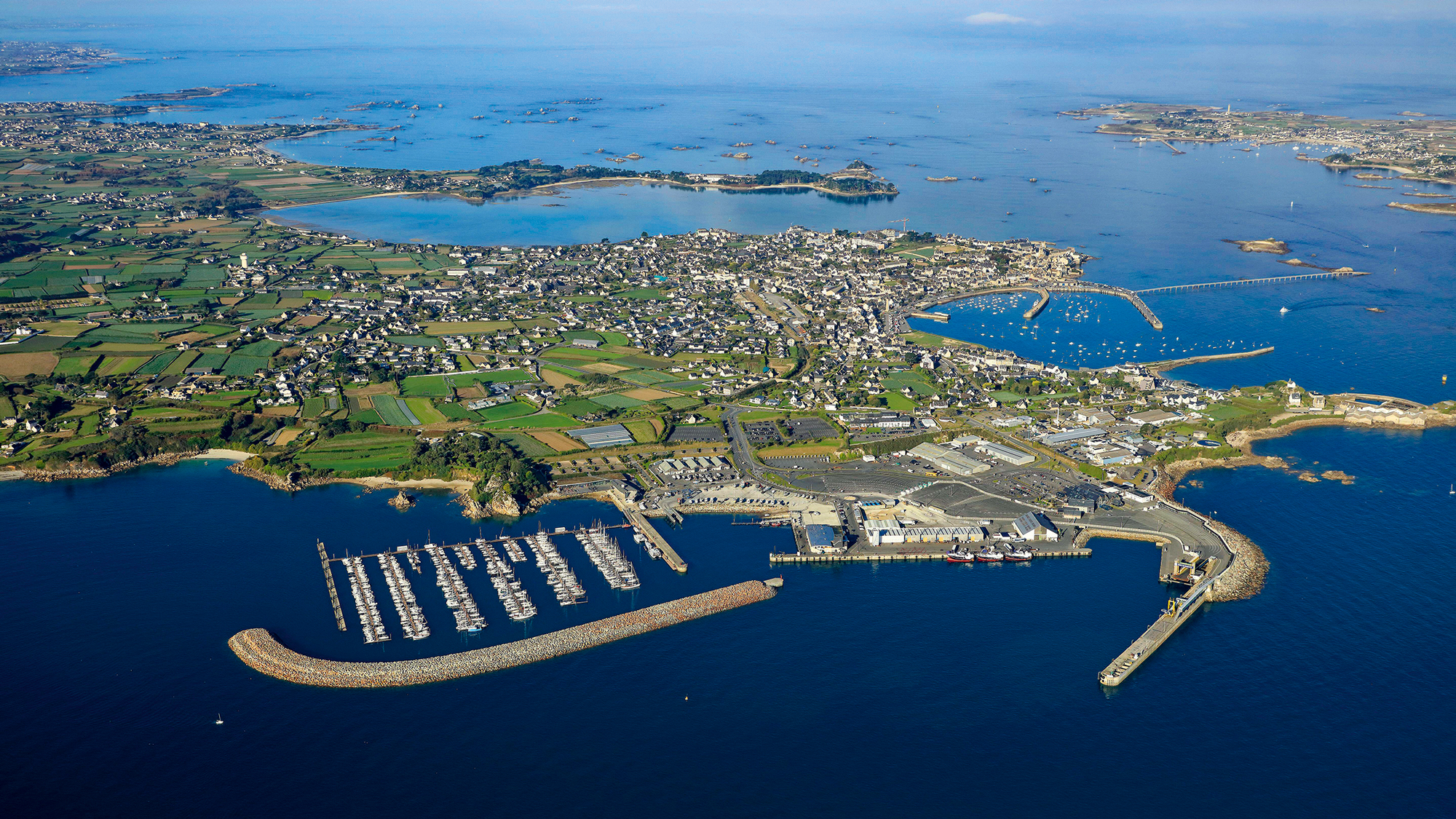
How would you try to avoid this tidal marina collision?
Roscoff Marina is one of the few all-tide ports in North Brittany. However, whilst it doesn’t have any depth restrictions,…
For a fit, healthy person engaged in racing, opting for a manual lifejacket is a reasonable decision. Another option would be to consider a Hammar activation lifejacket, which is initiated by water pressure, rather than water presence, and should only go off when fully immersed. However, they’re more difficult to re-arm yourself.
When it comes to buoyancy, a 150N lifejacket is the ISO requirement for most offshore sailing, although many manufacturers produce 170N or higher lifejackets as standard. The added buoyancy of 275N can make up for bulky, heavy clothing that will trap more air and so need greater buoyancy to roll the casualty, especially valuable for those in a commercial environment or high latitudes. However, once inflated, they are very cumbersome, which could make it harder to retrieve a casualty or for them to help themselves.
The added weight may also be a deterrent to wearing a lifejacket in the first place, especially for people of smaller stature. Ultimately, it’s Richard’s decision, but there are now several 190N lifejackets on the market which might be a good compromise.
A nuanced solution would be to have one or two manual lifejackets for Lisa to use when racing. It would be worth buying different coloured lifejackets if that’s the case to make them distinguishable. As always, no single item can provide complete protection for every scenario, and safe practices, Man overboard drills and knowing your limits are just as vital as kit.
Enjoyed reading this?
A subscription to Yachting Monthly magazine costs around 40% less than the cover price, so you can save money compared to buying single issues.
Print and digital editions are available through Magazines Direct – where you can also find the latest deals.
YM is packed with information to help you get the most from your time on the water.
-
-
- Take your seamanship to the next level with tips, advice and skills from our experts
- Impartial in-depth reviews of the latest yachts and equipment
- Cruising guides to help you reach those dream destinations
-
Follow us on Facebook, Twitter and Instagram.
Note: We may earn a commission when you buy through links on our site, at no extra cost to you. This doesn’t affect our editorial independence.