




Expert Rachael Sprot tackles a mid-channel crisis: Helen and Mark are over-pressed with a jammed furler and rising winds. What's the move?
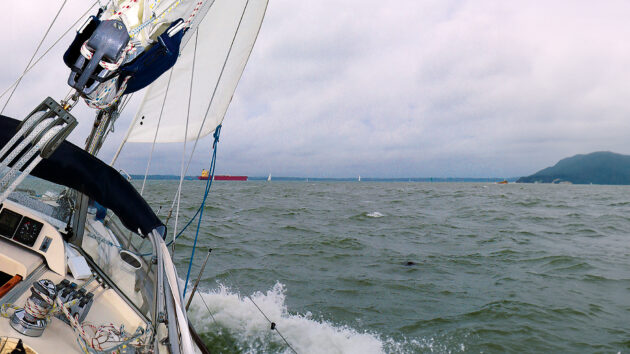
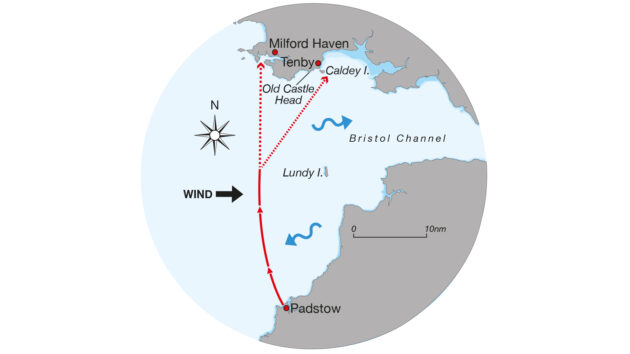
Helen and Mark sail their Halberg Rassy 34, Gemini, in the Bristol Channel. They’ve left Padstow at high water at 0900 bound for Milford Haven, which is 70 miles away on a course of almost due north. The forecast is W, F4-5, veering NW and increasing to F6 towards the end of the passage.
They hope to be in Milford Haven in the dying light. On leaving Padstow they set the full main and first reef on their 130% genoa. Halfway across, the wind has started to pick up and they decide to put a reef in the main and furl away more headsail. However, they discover that the furler is badly jammed. They’re already over-pressed, and it’s likely that the wind will increase another 5 knots or so and come forward more.
They’ve made some ground to the west of their track thanks to the ebb tide and sailing a little higher than they needed to. However, the tide is about to turn, which means that both the wind and the current will be setting them east. What are their options?
The furler has jammed and the wind is building: What do you do?
A jammed furler is not unheard of and it nearly always happens at the least convenient moments. Halfway across the Bristol Channel in a rising wind is certainly one of those. They have a few options, but this is an exposed sea area and the sea state could limit what can be done safely at sea.
In the first instance they can bear away onto a broad reach to take the pressure out of the headsail and work the furling line in and out. The most common cause of a jammed furler is a riding turn on the drum, caused by allowing it to unfurl too quickly, or a poor lead.
A riding turn can usually be resolved with coaxing and some perseverance. It’s worth taking on and easing off the halyard too and, if it’s adjustable, the backstay, as luff tension can have an impact. They should also check that they haven’t got a spare halyard twisted around the forestay at the top.
I would avoid using a winch handle to grind the furling line in except very sensitively, as it might make the riding turn worse. It’s often easier to release all the sail, rather than furl it all away since the pressure of the wind in the sail helps bring it out.
This won’t clear the riding turn, which will probably still be on the drum, but they would at least be able to drop the halyard and get rid of the sail. Whilst this isn’t ideal with 35-mile upwind left to sail, it does at least get the boat under control.
Article continues below…
What lifejackets should you have for offshore cruising?
Father and daughter Richard and Lisa have recently bought a Sigma 33 to be kept on the east coast for…
Should you set sail if a Force 8 is forecast?
Toby is skipper of Cutting Edge, a 13m cruiser racer which he keeps in Salcombe. Cutting Edge is a powerful…
If they can’t get rid of the sail, going forward to work on the furler at sea is risky in 20-25 kn and a lumpy sea state. Other than heaving to or bearing away, a quick look to see if there’s anything obviously wrong, they need to find some shelter.
Milford Haven has lots of places to tuck into in a NW’ly so they might be tempted to reef the main further and continue as planned. However, this will put stress on the crew and boat. They’ll struggle to make it now they have too much headsail out, and if they do it will be dark when they arrive.
The better option is to bear away towards Tenby. The course is more of a reach which would make for a faster passage and one better suited to the genoa-dominated sail plan. They need to find somewhere close inshore with plenty of sea-room to try and work out a solution. The coastline east of Old Castle Head or southeast of Caldey Island both look promising.
Once they find a decent lee, they can drop the main and either heave to (with a little engine on to prevent them falling off too far), or bear away onto a broad reach. Either way, this will make foredeck work easier.
If they really can’t clear the jam on the furler, this is a very difficult situation to deal with and one of the reasons why well-functioning furling gear is so important. Their best chance is to find as much shelter as possible. They’ll probably need to use trial and error to get the headsail under control as best as they can.
This might be by securing the lazy jibsheet tight down onto a foredeck cleat and wrapping a spare halyard around the forestay and then adding in some sail ties. It’s risky working on the foredeck with a flogging headsail, so they need to experiment with different wind angles to find the safest point of sail. Once the sail is under control, they can find an anchorage and plan next steps.
Enjoyed reading this?
A subscription to Yachting Monthly magazine costs around 40% less than the cover price, so you can save money compared to buying single issues.
Print and digital editions are available through Magazines Direct – where you can also find the latest deals.
YM is packed with information to help you get the most from your time on the water.
-
-
- Take your seamanship to the next level with tips, advice and skills from our experts
- Impartial in-depth reviews of the latest yachts and equipment
- Cruising guides to help you reach those dream destinations
-
Follow us on Facebook, Twitter and Instagram.
Note: We may earn a commission when you buy through links on our site, at no extra cost to you. This doesn’t affect our editorial independence.