


‘What more could possibly go wrong?’ Three men in a boat embark on a Mediterranean delivery trip from Athens to Spain that went badly in almost every way.
The J/105 my friend Richard had just bought was lying in a small harbour near Athens, but it wasn’t until a year later that it was time to collect the boat.
As I had sailed my own boat back to Moraira, Spain, three years earlier from Turkey, I offered to crew for Richard’s boat delivery. Flights were booked and we arrived in Athens just before Easter.
Richard and I worked like crazy for two days: provisioning, chandlery visits, installing the furler for the jib, fitting the mainsail and jib, visiting the port police and an endless list of jobs. First mate, Andrew, arrived late Saturday afternoon in preparation to depart Sunday morning and finally everything was ready – or so we thought!
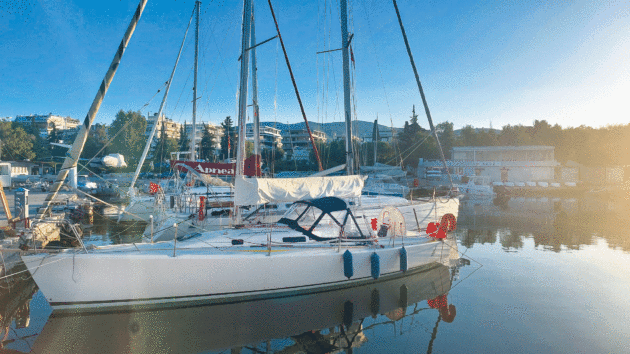
The J/105 moored close to Athens. Photo: Barry McCrae
The Mediterranean delivery trip: the first 24 hours
We departed the harbour in perfect conditions: the sun was shining, the winds were from astern, the asymmetric spinnaker was hoisted, it was champagne sailing.
But there were a few issues: early on I noticed the windvane wasn’t working; I also felt that the helm was very stiff; then later we discovered that the head was very stiff to operate. We poured some cooking oil down the toilet, which freed up the pump and repeated the process a few times over
the next few days.
Then to add insult to injury, I somehow trapped and injured my hand in one of the winches. We approached the Corinth Canal, completed the paperwork and were on our way again.
This was my third time through the canal but it never fails to impress. There were only two yachts transiting the canal, but we were having difficulty keeping up with the other one.
If we opened up the throttle the engine seemed to hesitate and then recover again. It seemed a little underpowered. At the exit we were waved through by the canal staff. The winds were light, so we set off motor-sailing. When the breeze picked up, it was on the nose so we tacked up the Gulf of Corinth.
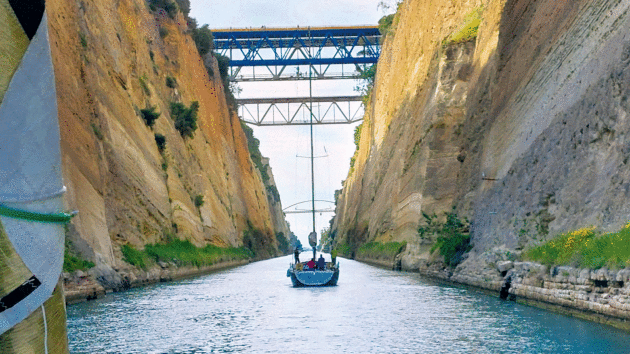
The Corinth Canal never fails to impress. Photo: Barry McCrae
During the night I was resting on the leeward saloon seat (there were no lee cloths fitted), when without warning we tacked. I flew across the saloon and hit my head and nose on the furniture resulting in a severe nose bleed. Later I discovered I must have struck the port saloon seat heavily with my thigh as I experienced pain and discomfort when walking.
A bit later during the first night Richard called for more jib halyard tension. This resulted in a ripping noise as the jib disintegrated. We rolled the jib away and motor-sailed again. Once again we experienced erratic engine revs sometimes dying, but then recovering. We still hadn’t completed 24 hours on board!
Pitstops one and two
By daybreak we were not far from the small harbour on the island of Trizonia, so we decided to stop there to fix a number of issues. We started with the jib, but as we couldn’t unfurl it, we were forced to cut it free. It was beyond repair and ended up in the rubbish bin.
We hoisted the second jib, which was much bigger, although we could sail with it partially furled. I took a trip to the top of the mast to fix the windvane and we changed the fuel filter for the spare we had on board. Three hours after arrival, we set off again.
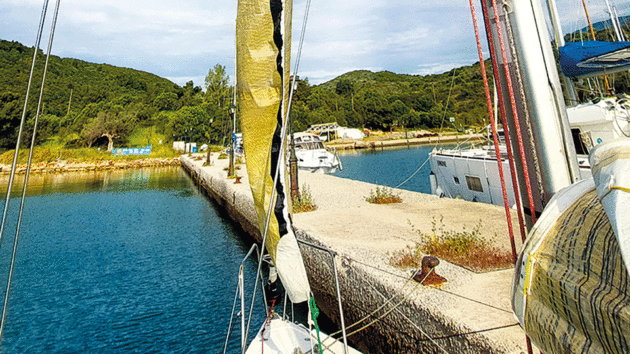
In Trizonia, changing the first jib. Photo: Barry McCrae
We continued up the channel, tacking against a fresh headwind. Heading towards the Rion Antirion bridge, I trimmed the jib a little more to clear
a small headland, but unfortunately this headsail also split. It was furled away and we motorsailed once again, with just the main, but despite changing the fuel filter we were still experiencing engine problems.
So we took the decision to stop at Mesolongi marina to change the jib. We arrived in darkness but in time to enjoy a meal in the marina restaurant. The next morning we removed the second jib without further damage and rigged the storm jib. It was much larger than a typical storm jib – in fact, the luff was a little too long so it wouldn’t furl – but at least we could sail.
We refuelled and also purchased fuel cleaner from the onsite chandlery and added a dose to the fuel tank and jerry cans.
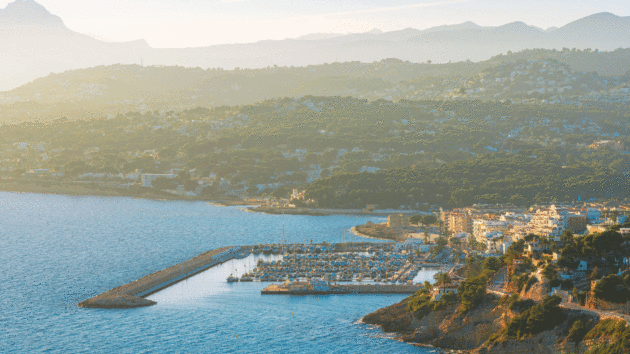
Moraira, on the Costa Blanca, was where the eventful voyage finally came to an end. Photo: Sergio Formoso / Alamy Stock Photo
Venturing offshore
It was still morning when we set sail offshore heading for the Straits of Messina between mainland Italy and Sicily, passing to the south of Kefalonia. The winds were forecast from the SE, but as night fell, the wind picked up and the seas built until we were seeing 3-4m waves.
We were hit once on the sideby a wall of water which knocked me across the cockpit, and were nearly pooped by a large wall of water approaching the transom, but luckily this just slid under the boat.
The winds continued to strengthen into the high 20s and over 30 knots. During the night Andrew was on watch when there was a loud bang. Both of us below thought we had hit something. There was a call for help from above – the webbing on the clew of the main sail had split and the sail was now flapping uncontrollably, fortunately retained by the reefing line.
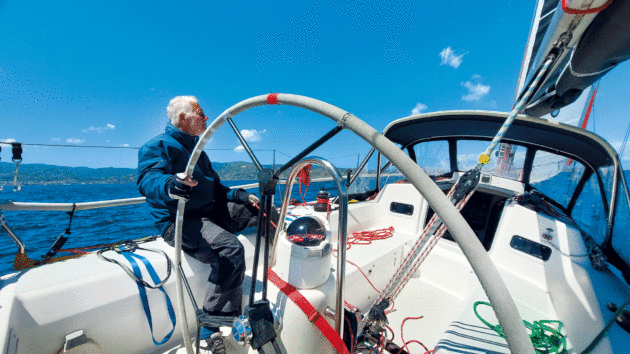
Barry McCrae started racing on windsurfers in the 1980s, moving to sailing on yachts. Photo: Barry McCrae
Damage control
We jumped into action, putting in the reef to bring the main under control, although the lower part of the main continued to flap and eventually destroyed the foot and part of the leech. We were concerned that the reef point might also disintegrate.
Having survived the night we were now approaching the Straits. With the wind dropping, the jib was rolled away and we started the motor.
Richard noted we were producing excessive exhaust smoke, then shortly after I heard a warning buzzer. It was the engine overheating alarm. We looked astern and saw no raw water coming out, so we shut the engine off immediately.
We checked the raw water strainer, then tried to check the impeller but could not budge the first bolt. We didn’t want to risk shearing it, so we gave up.
The winds were now blowing down the Straits and building. The jib was rolled out to balance the boat. We needed to find a port or marina for our third pitstop to sort these issues out.
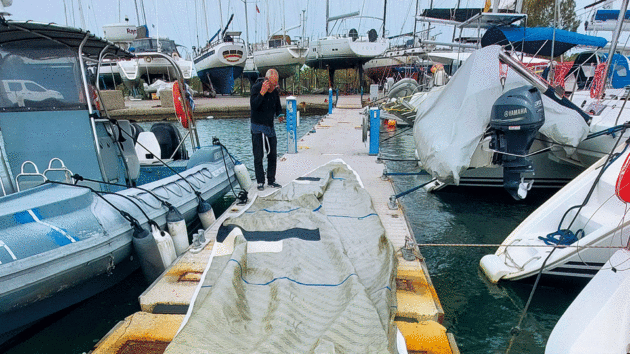
Changing the second jib in Mesolongi marina. Photo: Barry McCrae
We identified one located on the east side of the Straits in Reggio Calabria, which offered protection from the building wind. We tried contacting
the marina on the VHF several times but could not establish contact.
We discussed a plan to drop the main sail outside the marina, come in under jib only, roll away the jib at the last moment and start the engine just for a minute or so in case we needed it. The manoeuvre went exactly as planned and soon we were secure alongside.
Article continues below…
The Med-made sailor with a mission to help disabled children: Golden Globe Race skipper Dr. Selim Yalcin in his own words
Dr. Selim Yalcin writes for Yachting Monthly: I grew up in an Istanbul that lived by, on, and of the…
The furler has jammed and the wind is building: What do you do?
Helen and Mark sail their Halberg Rassy 34, Gemini, in the Bristol Channel. They’ve left Padstow at high water at…
Pitstop three
Almost immediately Port Security appeared, stating that we could not stay there, as it was only for fuel. That was all we needed after almost 300 miles! We explained that we had problems with the engine but this fell on deaf ears. Moments later, two Italian coast guards turned up, checking all our documents, passports, and sailing licences. Much heated discussion ensued.
Eventually someone from the marina turned up and spoke at length with the officials, which pacified them in the end.
The marina had their own engineers, who arrived quickly and started work on the raw water pump. Unsurprisingly they sheared the bolt on the impeller cover, however, once this was removed it was clear that the impeller was the cause of the problem.
We had a spare onboard, which they installed, and soon the engine was running again, with a good flow of cooling water. Unfortunately there was a small leak from the pump. We also had a raw water pump service kit onboard so the engineers said they would take it away, service it and return the following morning at 0900.
While we could use the engine briefly, we moved the boat from the fuel pontoon to a marina berth. The boat’s sail inventory included a new main, so we set about rigging it, followed by a nice meal ashore and a good night’s sleep.
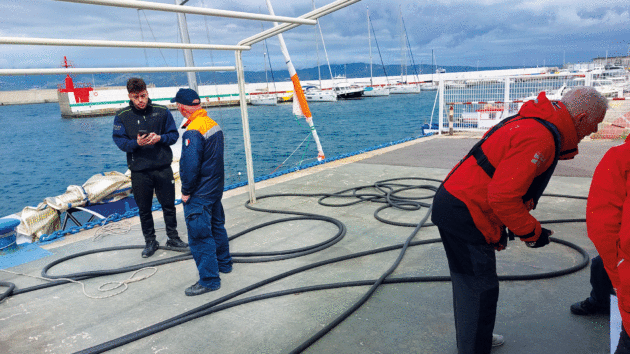
Encountering officialdom at Marina Queen 88 in Reggio Calabria. Photo: Barry McCrae
We were surprised the next morning – Good Friday – when the engineers turned up not at 0900 but 0830! After an hour the water pump was refitted, tested and we were fit to go.
We continued sailing up the east side of the Straits, then turned to the west to sail along the north coast of Sicily.
Offshore again
Our next consideration was fuel in preparation for crossing from Sicily to Sardinia. We called into Palermo and refilled the main tank and the jerry cans. On departing Palermo the winds were light and even motor-sailing it took a long time to put distance between us and Sicily. During the night the wind picked up and we had good speed; hand-steering with two hours on, four hours off.
After what seemed like an eternity, land appeared on the horizon. The wind was on the nose by now and we were tacking to make progress towards our destination, Carloforte, on a small island on the southwest corner of Sardinia.
Hours later we arrived at the inner harbour, lowered the jib and prepared to drop the main. Richard tried to start the motor, but it just turned over and wouldn’t stay running. We rapidly rehoisted the main and continued to sail around the inner harbour, having to avoid the busy ferry traffic – just what we needed after sailing 370 miles.
I contacted the marina and asked if they had a RIB that could assist us. ‘Change to Channel 16 and contact the Coastguard!’ came the stern reply. Then a voice on the VHF asked: ‘Do you guys need a tow?
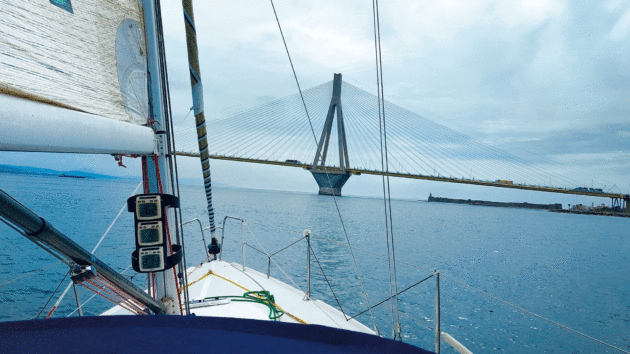
Motorsailing in light airs under the Rion bridge. Photo: Barry McCrae
‘We are on the catamaran moored in front of you, will you accept a tow?’
I looked up and saw two guys waving at us and immediately accepted their offer. The tow was prepared and soon we were alongside, a huge relief after such a long sail.
I went down below, opened up the bleed valve on the fuel filter, pumped fuel through, closed the valve, also closed the raw water inlet valve momentarily while trying the engine again – unbelievably it started – what was going on? We went ashore for a good meal and planned to look at the problem the next day.
Richard noted that a pre-filter had been installed by the previous owner, so I crawled into the engine bay and found the filter: it had a clear bowl on the lower part and it looked clear. However, we decided to get an engineer in to look at the engine, as without a reliable engine this could have serious consequences in an emergency situation.
We spoke with the marina office, who arranged for an engineer to come at 15.30. Andrew set off to do more provisioning and I set off to refill the jerry cans.
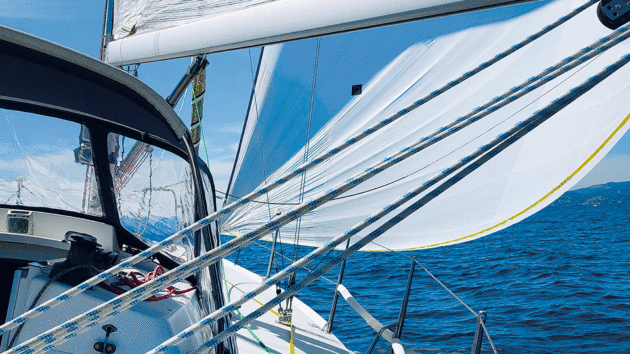
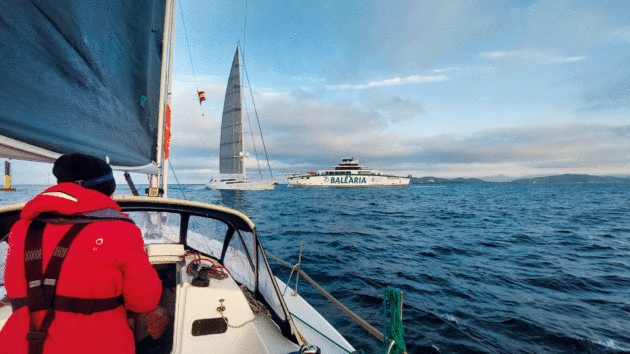
The first day – champagne sailing. Photo: Barry McCrae
Replacing the pre-filter
When the engineer turned up, he thought the problem could be the fuel rack, which he didn’t have in stock, and could take a week to arrive. I mentioned the fuel pre-filter, and he decided to remove it for a full clean out.
It was a very difficult job and unfortunately it broke in the process – I’m glad I didn’t attempt this. Fortunately he had a similar prefilter in his workshop, this was installed and we went out for a sea trial. As the engine now appeared reliable at constant high revs, we decided to resume our journey.
With a 240-mile leg ahead of us we opted to get a good night’s rest and set off for an early departure. We departed at 0700, heading for Porto Colom, Majorca. Once again the wind came up on the nose. The forecast was for the wind to turn, and eventually we had a more favourable tack to our destination.
Before we lost the light Andrew cooked our evening meal, but just as it was almost finished the gas ran out. No more hot food and drink until we had the opportunity to change the bottle in Porto Colom.
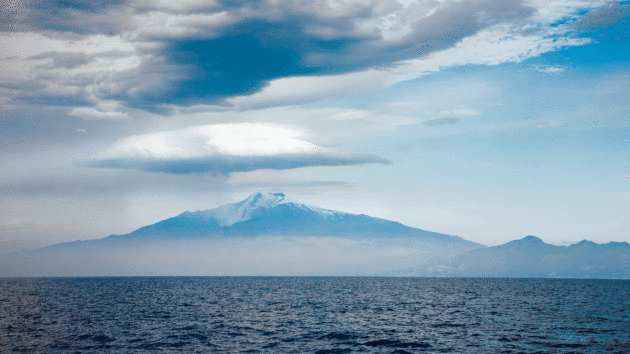
Lenticular cloud over Mount Etna located at the southern end of the Straits of Messina. Photo: Will Perrett / Alamy Stock Photo
Fuel and coffee stop
We settled into our watch system and continued on. Later I noticed that my phone wasn’t charging and on further investigation, we saw that the house batteries were obviously not holding their charge too well, so we started the engine to recharge the batteries.
The crossing took two days and six hours, much longer than expected, but arriving in Porto Colom during daylight is always a beautiful experience, such a picturesque natural harbour.
We needed more fuel, gas and a hot drink. I went in search of a shop to exchange the gas bottle, unfortunately this had closed half an hour earlier for lunch. So Andrew instead dashed off to a nearby hotel and came back with hot coffees and flasks of hot water for later.
After filling up with fuel and water we set off for the final leg, Majorca to Moraira on mainland Spain, a relatively short leg of around 155 miles, with limited hot water and another cold evening meal to look forward to, but we were getting closer. We motor-sailed just to keep up our average speed. At midnight I handed over to Andrew with the wind almost strong enough to switch off the engine.
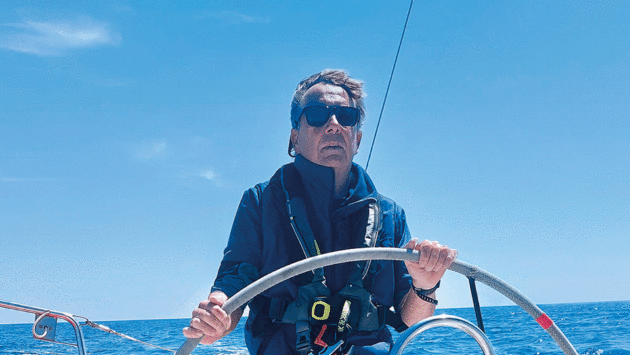
The first mate Andrew Guilbert enjoying perfect sailing conditions on the last leg. Photo: Barry McCrae
Engine failure off Ibiza
I went below to start my rest, then 10 minutes later I heard the engine revs reducing and then stopping. It had cut out again. We attempted to start it, but it was completely dead. We decided to wait until daylight to investigate, in the meantime we continued sailing.
At 0400 I was up for my watch. We were gliding past the east coast of Ibiza, a coastline I know reasonably well. Ten minutes later I suddenly saw the navigation lights go out. The battery voltage was low again, and now we couldn’t start the engine.
As it was only two-and-a-half hours until day break and there was little to no traffic about, we continued without navigation lights, but keeping a very good watch. At day break I went below, opened the bleed valve, pumped fuel through, closed the valve, tried the engine again and surprisingly it started – very mysterious. We passed through the Frejus, the gap between Ibiza and Formentera, and settled in for the last 60 miles.
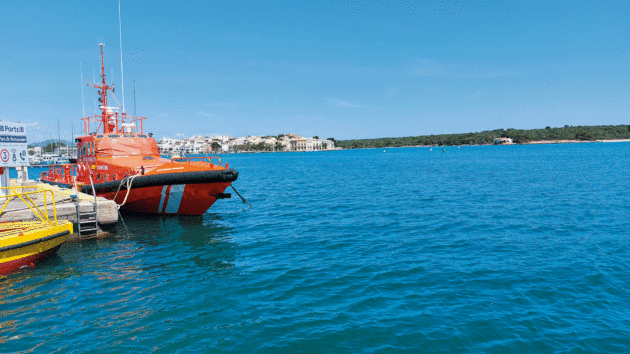
Porto Colom Majorca – another quick fuel stop. Photo: Barry McCrae
What a relief when we finally arrived in Moraira, it couldn’t come quick enough. We had covered approximately 1,280 miles and it had taken us 13-and-
a-half days. Throughout, I kept hoping that nothing more would go wrong, but as things kept happening, I was becoming concerned that something more serious could fail.
There were several times on the journey that I considered jumping on a plane and flying back, but out of loyalty I felt committed to bringing the boat back – I’m not sure I would make the same decision again in the future.
On a positive note, despite having no standing headroom in the galley, and with very limited provisions, Andrew produced meals of amazing variety and quality – there was always something to look forward to!
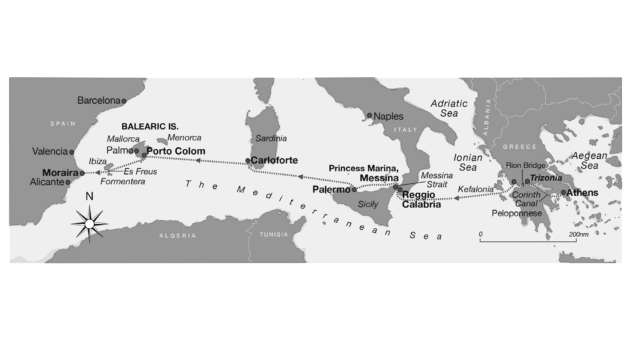
The route
Lessons Learnt
Never assume anything
With the boat having been surveyed by three different surveyors on different aspects of the boat, we assumed any problems would have been highlighted. We were therefore very surprised to experience so many issues on our trip, luckily we had spare sails and some engine spares.
Expect the unexpected
Each time something went wrong, I thought: ‘What more could possibly go wrong?’ Equally I was concerned that something more serious could fail. There were several times on the journey that I considered booking a plane ticket flying home!
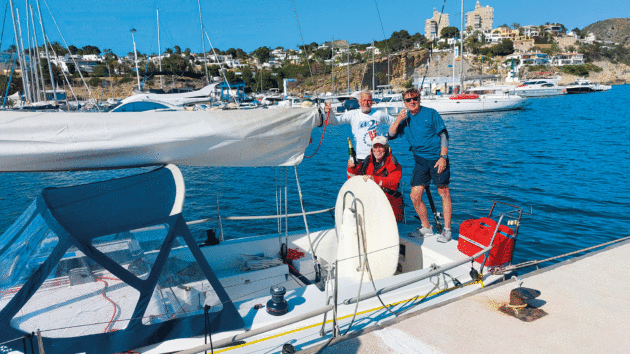
‘Three Men in a Boat’ on arrival in Moraira, Spain: L-R author Barry McCrae, owner Richard Pipkin, first mate Andrew Guilbert. Photo: Barry McCrae
The importance of good food for morale
We were well fed during our trip, which kept our spirits up (until we ran out of gas). The first mate had done some planning beforehand and this paid off. With a lengthy provisioning list we enjoyed varied and hearty meals while on board, which was no mean feat given the lack of standing headroom in the galley and the limited space in which to work.
Don’t always feel the need to sail to a schedule
Whilst we didn’t have a schedule as such to stick to, it felt like we did, but perhaps that is the nature of a delivery trip as opposed to a leisure trip.
I have previously made a similar delivery trip but that was with five crew on a 46ft boat, and with fewer issues, so perhaps that was why it felt less strenuous previously.
Stay alert
When off watch, even when sleeping, keep your sailing gear on so that you are ready and prepared to jump into action at a moment’s notice.
Enjoyed reading this?
A subscription to Yachting Monthly magazine costs around 40% less than the cover price, so you can save money compared to buying single issues.
Print and digital editions are available through Magazines Direct – where you can also find the latest deals.
YM is packed with information to help you get the most from your time on the water.
-
-
- Take your seamanship to the next level with tips, advice and skills from our experts
- Impartial in-depth reviews of the latest yachts and equipment
- Cruising guides to help you reach those dream destinations
-
Follow us on Facebook, Twitter and Instagram.
Note: We may earn a commission when you buy through links on our site, at no extra cost to you. This doesn’t affect our editorial independence.