




Each month Yachting Monthly's resident expert, Rachael Sprot, answers a reader's question. This month, how to cope with a prop wrap
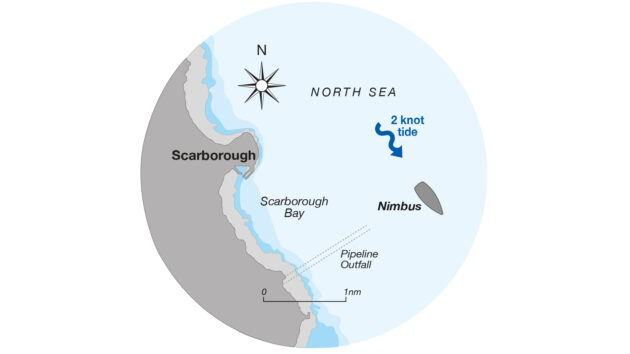
Sadler 29, Nimbus, is on passage from North Shields to Grimsby when the engine falters and cuts out. Skipper, Tim, instantly suspects a prop wrap as they’ve already passed a lot of pots, some of which were hard to spot as the two-knot tide had towed them under.
They’re a couple of miles off Scarborough and it’s about two hours before dusk. There isn’t much wind, but it’s due to start building from the east shortly.
Tim has two crew on board, Jules and Safi, both of whom are fairly novice sailors but fit and capable. Jules is a cold-water swimmer and volunteers to go over the side. Tim is not a regular swimmer but thinks that, as skipper, he should go in. He keeps a mask and snorkel on board for this eventuality.
Is this the best course of action?
How to deal with this prop wrap
Before they do anything, they need to check for immediate danger, such as being up-tide of a hazard, other vessels or a lee shore. In this instance it sounds as though they have some time to tackle the problem themselves, but if that changes, they need to call for help.
In the murky, cold waters of the North Sea, I’d be reluctant to put someone over the side if it can be avoided. They need to be sure the diagnosis is correct first and take various safety issues into account. A GoPro on the end of a boathook is an invaluable tool in clear waters but might not work well here.
Are they tethered to the bottom with 0 knots SOG? Are there any obvious signs of lines in the water? If they can get the engine out of gear, then starting the engine in neutral would eliminate the cause of the problem being a fuel issue, the other likely cause of sudden engine failure. Finally, if they have a shaft, rather than sail drive, they could put the gear stick in neutral and see whether the shaft can be turned by hand. If not – a prop wrap is the likely cause.
There are a couple of things to try before deciding whether anyone should enter the water. If the engine starts, I’d be tempted to put it into reverse for a moment and see if that throws anything clear – they might get lucky.
If the line is visible beneath the boat and they’re tethered to a string of pots, they may be able to hook the line with the boathook and bring it close enough to cut it, freeing the boat. This could be helpful, especially if there’s enough wind to sail into a safe haven, but isn’t always the right thing to do – it might be the only thing preventing the boat from drifting towards a hazard.
In most cases though, the only way to clear a prop-wrap is by manually disentangling it. Whether to do this at sea, or in a sheltered anchorage or port, is the main decision.
If it’s possible to sail into shelter, that’s by far the better option. However, they’re on an exposed coastline with few natural harbours and onshore winds forecast.
Putting someone over the side should never be done lightly. There’s a risk of entanglement, being hit by the hull, being swept away by the tide (if the boat is tethered) and cold water shock or hypothermia.
Tim should not go in – he’s not acclimatised to cold water and if anything happens to him Jules and Safi will be poorly placed to help. However, Jules is an experienced cold-water swimmer. As long as there isn’t much swell around, it’s worth a shot.
If a wetsuit is available, this can make a big difference to how cold she’ll get. It’s also surprising how much energy it takes to swim down to the propeller, so she’ll get tired quickly, and it’s remarkably hard to hold your breath for long in cold water. If she can reach the prop with an outstretched hand from the waterline, so much the better.
She’ll need a good boat knife – a sharp bread knife can work well – and to have some lines to hold onto, although nothing with a bight in which she could get caught. Having the dinghy in the water trailing astern would give her something to grab, or at the very least a line with a fender attached to it.
If they haven’t already done so, they should drop the sails to ensure the boat isn’t making way. Above all, she must keep well clear of the stern area to avoid being hit on the head by the transom, even in little swell.
If the wrap doesn’t come free fairly quickly it’s time to call for help. Scarborough has an all-weather lifeboat and it will be easier for them to render assistance in daylight hours. Even if they do clear the wrap, they should consider diverting there rather than continuing to Grimsby – prop wraps can damage engine mounts, gear box and shaft, which will all need thorough inspection.
Enjoyed reading this?

A subscription to Yachting Monthly magazine costs around 40% less than the cover price, so you can save money compared to buying single issues.
Print and digital editions are available through Magazines Direct – where you can also find the latest deals.
YM is packed with information to help you get the most from your time on the water.
-
-
- Take your seamanship to the next level with tips, advice and skills from our experts
- Impartial in-depth reviews of the latest yachts and equipment
- Cruising guides to help you reach those dream destinations
-
Follow us on Facebook, Twitter and Instagram.
Note: We may earn a commission when you buy through links on our site, at no extra cost to you. This doesn’t affect our editorial independence.