



High-latitude sailor and environmental campaigner Jon Amtrup explores how sailors can help protect the ocean through being citizen scientists
Staring out over the white-speckled blue, the wind pushes us gently west towards Shetland. In between, there is the ocean and life. I scan the horizon. The reward comes in the form of a characteristic spray of water and the following sound.
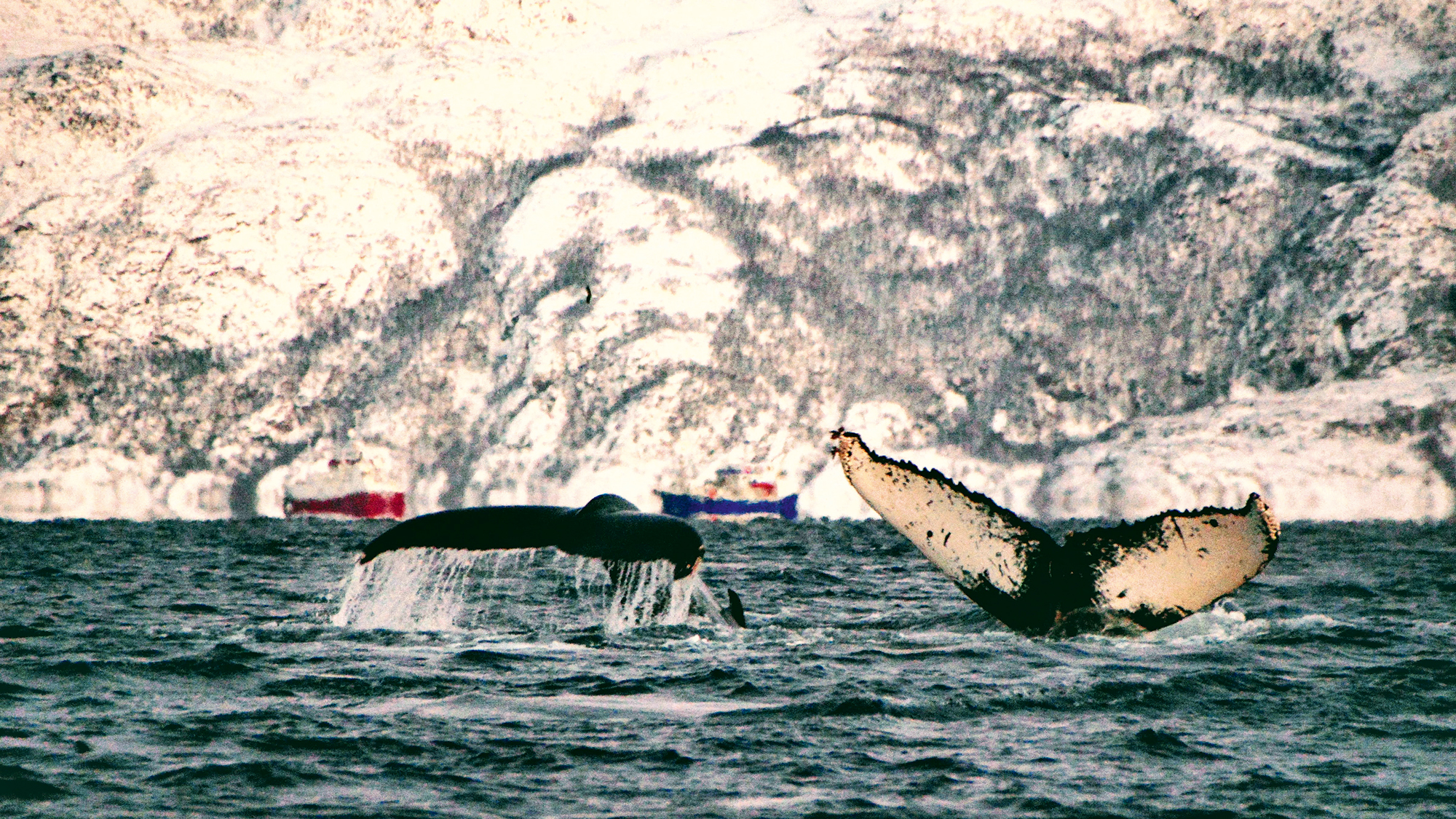
The humpback has surfaced to say hello. The sight brings out a big smile, and I shout ‘there she blows’ so that the rest of the crew can enjoy the majestic animal some 50 metres away.
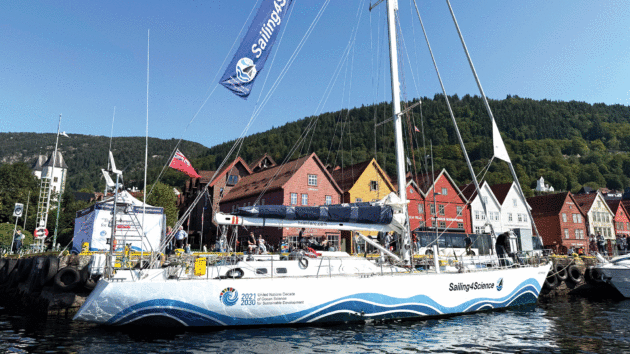
Hrimfare, a Challenger 67, turned into a sailing science platform in an effort to save the ocean. Photo: Bjorn Bertoft
The waters between Norway and Shetland are a migratory route for humpback whales, linking the cold Arctic waters of Northern Norway and the much warmer Caribbean.
I open my phone, tap the Orca app, and start documenting my sighting. As soon as we get cell coverage in Shetland, the sighting, including sea state, boat position, and where I saw the whale relative to the boat, will be shared with the Orca organisation. I have been a citizen scientist and given my little contribution to protect whales.
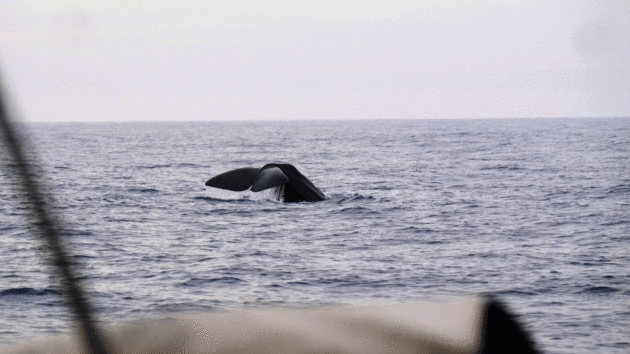
If you look actively, you have a higher probability of seeing a humpback dive close to your boat. And then you can document the sighting through an app. Photo: Jon Amtrup
So what is a citizen scientist?
A member of the general public – that’s you and me – who voluntarily contributes to scientific research or monitoring efforts, usually in collaboration with professional scientists or research organisations.
Contributions can include collecting data, counting birds, collecting bear poop, classifying images, running experiments, analysing or transcribing data, or helping design studies. In today’s tech world, most citizen science projects use apps to collect and share data.
The ocean is vast, and most of it is unexplored.
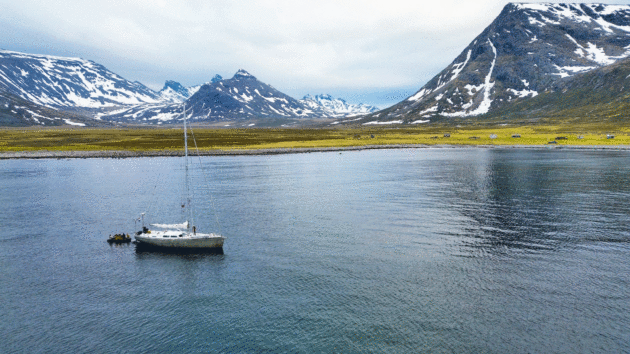
The scientists and citizen scientists took the dinghy to the beach from sailing yacht Moondance to collect beach litter for analysis. You can also help science by contributing your yacht as a platform.
A scientist alone can’t cover it all to understand and protect it, so this is where sailors come in as valuable helpers. We, the sailors, can, with relatively simple methods and instruments, collect data that we share with actual scientists, so that they get a better understanding of what lies beneath the surface. Only by knowing more can we protect and help the ocean.
Sailing can be more than enjoyable passages and beautiful anchorages. By contributing as a citizen scientist, you not only help the ocean, but you also bring purpose to your sailing.
It is always a good feeling to know you have contributed in a positive way to the oceans’ well-being, says Martin Hassellöv, professor of the Department of Marine Science at the University of Gothenburg, and a sailor with a burning desire to motivate fellow sailors to become citizen scientists.
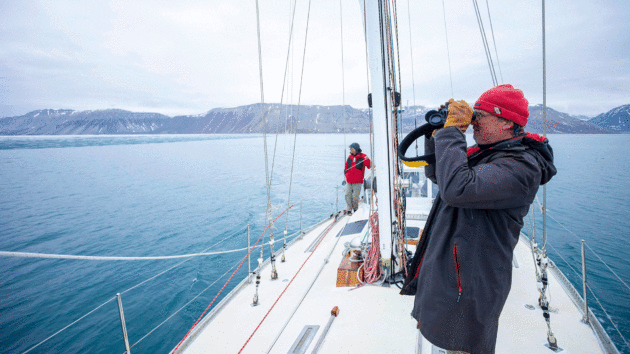
Jon Amtrup is looking for whales in Svalbard. You can also be a citizen scientist by joining The International SeaKeepers Society. Photo: James Austrums/59-north.com
Sailing science lab
He bought an old iconic racer, a Challenger 67, named it Hrimfare, and transformed her into an ‘ocean lab’ for scientists and as inspiration for the sailing community to become citizen scientists.
Together with his colleague, Professor Murat Ardelan from the Norwegian University of Science and Technology (NTNU), they have embraced the concept ‘Sailing4Science’, and developed its mission on low-cost, minimum footprint sailing expeditions from converted charter boats in the Mediterranean and local fishing Dhow boats in Tanzania to sailing dugout canoes in Ghana and professional yachts in Scandinavia.
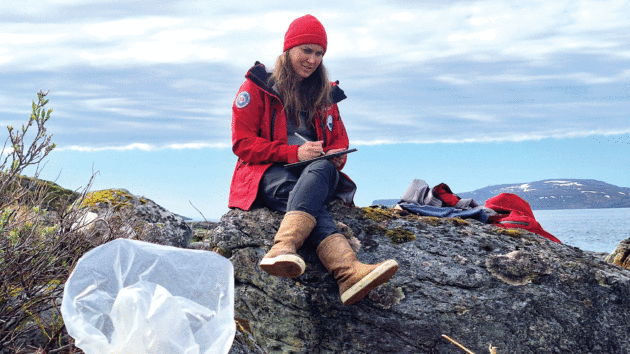
Catharina Frostad, co-founder of Gate to the Arctic, is documenting marine litter collected on a beach at 70 degrees north in Norway. Photo: Jon Amtrup
Sailing4Science was one of the first projects to be endorsed by UNESCO under the UN Decade of Ocean Science for Sustainable Development (2021-2030) with the motto ‘the science we need for the ocean we want’.
Now Sailing4Science is being established as an independent foundation under the same name, with a set course in partnership with the European Marine Observation Data Network (EMODNET). The aim is to engage and inspire the global sailing community to help collect data on the vast ocean and bring hidden facts to the surface for the general public.
Sailing4Science is an open network where together we can democratise ocean science with readily available tools and low-cost sensors, and thereby empower sailing ocean ambassadors, says Hassellöv.
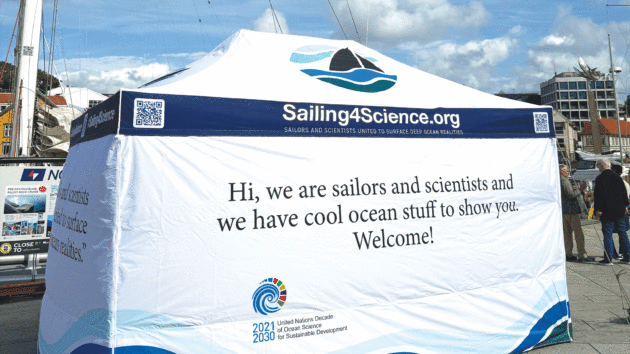
No reason to hold back. Sailing4Science attracted both sailors and landlubbers into the tent in Stavanger learn about the ocean. Photo: Bjorn Bertoft
Last year’s expedition aboard Hrimfare sailed from Gothenburg to Trondheim, Norway, as part of the EU-funded project DiverSea. They stopped at more than 35 sampling stations to collect plankton, water, chemical data observations, and sediment from the seabed. Along the way, the crew showcased the project and lots of ‘cool ocean stuff’ in a dedicated pop-up tent, and connected with stakeholders, schools and curious people from all over the world.
Being a sailing citizen scientist is truly fulfilling. Not only do you help scientists better understand the ocean, but your work also inspires and fascinates people from all walks of life. They want to know more and how to get involved, says Hassellöv.
And there are a lot of crew who have already taken citizen science to their hearts. On board the 50ft Freeranger, there is a family of four sailing with a purpose. Larissa Clark and Duncan Copeland, with their children Eden and Sky, have turned their boat into a mobile platform for marine conservation.
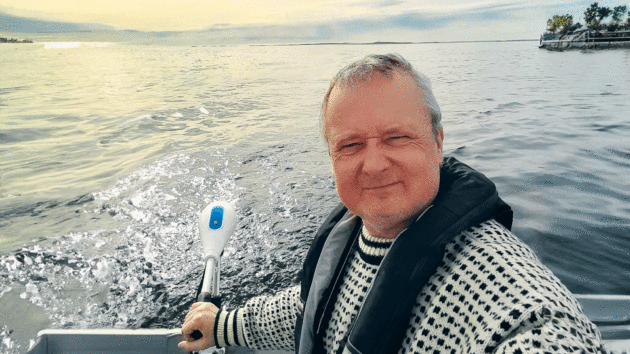
Norwegian journalist Jon Amtrup has been sailing and writing for most of his life.
They received the Ocean Cruising Club Environmental Award 2025 for their efforts.
On their homepage, they have listed 50 Citizen Science projects sailors can partake in. The directory is a valuable resource for everyone who wants to make a difference, and you can check it out at www.freerangeocean.org
For the two kids on board Freeranger it has become a natural part of the day to collect samples and do sightings that they share with scientists.
But the information does not only go one way. Many of the projects also share the combined findings with their citizen scientists. That way, the sailors learn more about the ocean and get even more inspiration to continue their important work.
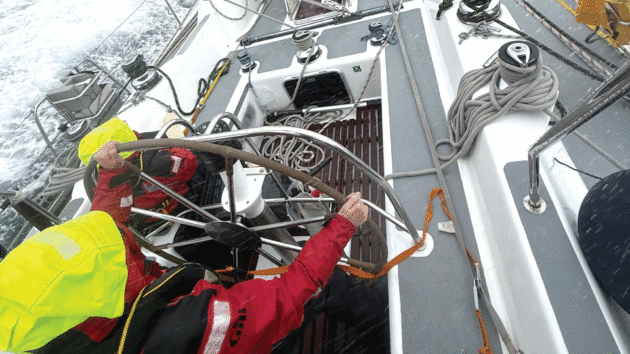
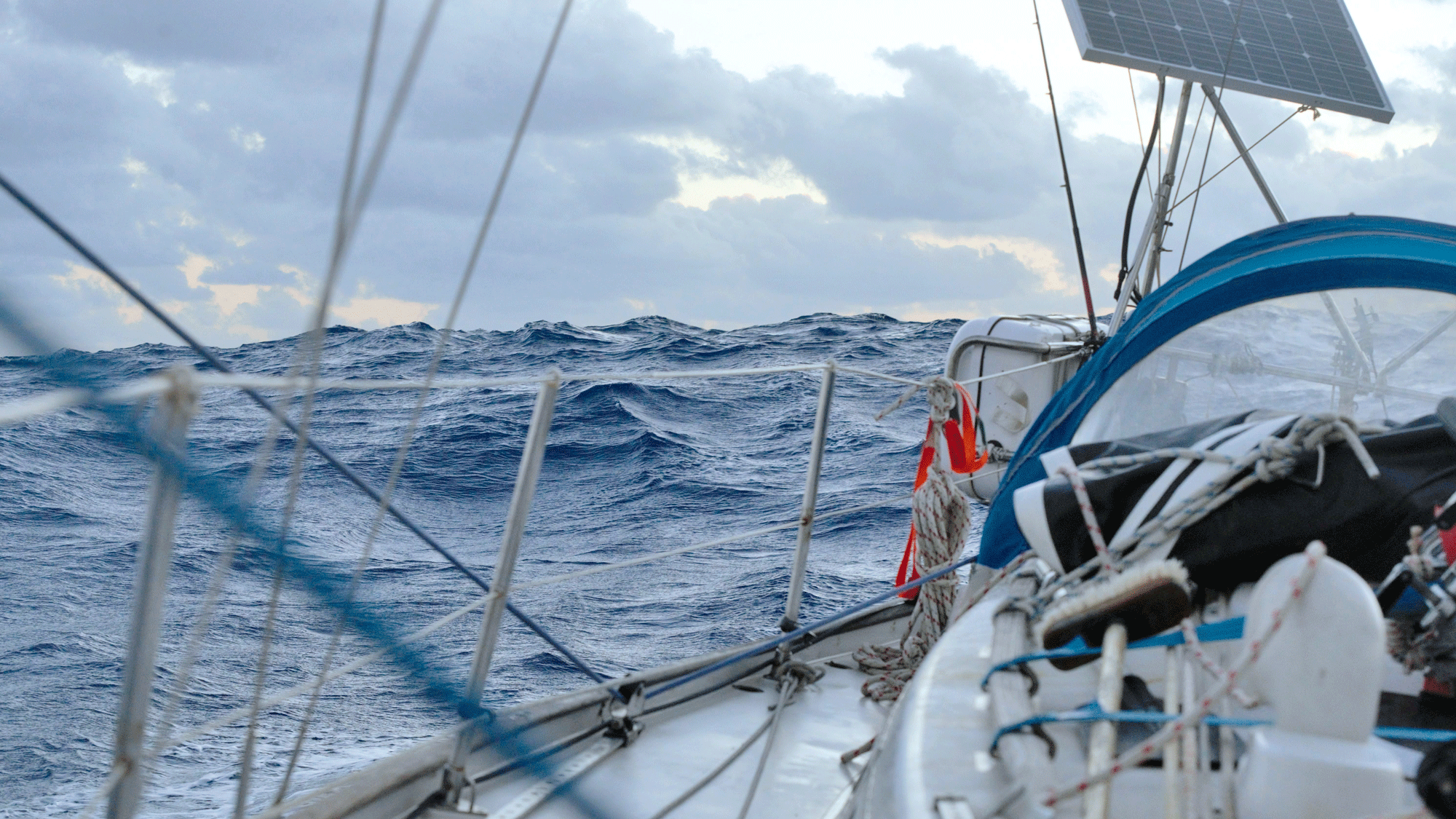
Sailing through the rough stuff in search of a higher purpose. Hrimfare pushes through a gale
to inspire more sailors to become citizen scientists through the Sailing4Science program.
Becoming a citizen scientist
Between 2018-2022, the citizen science project boat 100%SunWindWater sailed under electric propulsion alone around the Baltic Sea and Scandinavia with young crew members to collect data and insights while performing experiments on sustainable lifestyle alternatives such as zero-waste, toxic-free, fossil fuel-free, gender-equal, sustainable food sourcing, and a compost garden on their transom.
The International Seakeepers Society is also a very good way to start your journey into contributing to ocean wellbeing. The Seakeepers Society facilitates oceanographic research, conservation and education by engaging the yachting community.
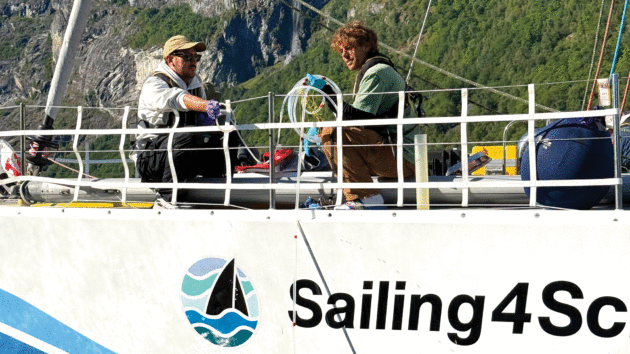
Sailing4Science crew taking water samples. Photo: Bjorn Bertoft
It has different programmes, and I have signed up with my yacht Njord for the Discovery Programme. Here, I can donate time for scientists to come on board for specific passages where they already have projects.
I have yet to find a project that suitably aligns with my sailing plans, but since it began in 2014, the Discovery programme has supported hundreds of missions worldwide. Some day, I will find time and water to donate my time and a bunk or two aboard to scientists.
In the meantime, I will continue sailing and helping collect data for scientists. Out on the water, every detail – from a curious plankton bloom to a lone plastic bottle – tells a story we can help read. By recording observations, taking water samples, or logging sightings through established apps and programmes, sailors turn routine passages into contributions that advance science and protect the seas we love.
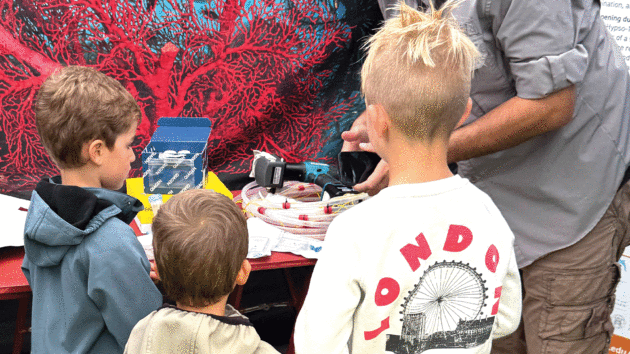
The future generation is always eager to learn about the ocean. Photo: Bjorn Bertoft
Training is accessible, equipment is simple, and the community is welcoming: your logs become data used by researchers, policymakers and conservationists worldwide.
Join a network of cruising naturalists, submit observations to citizen-science platforms, and bring young crews into the practice – your voyages will become classrooms for stewardship. Sailors have the mobility, perspective and passion to fill gaps in coastal and ocean monitoring; together we can map change, spot hazards, and push for smarter management.
Hoist your curiosity alongside the sails: become a citizen scientist, and let every trip help secure healthier oceans for generations to come – start collecting data today.
Article continues below…
‘With scientists on board, I get force-fed fun and helpful knowledge day in and night out’
I could spend my life sailing towards the horizon. To save my soul, as solo sailor Bernard Moitessier famously said…
6 ways seamanship protects our seas: ‘it is estimated that 30-50% of coral reefs have already been lost’
Sailing has the unique ability to allow us to be outside of our natural environment; being a land animal at…
Your observations make a difference
How to get started
- Pick one or two simple projects from www.freerangeocean.org
- Sign up/connect with Sailing4science.org and/or Seakeepers.org
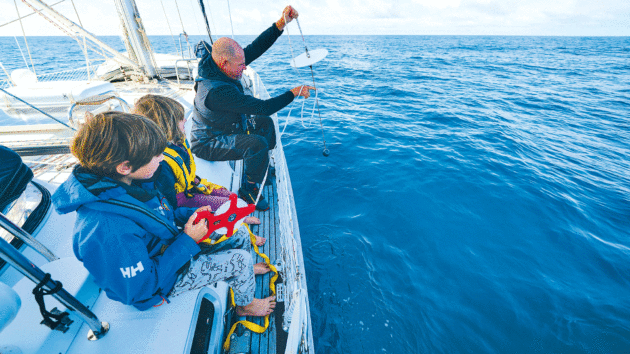
- Get basic tools: reliable GPS/phone (apps), camera, notebook/tablet, Secchi disk
- Join any relevant online communities and training webinars
- Log observations regularly and upload promptly
Scientific benefits
Citizen science improves scientific understanding, conservation planning, and policy. It helps detect pollution events, migration shifts and climate impacts
Engages the sailing community and raises awareness
Citizen science makes your sailing life way more interesting and satisfying
Enjoyed reading this?
A subscription to Yachting Monthly magazine costs around 40% less than the cover price, so you can save money compared to buying single issues.
Print and digital editions are available through Magazines Direct – where you can also find the latest deals.
YM is packed with information to help you get the most from your time on the water.
-
-
- Take your seamanship to the next level with tips, advice and skills from our experts
- Impartial in-depth reviews of the latest yachts and equipment
- Cruising guides to help you reach those dream destinations
-
Follow us on Facebook, Twitter and Instagram.
Note: We may earn a commission when you buy through links on our site, at no extra cost to you. This doesn’t affect our editorial independence.