



A well-maintained, well-sailed boat is not only good seamanship, but also better for the environment, says Solene Giraudeau-Potel
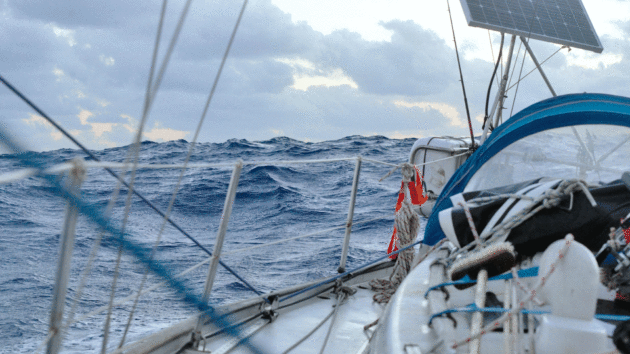
Sailing has the unique ability to allow us to be outside of our natural environment; being a land animal at sea can become addictive. The sensation of being one with the ocean can make us think that our presence has little or no impact on the environment through which we’re sailing.
Certainly, any impact we do have is easy to overlook when compared to the big polluters of shipping, fishing, fish-farming and shore-based global industry – for which systemic change is essential.
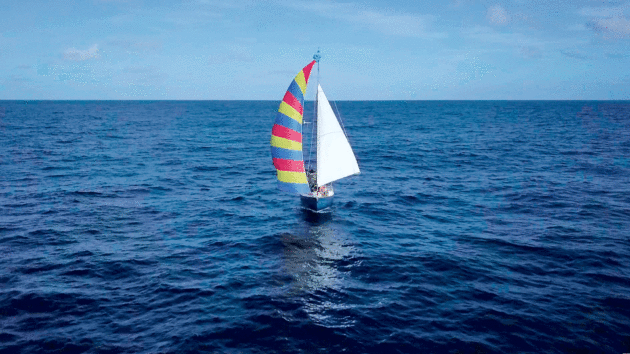
A clean hull and minimal waste lets you sail the oceans with very little impact. Photo: Joe Turner and Solene Giraudeau-Potel
But individual actions matter too. Sailing is a privilege, and it allows us to enter and closely interact with sensitive ecosystems and wildlife that few others can reach, and we therefore need to proceed with care and respect.
Visitors to national parks on land are comfortable with the concept of ‘take nothing but photos, leave nothing but footprints’, and we need to have same attitude at sea. The antifoul, waste and fumes we leave in our wake may be relatively small, but we should still try to minimise the trail we leave. Here are six ways to be a more environmentally friendly sailor.
1 – Did that go overboard?
Eradicating waste is one of the most immediate ways to reduce our impact. The obvious starting point is avoiding littering. We have met sailors who, on long crossings, throw tins and cardboard overboard to avoid storing them.
Storing them saves on plastic pollution, and the raw material can be recycled. To our surprise, there is a lot of space for storing rubbish over a long passage, like the anchor locker.
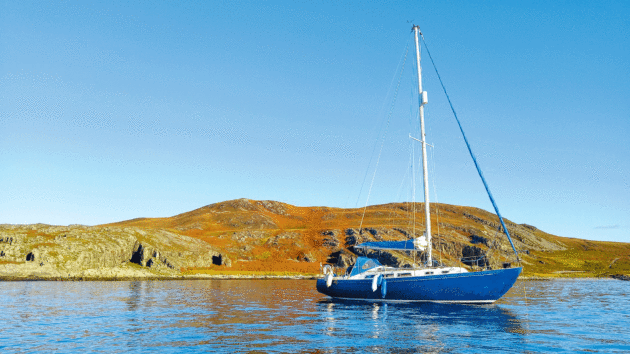
Scottish adventures around Jura. Photo: Joe Turner and Solene Giraudeau-Potel
Small habits we justify can be just as harmful. As an example, some smokers believe that if a cigarette has no filter, it can be tossed overboard because it will decompose, ‘It’s only paper and tobacco.’ But burnt tobacco contains toxic compounds. Just because something appears biodegradable doesn’t mean it belongs in the sea.
However, a more difficult to manage source is accidental loss overboard as it’s almost impossible to anticipate. Like many sailors, we’ve lost more than we’d like to admit: clothes pegs, a tiller extension, a fishing gaff, even a cushion. Most of it could have been prevented with better foresight.
Some solutions are simple: tether essential items, reduce packaging, and keep the cockpit and deck clear of clutter so anything loose can be stowed straight away. When replacing equipment, favour natural materials.
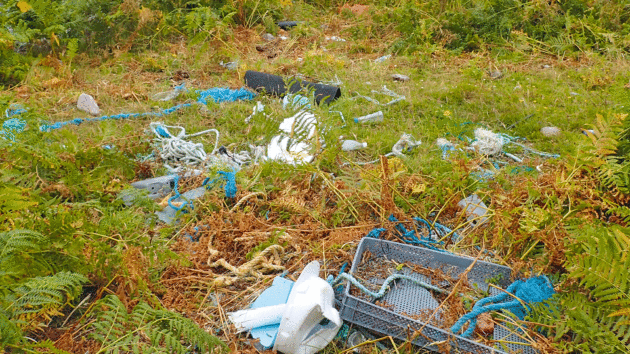
It’s easy to lose items overboard, but waste like black and grey water, leeching antifouling and microfibres is harder to control. Photo: Joe Turner and Solene Giraudeau-Potel
For example, a deck brush can be bought in wood and with bristles made of natural fibres. The former one we had shed all of the plastic bristles and it was a sore sight each time we used it.
There is also more insidious pollution, such as the kind created during maintenance. Our Rival 32, Maalie, is an old GRP classic, and every time we work on the hull, billions of microplastics are released. We try to contain them, but even a small fraction escaping into the water represents pollution. Even steel or aluminium hulls are not exempt: epoxy coatings and paint dust require management.
However, the question non-sailors ask most often concerns grey and black water. I’m always embarrassed to admit we don’t have a treatment system onboard.
Holding tanks or compostable toilets are great solutions. It’s particularly important in crowded areas, enclosed bays or brackish lakes where excess nutrients and cleaning chemicals can have a long-lasting impact.
It allows waste to be discharged offshore or pumped at a facility, and kept away from sensitive ecosystems. When no system is in place to control waste water, avoiding the most vulnerable areas is a sensible option. For example, in hindsight, we would choose not to visit the Bras d’Or Lake in Nova Scotia, Canada, as we do not have means to control when to release our black water.
But saving up all the grey water would be very difficult. Solutions are to minimise food scraps, use natural sponges (synthetic ones rapidly shed microplastics), choose biodegradable soap to limit chemical discharge and wash only if really needed.
2- Make your presence meaningful
We have worked hard to create the opportunity to be out here on the water. One meaningful way to give something back to our environment is to share the opportunity of being there in the first place with science.
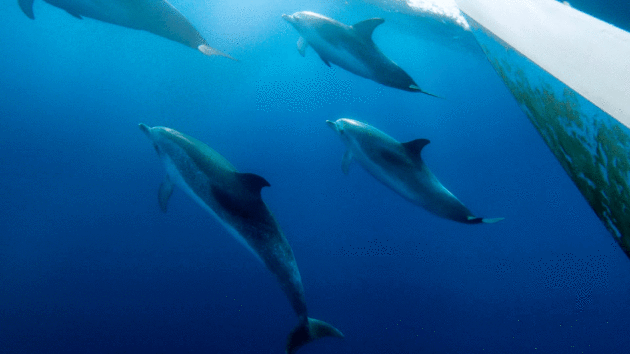
There are many ways to report the wildlife you see, such as apps and charities. Photo: Joe Turner and Solene Giraudeau-Potel
Protecting the environment begins with evidence. Evidence of whether an area is under threat, that pollution is or isn’t present, or that a species is declining. In order to monitor long-term change, scientists continually collect environmental data to detect change, and inform policy-makers.
One problem they face is the eye-watering cost of research vessels, which then limit the amount of monitoring programs they can undertake. Yet, as sailors, we navigate those same waters regularly.
Getting involved in citizen science projects promotes an increased understanding of the environment we are in and can help worldwide science. But don’t worry if your background isn’t in research, data collection may sound nerdy but collecting data is surprisingly accessible and deeply rewarding.
Reporting wildlife sightings
The simplest way to begin is by observing. You can use apps to log wildlife sightings, like eBird. Depending where you are on the globe, specific programs will exist, such as the monitoring run by the Hebridean Whale and Dolphin Trust on the west coast of Scotland.
Across the pond, in the Gulf of Saint Lawrence, we had the chance to report a leather back turtle to the Canadian Sea Turtle Network. These reports contribute to a wider understanding of endangered animals and how to better protect them.
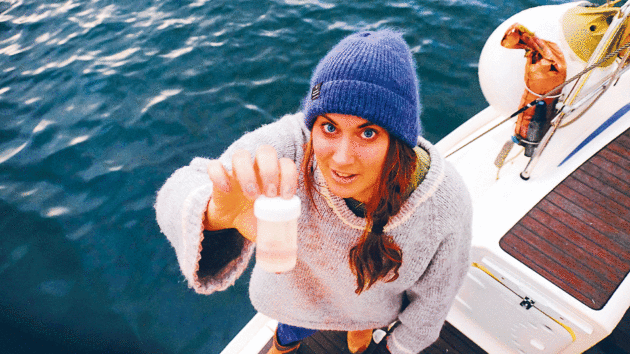
Collecting seawater samples can contribute important data to environmental studies. Photo: Joe Turner and Solene Giraudeau-Potel
In addition, you can add pictures alongside your sighting data. Clear photographs help researchers identify individuals and monitor populations over time. This will become a remarkable scientific resource.
Gathering data
If you’d like to go one step further, some programmes provide equipment to collect oceanographic data such as sea temperature, salinity or depth. Small probes or autonomous loggers can record quietly in the background during a passage.
For a more hands-on approach, sampling kits are often available to collect plankton or environmental DNA (eDNA). These projects are crucial because there are still significant gaps in sampling coverage that we can help fill in.
This is more involved, with physically collecting the samples, processing them, storing them and shipping them, but for those who love a hands-on approach, it is a very rewarding venture! If you are interested, there are many organisations that coordinate participation. Clean Sailors, The International SeaKeepers Society, Marine Conservation Society, and Astrolabe Expeditions are all excellent starting points.
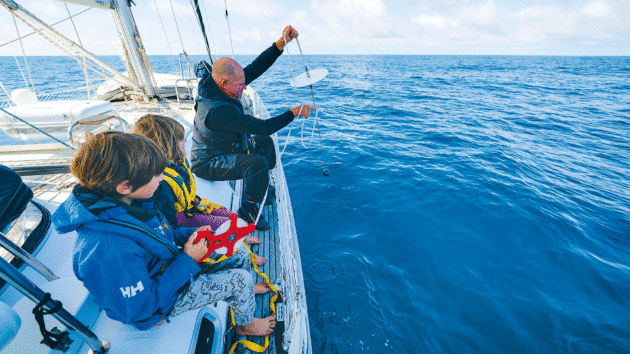
As a sailor, you will get to places scientists can’t easily get to, so your presence can really help
scientific research. Photo: Joe Turner and Solene Giraudeau-Potel
For those sailing locally in the UK, there are numerous regional projects, like reporting shark and skate egg cases, taking part in snorkel-based biodiversity surveys, or contributing to seaweed and microplastic monitoring. Earthwatch Europe provides a useful overview of active initiatives.
In many areas, sailors can also participate in hands-on restoration work, from planting seagrass to restoring oyster beds. Contact your local wildlife trusts to discover what’s near you.
Citizen science feeds not only scientific understanding but also policy, conservation and activism work. This is a great way to influence systemic change.
Our voices matter, and raising awareness among fellow sailors, supporting conservation initiatives, and shaping decisions will contribute to the future of our planet.
3- Get a spotter to drop anchor!
Considering where you drop anchor is a key aspect to manage potential damage to the seabed. It’s nothing we wouldn’t be doing anyway, as finding good holding and avoiding hazards that could foul your anchor is good seamanship.
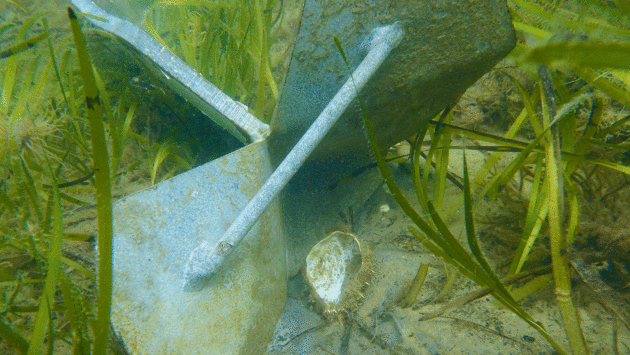
Dropping anchor on clean sand, rather than weed or seagrass, has less impact on seabed health. Photo: Joe Turner and Solene Giraudeau-Potel
And if you are looking to empower new crew, spotting the right area to drop anchor at the bow is a great responsibility to share. While this largely relies on having water clear enough to see the bottom – not always the case, particularly in the UK’s shallower waters – many protected seabed features will also be noted on charts.
In multiple types of habitats, randomly dropping anchor is simply not an option. Whilst we need the anchor to set well and protect the vessel from drifting, it’s also vitally important that we do our best to avoid unnecessary damage in the process.
Two habitats frequently affected by anchoring are seagrass meadows and coral reefs.
Seagrass
Seagrass takes a long time to establish. Some species recover within months but others need decades. In areas that already encounter challenges, even small disturbances can slow restoration and push the habitat closer to collapse. In the UK, researchers estimate that around 44% of seagrass meadows have been lost since 1936, and more than 90% have disappeared since their decline began.
These underwater meadows are major carbon sinks and vital fish nurseries, supporting fragile species. They are a key ally against biodiversity loss and climate change, and therefore need to be cherished and protected.
Coral
While coral is less of a UK concern (though there are some cold-water reefs in the UK), many British boats head for tropical waters each year. Globally, it is estimated that 30-50% of coral reefs have already been lost, and around 86% are severely stressed.
Similar to our seagrass beds, reefs are essential to ocean health: they act as carbon sinks, protecting coastlines from erosion, and support roughly a quarter of all marine life. Yet they are fragile and slow to recover from physical damage.
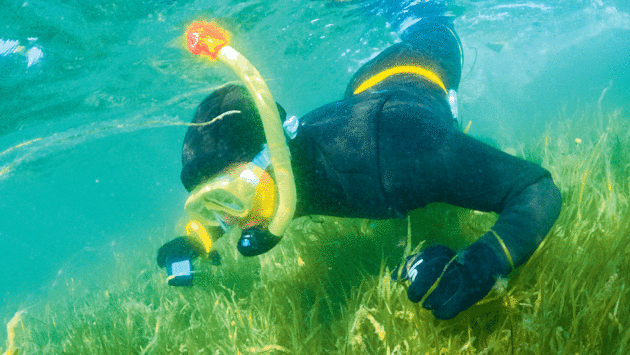
Seagrass is a valuable carbon sink and ocean nursery but is under serious threat and needs protecting. Photo: Joe Turner and Solene Giraudeau-Potel
Avoiding anchoring on these habitats is the absolute minimum we can do. A tiny patch of sand is rarely enough. Remember that if the wind shifts, your boat will swing and the chain will sweep a wide arc, ploughing the seabed and uprooting plants or coral in its wake. Use a spotter on the bow and look for a large, clear sandy area.
An option is to fit a trip line with a small recovery buoy to help retrieve a stuck anchor by applying upward force, reducing the risk of breaking coral if it drags or fouls. If there is no safe patch, it may simply not be the right place to stop. Protecting the seabed is one of the simplest and most effective actions sailors can take.
For the sake of our ocean, we have to be aware of when mooring buoys are mandatory or restricted zones are in place. In the British Virgin Islands, we were pleasantly surprised to find that while many places were prohibited for anchoring, buoys had been provided for day use.
It kept boats moving so more people could enjoy the area, and importantly, there was no seabed disturbance. The underwater life was thriving, a powerful reminder of what protection can achieve.
Mooring buoys and restricted areas are increasingly put in place and it often raises heated debates – Studland Bay being a prime example in England. But the reality is that we are many users sharing limited, sensitive spaces.
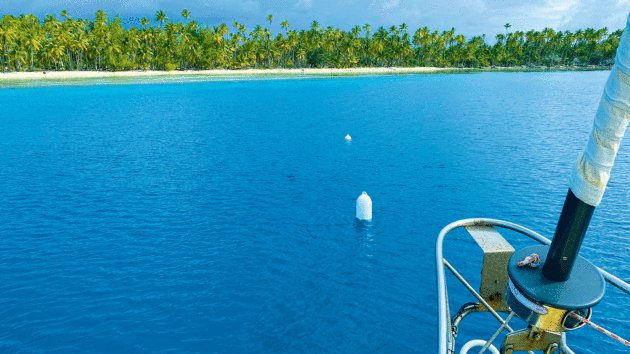
Buoying your anchor gives you an option to recover it, or pick it up later. Here, two buoys support the chain to keep it clear of coral. Photo: Joe Turner and Solene Giraudeau-Potel
Controlling the number of boats in one place at a time can be essential for ecosystems to recover and breathe, especially in areas with a high number of boats. Rather than seeing them as constraints, we can choose to see them as collective efforts to protect what draws us there in the first place.
Anchoring well requires patience, awareness and compromise. Yet it is one of the most direct ways we interact with the seabed. Done thoughtfully, it allows us to enjoy incredible environments without leaving scars behind.
4 – What is your maintenance impact?
One of the cheapest and most effective ways to reduce your environmental impact is simply to maintain your boat well. You’ll thank yourself for it too. A well-kept boat is more reliable in critical moments, requires fewer major refits, and holds its value better over time.
A good place to start, depending on your boat, is the bilge. When we bought our old boat, I’m not sure the bilge had ever been properly cleaned. At first it just looked dirty, and it was easy to ignore. But after flushing it a few times, with certainty that we had no leak on our engine, we noticed an oily sheen forming on the water by the bilge through-hull. That raised questions.
When the boat was ashore, we took the opportunity for a deep clean.
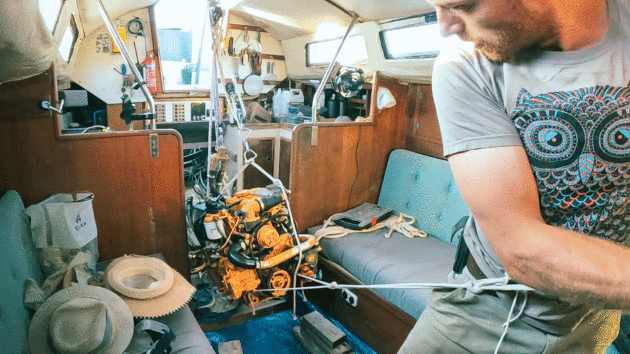
Hauling out our engine to take care of all the older parts and to ensure everything is in good working order. Photo: Joe Turner and Solene Giraudeau-Potel
It turned out the previous engine had likely leaked for years; the bilges were thick with built-up oil. In what felt like an extreme session of boat yoga, I scrubbed every awkward corner until it was finally clean. It was worth the effort. Now, when we flush the bilge, we know we’re not releasing oil into the water. You can also add filters into your bilge pump outlet to remove any pollutants such as oil and mircoplastics before it goes overboard.
The engine itself deserves close attention. Good gaskets, clean filters and the absence of leaks are not just matters of performance but of pollution prevention. Regular servicing, or even a full overhaul when needed, reduces the risk of discharging contaminants and ensures the engine will be there for you in difficult conditions.
Maintenance also means caring for your gear so it lasts. The longer we extend the life of what we already own, the lower our overall carbon footprint is and the less waste we generate.
Sails are a good example. They are often replaced once they lose their perfect shape, yet thorough annual repairs can extend their working life. Modern sails are made from kilograms of synthetic fibres that can’t be recycled. Sailmakers are, however, investigating natural fibres such as flax, which could lead to exciting developments in the future, as well as single-material sails that allow them to be recycled much more easily.
When replacement is unavoidable, look for ways to upcycle. In the UK, companies such as Sails and Canvas transform old sails into new products. Otherwise, schools and other organisations would like to have sails for decoration or sun protection.
Article continues below…

Environmental journalism award winner! The sailors working to save Britain’s seagrass meadows
The ragged inlets and wild rocky islands of Argyll are the place that I call home. For almost a decade,…
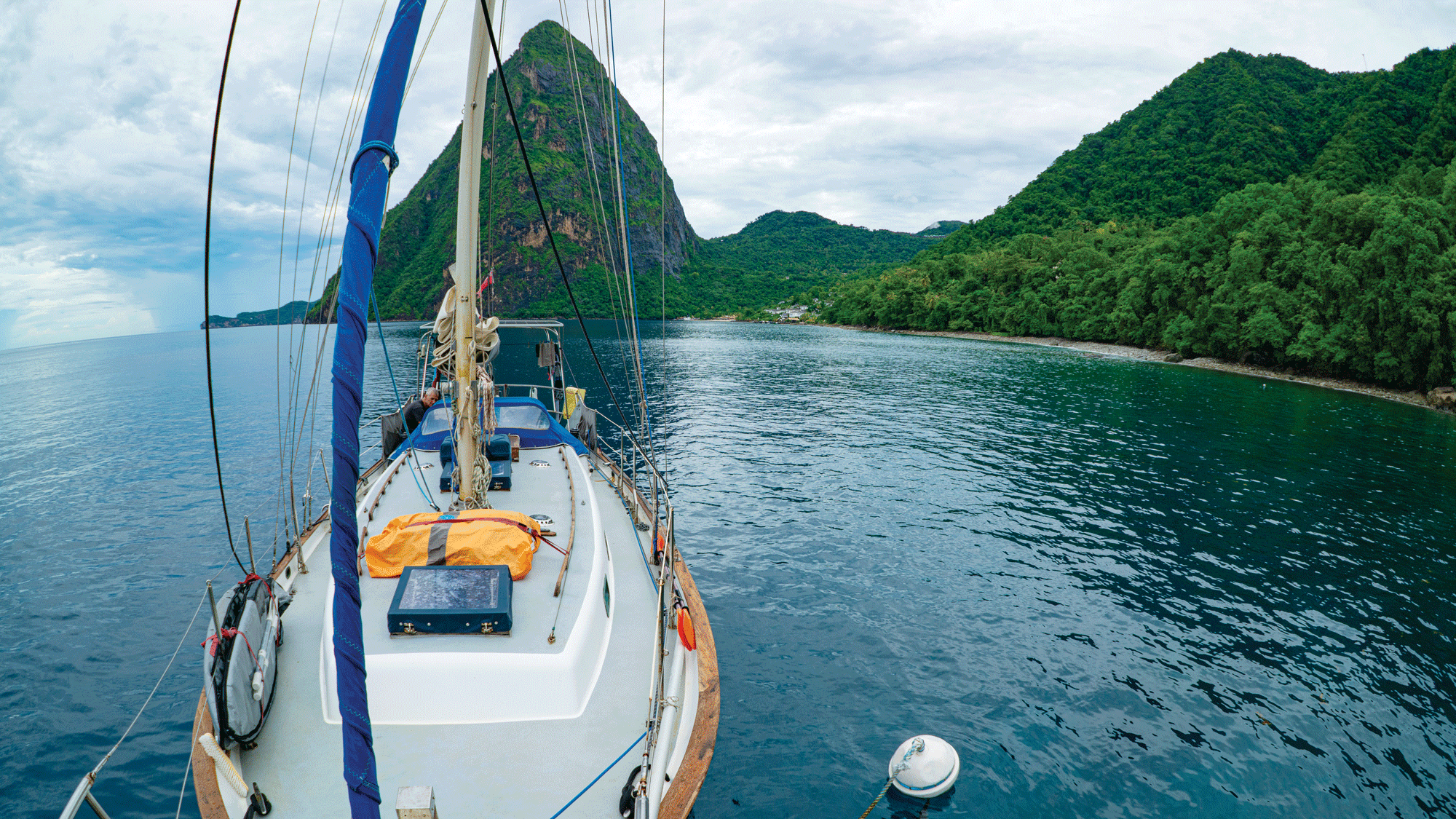
Exploring the Tobago Cays by yacht: ‘The allure is underwater, on the reef and in the seagrass meadow’
Well, we seem to have arrived in paradise,’ Tom exclaims as we sail smoothly through the shallow channel and drift…
5 – Being mindful with wildlife
It’s not only the trace you leave behind but the interaction with other living beings that matters. The ocean is a place where you can be lucky to experience genuine natural interactions with animals. It’s so special that it’s considered a good omen on passages when a cetacean appears at your bow. But we need to be careful not to force the interaction. When observing marine mammals, keep your distance and do not touch them.
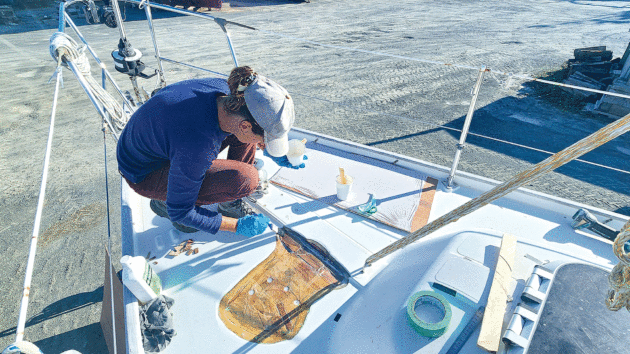
Repairing the deck of a GRP boat is a source of waste and pollution to consider. Photo: Joe Turner and Solene Giraudeau-Potel
Interactions can be less friendly and more physical, like with Iberian orca. In these moments, in addition to following local guidelines, we should remember that we are guests in an environment that isn’t ours.
You need to protect yourself, but there is little consensus on what works; harmless deterrents should always be preferred where avoidance has failed. Attacking in response will not help you or any future sailors.
If you ever encounter a marine animal at risk, report it immediately to local authorities to ensure they are taken care of as it needs.
Underwater noise is a different type of interaction that can lead to negative impacts. Even if we are small boats in comparison to tankers and cruise ships, our propellers create a rapid cavitation of bubbles, which results in low-frequency sound that can travel far underwater.
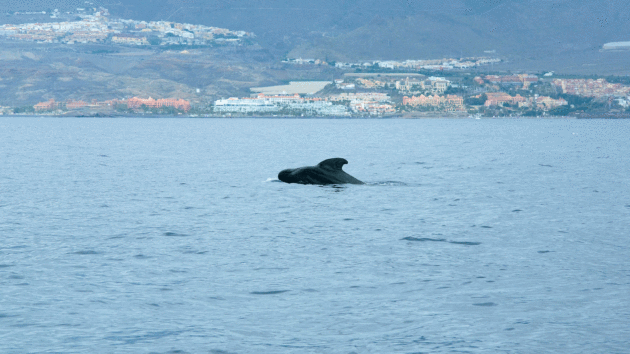
Pilot whale off Tenerife. Spotting and reporting sealife is a key action to understand their threats. Photo: Joe Turner and Solene Giraudeau-Potel
This has a direct impact on the fauna in the local ecosystem by ‘silencing’ their voice. Communication is key in the ocean and it was observed that ‘healthy’ noise levels can boost restoration areas but when a certain amount of boats create a strong background noise, the ecosystem stops thriving.
I would encourage you to snorkel when several boats have their engine on and propeller turning, (mark your position, or stay close to your boat!) you will see how it changes your experience underwater.
6 – Clean hull good for all
The final interaction is that of transporting non-native invasive species and enabling their spread around a coastline, an important threat to biodiversity worldwide. In the UK, species such as Pacific rock oysters, zebra mussels and carpet sea-squirt are all threatening native species currently.
Keeping your hull clean is important for this reason, as well as making your boat faster and more fuel-efficient when motoring. Of course, anti-foul is another complex area fraught with its own problems.
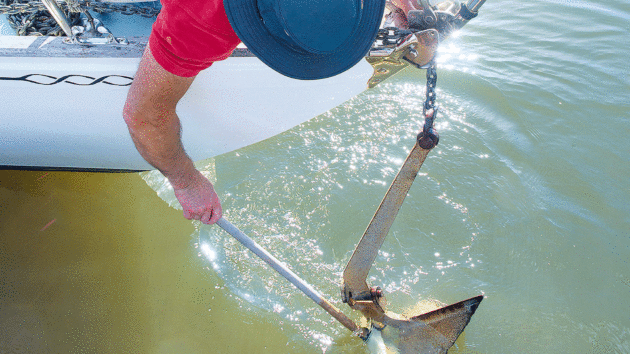
Brushing or hosing mud off your anchor after use prevents the spread of invasive species
Antifouls often leach biocides into the water and settle into the mud. Scrubbing off in the water increases this, while lifting out and cleaning in a bunded drainage area often isn’t possible locally. I won’t recommend one solution, but weigh up the options available to you and make the best choice possible for your set up.
In any event, be careful what is attached to your hull or look for any stowaway onboard. When weighing anchor, be careful to clean off the chain and anchor as it comes up – use a bucket of seawater and a brush to clean mud and weed off before it goes into your anchor locker.
It’s unlikely small sailing boats introduced invasive species in the first place, but we go further into the coast than most, and we can at least ensure we don’t spread them from anchorage to anchorage. Your anchor and chain will also stay in better condition, last longer and will be less likely to get stuck on the windlass.
Enjoyed reading this?
A subscription to Yachting Monthly magazine costs around 40% less than the cover price, so you can save money compared to buying single issues.
Print and digital editions are available through Magazines Direct – where you can also find the latest deals.
YM is packed with information to help you get the most from your time on the water.
-
-
- Take your seamanship to the next level with tips, advice and skills from our experts
- Impartial in-depth reviews of the latest yachts and equipment
- Cruising guides to help you reach those dream destinations
-
Follow us on Facebook, Twitter and Instagram.
Note: We may earn a commission when you buy through links on our site, at no extra cost to you. This doesn’t affect our editorial independence.