


Managing known risks is one thing, but how do you prepare for unexpected events? Mark Chisnell examines the problem of rogue waves
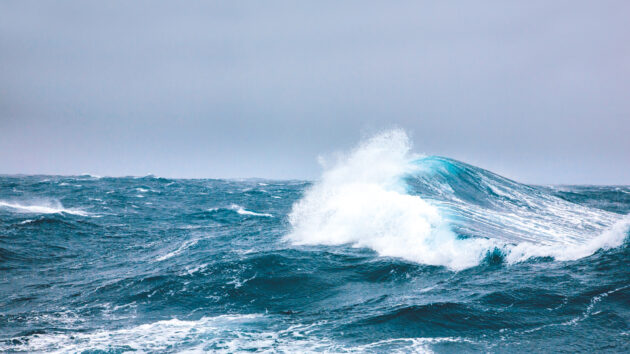
If there is a single point on the planet that figures in the imagination of every sailor, it’s Cape Horn. It lies at the southern end of the South American continent, squeezing the wind and waves of the South Pacific Ocean into a 500-mile gap between South America and Antarctica, right where the deep water of the South East Pacific Basin shallows on to the continental shelf. It’s a lethal combination.
Conor O’Brien’s Saoirse was the first yacht to successfully go around in 1923, and it was 35 years before a second, the Tzu Hang, would clear customs in Melbourne with Montevideo in mind.
Calm before the monster wave
The Tzu Hang was 46ft long, originally built in Hong Kong from teak with copper fastenings, and in 1951 it was bought by Beryl and Miles Smeeton. Miles was a career army officer, and it was after his service in the Second World War that they took up sailing. In 1955, they sold the farm in British Columbia that had been their home since the war and took off in the boat. Like so many people before and since, they set off across the Pacific. Unlike many others, on reaching Australia they turned back east, sailed down into the high latitudes and attempted to round Cape Horn.
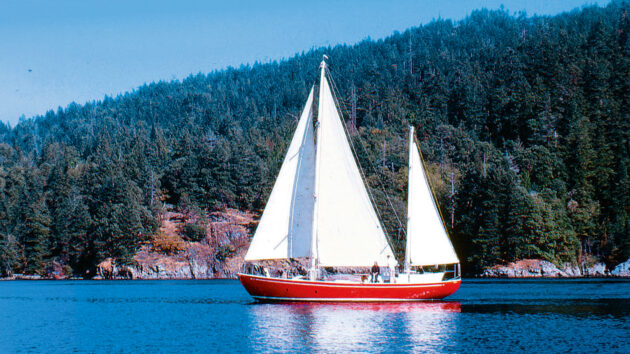
The Smeetons were the second sailors ever to round Cape Horn in a sailing yacht, the Tzu Hang. Photo: Tor Johnson Clio Smeeton
It all started well enough; in his book, Once is Enough, Miles Smeeton describes an idyllic life onboard. They had the fire stoked up like a country pub on a winter weekend, with the cat curled up in front
of it.
Beryl Smeeton had taken to knitting jumpers, and her breakfasts of porridge, bacon and eggs, toast and home-made marmalade all washed down with tea would have shamed some British bed-and-breakfast hotels. The bunks were real beds, oatmeal cakes were baked, pudding was cooked at any excuse and the England versus Ireland rugby match was on the radio: blissful really – until 12 February 1959.
Deteriorating conditions
Things had been deteriorating for a while.
The Smeetons and their crew mate, John Guzzwell, had reduced the sail of Tzu Hang and were trailing over 100m of 8cm-thick cable out of the back of the boat. The hope was to slow her down and help keep her in line with the breaking waves.
The swell was bigger than they had ever seen before – Miles Smeeton described a seascape that was as different from a normal rough ocean as a winter landscape is to a summer one. There was white foam and spume everywhere, showered like confetti by the breaking crests of the huge waves; it lay over the ocean like Christmas snow.
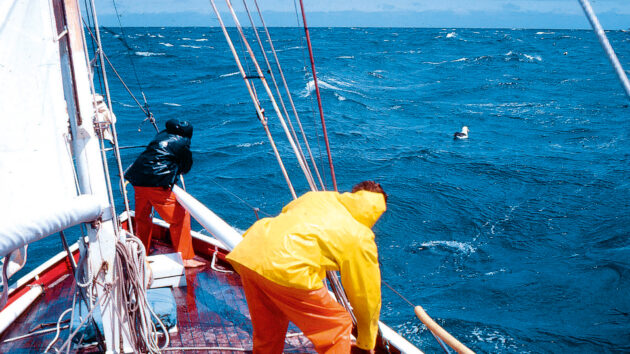
Clio Smeeton took this colour photo of her parents handling a whisker pole on deck at sea aboard Tzu Hang. Photo: Clio Smeeton
And for the first time since the Tasman Sea, the albatrosses had disappeared – this, it turned out, was ominous.
Miles was in his bunk reading when it happened, his wife on deck at the helm. He described what she saw: ‘Close behind her a great wall of water was towering above her, so wide that she couldn’t see its flanks, so high and so steep that she knew Tzu Hang could not ride over it. It didn’t seem to be breaking as the other waves had broken, but water was cascading down its front, like a waterfall.’
After that, Beryl Smeeton remembered thinking that she could do nothing else with the helm, then the sensation of falling and no more, until she found herself floating alone, in the Southern Ocean, with just the broken tether of her lifeline for company.
It was only when she was lifted by the following wave that she saw the boat just 30m away, both masts gone and very low in the water – which was unsurprising, when you consider that the deckhouse had been ripped off.
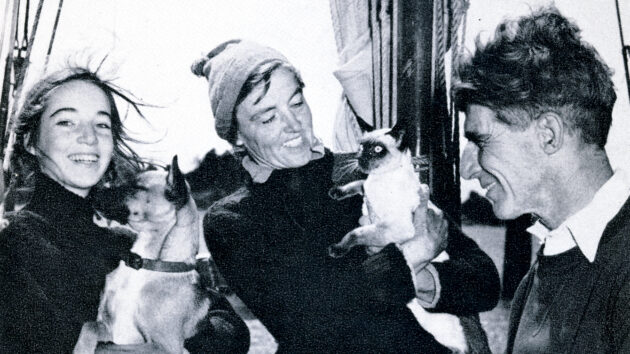
Miles and Beryl Smeeton aboard Tzu Hang with their daughter Clio, and pets
Inside the maelstrom
It’s arguable whether Miles Smeeton and John Guzzwell were any better off down below. They were hurled around the cabin along with everything that wasn’t tied down and quite a bit of what had been. Then the vanishing deckhouse had allowed the cold black sea to pour in, as Tzu Hang was rolled over and under that huge wave.
They both surfaced into waist-deep water, awash with cushions, mattresses and books – and one seriously unhappy cat. Miles made it on deck in time to see his wife swim to the remains of the mast, from where she pulled herself to the boat on the still-attached rigging and was hauled back on board by the men.
Article continues below…
What to do when your yacht hits a rock under autopilot
Emma and Karl are cruising the Outer Hebrides aboard their Sweden 390, Vision. They put the boat on autopilot after…

Sailing in waves: top tips to keep you safe at speed
Sailing in waves can make for a jarring, juddering experience and long, uncomfortable passages and at worst, a dangerous, boat-rolling…
Their home was full of water, and there was a 2m hole where the deckhouse had been. Both masts were gone, as were the rudder, dinghies and the cabin skylights. The rigging, guardrails and stanchions were a mass of twisted metal. There was no life raft, and no hope of rescue.
The men just stood and stared in despair, but Beryl went for the buckets. She galvanised them all, and their energy was rewarded with luck. John Guzzwell quickly found nails, a hammer and wood in the chaos below. He worked like a demon to make Tzu Hang watertight again, before another wave took her down for good. Meanwhile, Miles and Beryl bailed, and bailed, and bailed. It took 12 hours to get the water down to the level of the floorboards – had there been any floorboards left.
Then, exhausted, they managed to heat some soup, and slept.
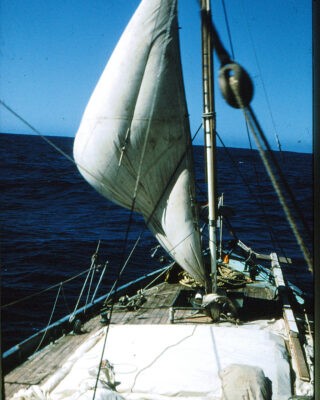
The Smeetons set about making the hull watertight and setting a jury rig
Clearing the chaos
The storm abated the following day, and they were fortunate that the sturdy teak hull had not sprung a leak. Slowly, the chaos was cleared – amongst the casualties was the stuffed blue bear they carried as a lucky mascot. Headless, he was thrown overboard, judged to have been no help at all.
They built a temporary mast to pull up a small sail, along with a steering oar. Mostly Tzu Hang sailed herself though, with just changes to the sails to keep her going in a straight line. Enough navigational equipment had survived for them to take position fixes, along with a pilot book for South America and 23 unbroken eggs. It took almost a week for the cat to dry off and recover her good humour.
It was not their only encounter with a rogue wave, and Miles Smeeton put himself at odds with the received wisdom of the sailing fraternity of the time when he concluded that there are some waves that a yacht, ‘will be lucky to survive whatever she does.’ These days, such an opinion is mainstream, but prior to Tzu Hang’s experiences, yachtsmen had believed that a well-sailed, well-founded yacht was safe in any deep-water sea. They were wrong. There are rogue waves out there that don’t seem to belong to any ocean or storm, monstrous waves created by some unknown collusion of the elements. ‘With more experience I do not think these waves are so rare,’ commented Smeeton.
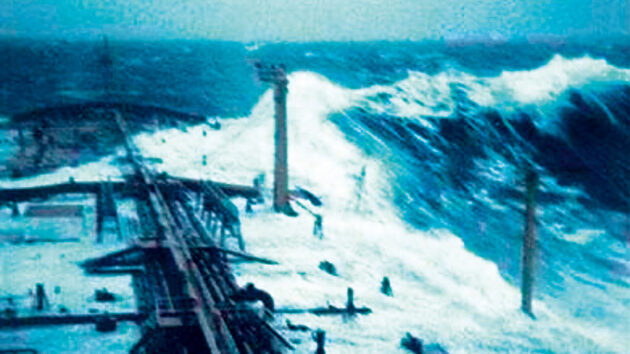
This rare photo of a rogue wave was taken by first mate Philippe Lijour aboard the supertanker Esso Languedoc, during a storm off Durban in South Africa in 1980. The mast seen starboard in the photo stands 25 metres above mean sea level. The wave approached the ship from behind before breaking over the deck, but in this case caused only minor damage. The mean wave height at the time was between 5-10 metres. Photo: ESA Standard Licence
There be monsters
The Smeetons’ experience can teach us something important about risk – that we can’t know all of the risks we face. When Miles Smeeton published his book, it joined a building folklore about rogue waves. There are many accounts of huge waves dotted throughout the logbooks and tales of seafarers, one of the most famous being Ernest Shackleton’s account in his book about the voyage from Antarctica to South Georgia, The Voyage of the James Caird.
Then there was the Esso Languedoc, caught in a storm off South Africa in 1980. Philippe Lijour, the first mate aboard the oil tanker, was fortunate enough to have a camera handy when the breaking crest of a wave roared past, just short of the top of the ship’s cranes some 25m above the waterline.
At the time, Lijour reckoned the average wave height to be somewhere between five to 10m from trough to crest. So where did this monster come from? Despite the stories, oceanographers refused to believe these freak waves existed in any number. Conventional mathematics states that waves should vary in a pattern around the average, called the significant wave height, defined as the mean of the largest third of the waves recorded.
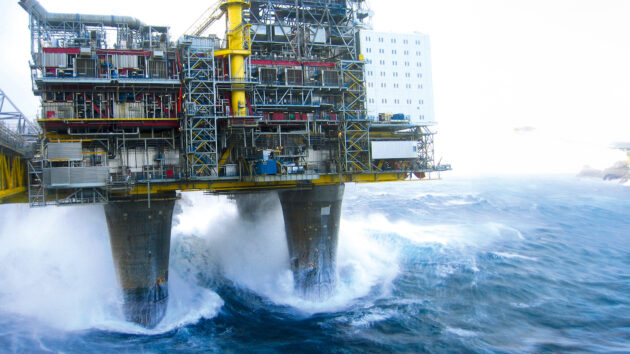
Heaving seas beneath the decks of the Oseberg A oil rig in the North Sea
The new year wave
According to this analysis, in a storm sea of 12m, a 15m wave will pop up about once every 25 years. A rogue wave – one defined as twice that of the significant wave height – is possible, but you’ll have to wait about 10,000 years to see one.
It seemed to the seafaring community that they were appearing a lot more often than that, but the scientists were about as interested in the anecdotal evidence as they were in reports of the Loch Ness Monster. And that’s how things stood until New Year’s Day 1995.
The winds howling down the North Sea had peaked at hurricane force that afternoon, when what’s become known as the New Year Wave roared under the Draupner oil platform just after 1500. It was measured by a laser wave sensor at a maximum height of 25.6m – twice the size of the average wave at the time. Suddenly, the accounts of walls of water approaching at twice the height of the waves around them were no longer so unbelievable.
The immense extra force of these waves did not have good implications for the safety of ships and oil platforms – their design had always been based on the assumptions of conventional mathematics. But the maths was flawed, so the science community went back to its other mainstay: observation.
The EU started up a project called MaxWave, which used images from satellite radar to measure wave height across broad swathes of ocean. In three weeks of images taken from a period and place when two cruise ships had almost been sunk by rogues, it measured ten waves bigger than 25m, which kicked the conventional mathematical models into touch.
Rogue science
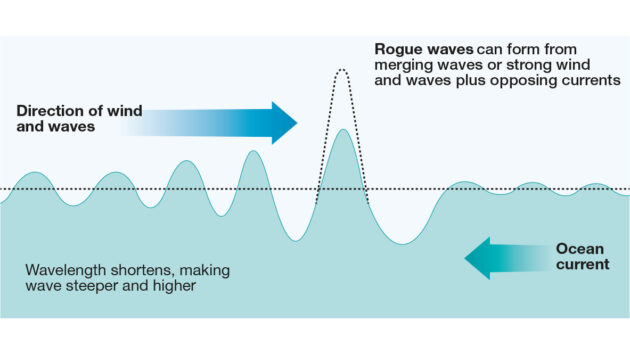
We still don’t have a definitive explanation for why these waves occur. The most likely ones use the same equations as quantum mechanics. It seems that the energy from several separate waves is being focused into just one or two of these monsters, but until theories are better refined, our best chance of predicting these waves is radar tracking.
The research from the MaxWave and subsequent programmes have essentially upended hundreds of years of design assumptions about the conditions that ships will meet at sea. It turns out that a newly built and apparently well-founded, well-prepared ship and crew leaving harbour in 1980 to cross the North Atlantic were in fact not prepared to face the conditions they might encounter.
There is a lesson here for our knowledge of risk – it’s difficult to properly prepare for and mitigate all the risks when we can’t be sure what they are. The Smeetons’ experience was completely unforeseeable at the time.
A rogue wave – of a size that was believed by the planet’s top mathematicians to be physically impossible – appeared from nowhere and rolled their boat, destroyed their home and threatened their lives. Nothing in their experience had given them any expectation of this event, so how could they have been aware of this risk, never mind prepared for it?
The great unknown
Rogue waves happen in many different fields and areas of our lives. Donald Rumsfeld famously labelled them the unknown unknowns in his reply to a journalist’s question in 2002. ‘There are known knowns; there are things we know we know. We also know there are known unknowns; that is to say we know there are some things we do not know.
But there are also unknown unknowns – the ones we don’t know we don’t know…’ because we haven’t thought about them. The question we must consider is whether – and how – we can prepare for the unknown unknowns. Is it even possible to prepare for the implausible, improbable or ‘impossible’?
We can’t plan in any detail for an unknown, unexpected and unpredictable event – but we can plan flexibly, we can be open to the potential for the unexpected and we can prepare for it in some ways. The Smeetons and Guzzwell had a hammer, nails and wood on board Tzu Hang and that was enough to get them through an experience they had no expectation, or comprehension, of when they left Melbourne.
This is what we’re looking for when we’re preparing for something with full appreciation of all the risks, known and unknown – the wood, hammer and nails, the tools that will get us through the unexpected crisis. Remember the Tzu Hang, next time you pack for an adventure.
Enjoyed reading this?
A subscription to Yachting Monthly magazine costs around 40% less than the cover price, so you can save money compared to buying single issues.
Print and digital editions are available through Magazines Direct – where you can also find the latest deals.
YM is packed with information to help you get the most from your time on the water.
-
-
- Take your seamanship to the next level with tips, advice and skills from our experts
- Impartial in-depth reviews of the latest yachts and equipment
- Cruising guides to help you reach those dream destinations
-
Follow us on Facebook, Twitter and Instagram.
Note: We may earn a commission when you buy through links on our site, at no extra cost to you. This doesn’t affect our editorial independence.