



Being too hot or too cold at sea can quickly turn a sailing trip into a disaster. Here are some ways you can stay safe on the water in different temperatures
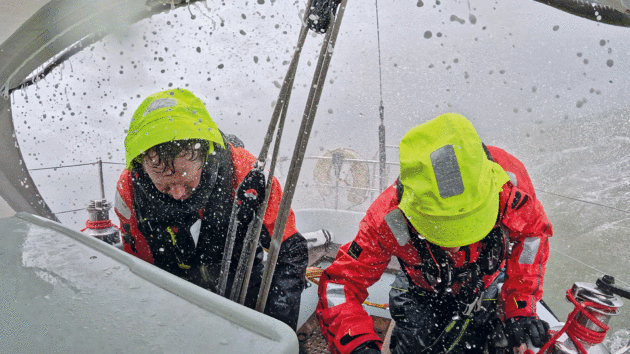
Extremes of temperature whilst sailing affect not only our comfort but may have a significant effect on health and wellbeing. The scourge of hypothermia or, on the opposite end of the spectrum, heat stroke can creep in slowly causing a debilitating or life-threatening situation.
We will look at the causes and treatment for each, but focusing on prevention is always much better than dealing with a casualty halfway across the North Atlantic or in intense heat off that beautiful Mediterranean island.
A little basic physiology will help understanding of what happens, why it is important to maintain homeostasis – keeping your body in equilibrium.
In essence, vital chemical reactions take place within the body and these need a relatively narrow range of temperature. For the human body, this is between 36°C – 37.3°C to be precise. Any movement outside this range, especially if it is significant, can spell problems.
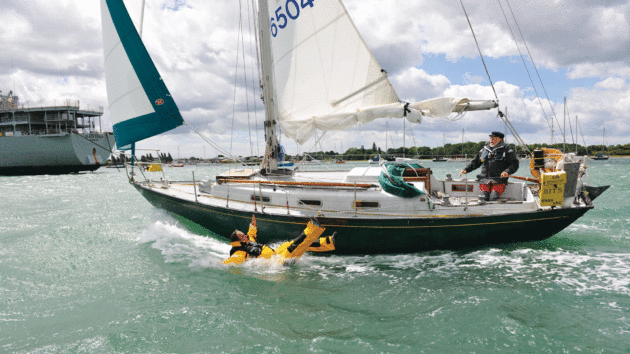
Falling in, at any time of the year, can be enough to trigger cold water shock. Photo: Lester McCarthy
Hypothermia
Too cold
Let’s focus on hypothermia (being too cold) which occurs when body temperature falls below 35°C. Imagine you are having a pleasant beam reach across the English Channel on a cool autumn day.
One of your crew members, Bunty, has her waterproofs on, but hasn’t put enough layers on beneath them. It is great sailing on a broad reach, but she has been seated for hours in a chilling north-easterly wind, and she got pretty wet from a recent downpour. She doesn’t want to get seasick, so has avoided going below.
Her body is slowly cooling and she seems to be becoming more withdrawn. You would soon expect to see unusual tiredness and confusion, shivering, cold pale skin, and slow breathing. What we are seeing is adaptation to body cooling. Her body is trying to conserve heat by moving blood away from the skin and peripheries, hence the paleness and shivering to generate heat.
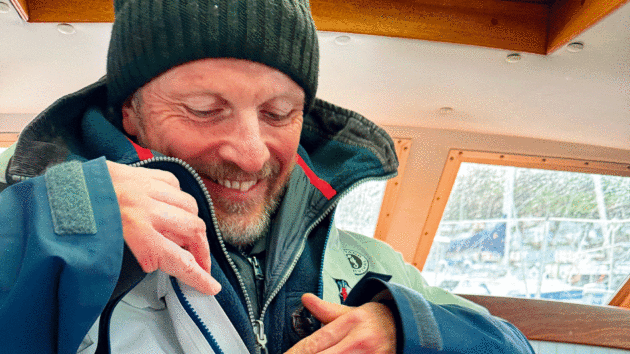
Getting back on board and layering up in dry clothes is a first course of action.
Actions
She needs to be moved, even if she is worried about going below. Ask her, or help her, to remove wet cold clothes and put some dry ones on, give her a warm non-alcoholic drink, and monitor her. Special vigilance is required of old or very young sailors who are especially sensitive to hypothermia, have less ability to deal with it and tend not to complain.
If you happen have a pet St Bernard dog on board with a rum casket around its neck, please refrain from issuing alcohol to someone with hypothermia. Alcohol is a peripheral vasodilator, so allows warm blood to move away from the core and suppresses shivering, while giving the sensation of warmth.
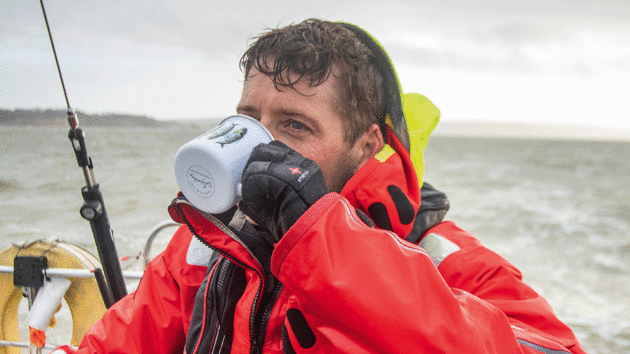
A hot drink (not alcohol) will help, but shelter and dry clothes are better
Cold water shock
Let’s look at another scenario where the ambient temperature is much colder. Fred is a keen racer and undertaking a winter series off Falmouth on a cold January day.
He prefers to be nimble around the boat, choosing to wear a lifejacket only and not a tether, as he finds it annoying. Unfortunately, on rounding the gybe mark he loses his footing, slips between the guardrails and falls into 6°C sea water. Not only is this a man overboard scenario but we now have someone suffering the immediate effects of cold water shock and will experience rapid cooling.
The effect of submersion in cold water causes two initial responses evoked by rapid cooling of the skin. The casualty will experience an involuntary gasp response, followed by rapid, uncontrollable breathing, sometimes breathing 10 times faster than the normal range. It can result in the inhalation of water where drowning can occur.
The surface blood vessels constrict suddenly, increasing resistance to the skin and forcing blood to the core. This can cause a dramatic rise in blood pressure, and the heart may strain to adapt to this sudden increase in load, and the heart failing and even stopping is a possible outcome.
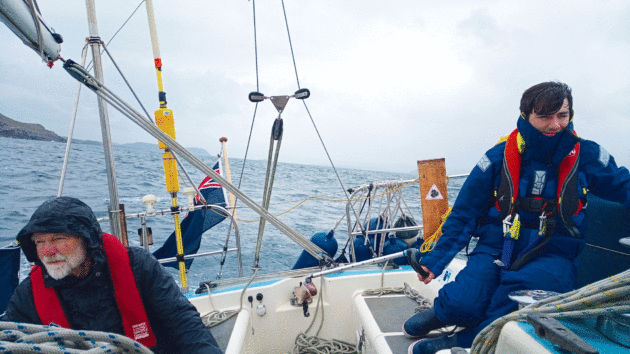
Caring for your crew is critical. Photo: Nick Leather
Actions
The effect on breathing, heart and vessels generally lasts less than a minute and Fred should therefore not swim straight away, but try and maintain calm, and just float. The RNLI call it ‘Float to Live’ and a number of lives have been documented as having been saved by this message already.
One area Fred got right was he wore a lifejacket, helping him to keep his mouth and nose above the water and supporting him when swim failure can ensue after 30 minutes.
Fortunately, the skipper gets Fred on board within five minutes. He should ideally be lifted onto the boat horizontally (hydrostatic squeeze supports blood pressure, and blood pressure can suddenly drop when this is removed), taken below decks and any wet clothes should be removed and replaced with dry ones.
The casualty should then be put into a sleeping bag. It may be worth having another crew member lie close to share their body heat with Fred. A warm beverage may also help, if he is conscious. In all cases, a May Day distress call needs to be put out and he may need a hospital transfer, even if just for a check-up.
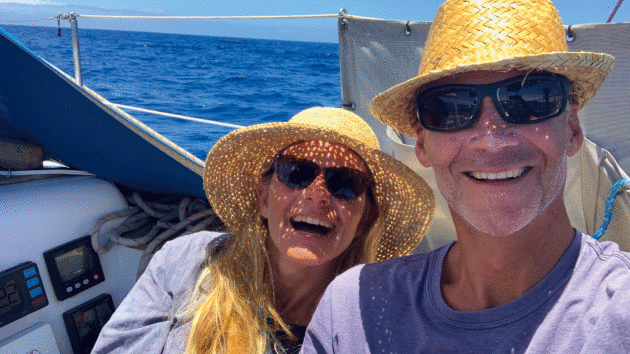
Sunhats, suncream, long sleeves, shade and hydration are key mitigations
Hyperthermia
Too hot
A completely contrasting situation that can affect sailors is being too hot. At its simplest, it can affect concentration, performance during competitive racing and increase chance of sea sickness. It can go hand in hand with dehydration which exacerbates the problem further.
Symptoms of heat stroke range from headache, dizziness, abdominal cramps and in later stages, high temperature, fast heart rate and weakness. These ailments could signal heat exhaustion.
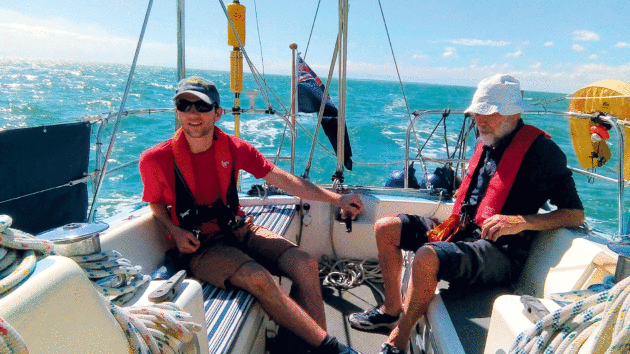
Within the scope of the British summer, there is chance to get very hot… Photo: Nick Leather
Actions
In the early stages, and to avoid developing symptoms, move the sailor into the shade and ensure they drink plenty of isotonic fluids or rehydration drinks such as Dioralyte. Sunhats, staying in a breeze or even going for a dip in the sea will all help.
It goes without saying that avoiding intense exercise and wearing light clothing that covers the skin from the sun will help too. In more extreme cases you will need to move the casualty to a cool area and spray them with tepid water to cool them. The body can then compensate for heat loss through sweating and allowing surface skin vessels to dilate to help heat escape.
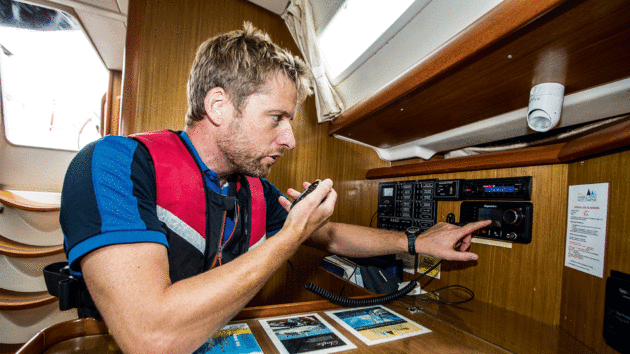
Heat exhaustion can be life threatening and may justify a Mayday call
Article continues below…

How do you recover a man overboard?
Paul and Emma own a 10m yacht and are day sailing with Paul’s parents on a fine day in early…

Catamaran sailing skills: recover a multihull man overboard
Finding yourself in a man overboard (MOB) situation probably ranks near the top of every sailor’s list of biggest fears…
Heat stroke
If heat is excessive and is experienced for too long, those important chemical reactions can become compromised and this is exactly what happens during heat stroke, when the body temperature rises above 40°C. This is a medical emergency and a May Day or 999 call needs to be made.
The casualty may be unresponsive and experiencing fits, confusion and a rapid heart rate and breathing. If they are unresponsive check their airway, breathing and circulation, and place the casualty in the recovery position.
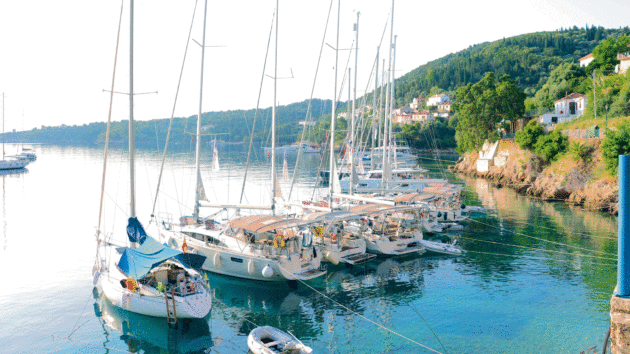
Heat exhaustion can catch you unawares after a day on the water under a hot sun, particularly if you’ve not been drinking enough water. Photo: Heather Prentice
Planning ahead and taking necessary precautions for the environment you are sailing in will reduce the risks and help with a safer passage.
Enjoyed reading this?
A subscription to Yachting Monthly magazine costs around 40% less than the cover price, so you can save money compared to buying single issues.
Print and digital editions are available through Magazines Direct – where you can also find the latest deals.
YM is packed with information to help you get the most from your time on the water.
-
-
- Take your seamanship to the next level with tips, advice and skills from our experts
- Impartial in-depth reviews of the latest yachts and equipment
- Cruising guides to help you reach those dream destinations
-
Follow us on Facebook, Twitter and Instagram.
Note: We may earn a commission when you buy through links on our site, at no extra cost to you. This doesn’t affect our editorial independence.