



Having thorough, easy-to-use checklists for all situations and emergency processes on board can dramatically reduce failures and improve safety for all on board, says Tom Sanders
Would it sound far-fetched if I told you a simple piece of paper could save your boat from expensive breakages and repair, or even peril, and in extremis, save the lives of you and your crew?
Yet when the World Health Organisation introduced a similar unassuming piece of paper into surgical operating rooms around the world, it slashed major complications by a third and cut surgical deaths by over 40%. No new tech, no miracle drug, just a simple list… a checklist. They proved so effective that in 2009 they became mandatory across the NHS and are now used worldwide.
You may well have thought of aviation when you heard checklists, and you’d be correct. It was indeed the Aviation industry that pioneered checklists. Back in 1935, during a demonstration flight of the Boeing model 299, a cutting edge bomber that would later become the B-17 Flying Fortress, the aircraft crashed shortly after takeoff.
The experienced test pilots simply forgot to release a flight control lock; something so basic, but easily overlooked in a complex cockpit.
Rather than give up on the design, they came up with a radically simple solution, a written checklist. Not because the pilots were incompetent, but because we are human and in situations of stress or complexity even the most basic procedures or steps can easily be missed.
You don’t need to be flying an aircraft to reap the benefits of checklists. When the human body is under stress, whether it’s heavy weather, engine failure, a person overboard or just sheer exhaustion, our ability to think clearly and recall even basic steps can go overboard too. Our working memory is limited, and stress reduces this capacity, especially when time is short.
This leads to rushed or incorrect decisions, or in some cases an inability to make any decision at all. That’s why checklists are used worldwide across multiple industries and continue to save lives each day.
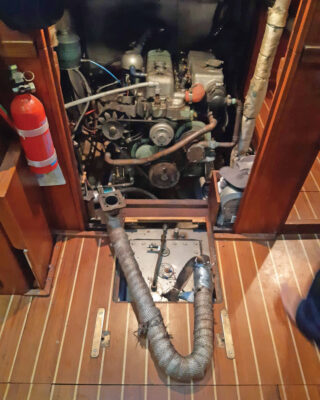
The cast iron wet exhaust pipe was removed from the engine block after the rupture. Photo: Tom Sanders
In the hot seat
Imagine you’re at the helm in confined waters, the visibility is poor and your brain is working overtime fixing your position and monitoring nearby vessels. Suddenly you have an engine failure, panic starts to set in, you may even reach cognitive overload. Thankfully one of the crew calmly hands you the engine failure checklist; you confidently, systematically and calmly call out and each step.
‘Prepare the anchor, check the engine compartment, create as much sea-room as possible from hazards’… This checklist turned a potentially chaotic situation into a controlled one where crew members knew exactly what needed to be done.
Or the classic one – you’ve packed the boat away, hopped in the dinghy and rowed to shore on the last of the tide, deflated and packed the dinghy into the car. Only then do you realise you’ve left your wallet on the chart table, or you can’t remember if you turned the gas off or not. The effort to get back out to the boat isn’t a fun prospect to sort these forgotten items.
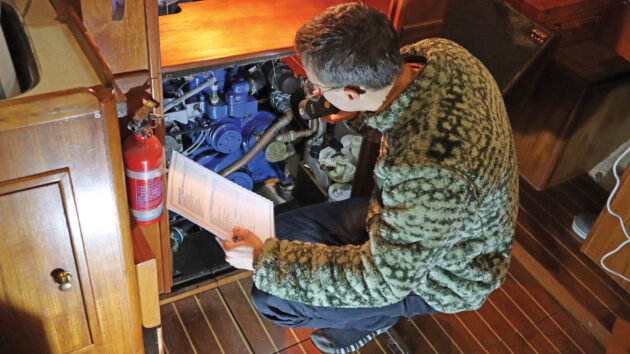
Tom’s new checklists immediately came into effect as he set about sourcing the leak. Photo: Tom Sanders
Checklists in action
You’re probably already well versed with checklists, perhaps in the form of a shopping list for long trips offshore, rigging checks before a passage, fuel and water inventories, or spare parts for the engine. The good news is you can make similar checklists for both routine procedures and emergencies yourself, with nothing other than a pen and a simple piece of paper.
It was probably my Merchant Navy background that pushed me to develop a set of routine and emergency checklists for my own boat, and I’m very glad it did. Within the first 200 miles under my ownership the boat suffered a failure of the engine’s wet exhaust pipe, initially presenting as what appeared to be a full-scale flooding situation.
In that moment, I was grateful for the time I’d spent with the previous owner, methodically working through the boat’s systems, conversations that became the foundation for developing the emergency checklists. Working through that flooding checklist calmly allowed me to stabilise the situation and ensure nothing was missed.
The real challenge came later. Unable to enter a marina without engine power, we went safely to anchor. With the engine inoperable and the battery bank rapidly depleting, we were suddenly racing the clock.
The repair itself was straightforward enough but only if we could get the required parts back to the boat before the batteries fell below the threshold needed to restart the engine, a task made harder by our isolated anchorage. At that point, it felt less like sailing and more like a scenario aboard Apollo 11.
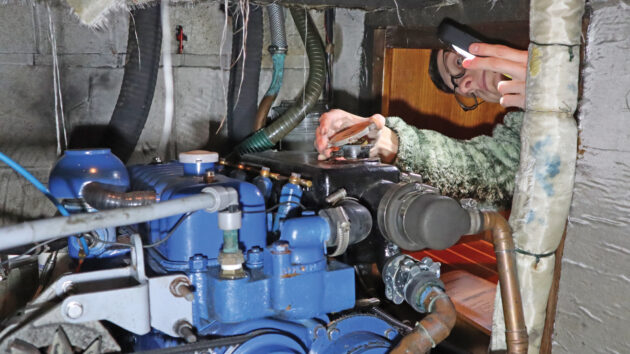
Going through a set of checks on the engine to find the fault. Photo: Tom Sanders
Making your own checklists
You might think buying pre-made checklists or copying a fellow sailor’s list is the way to go, but not all checklists are created equal. Copying from existing checklists is of course a great place to start, but the best checklists are tailored to you, your vessel, its layout, equipment and crew.
The best place to start is to run through the scenario on your own boat. Stand in the cockpit, go below deck, picture the situation unfolding in real time. What would you do if the engine cut out or you lost all power onboard? What if fog rolled in with zero visibility?
Walk yourself through it step by step. Think through every possible outcome, and jot down every action you’d need to take. What tools do you need? Who does what? Where is everything stored?
From there, you can trim and refine it into a clear, efficient list. Start with raw ideas, then sharpen it down into a set of practical, repeatable steps. And remember, thinking through the theory in the marina is one thing, reality at sea is something else entirely.
Build your checklist from the real world and your experiences.
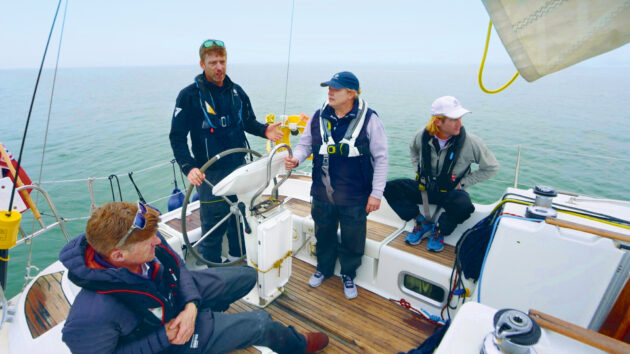
Develop a list that makes it easy to brief crew, that you can rehearse with them, and that they can use on their own. Photo: Richard Langdon
Making it automatic
Once you’ve created your checklists, don’t just file them away and forget them. They should be living documents, reviewed, updated, and most importantly, practised. The goal? Muscle memory. So that when things go sideways, your response is automatic. The checklist is then an aid to ensure you haven’t missed anything rather than a step-by-step procedure.
Make notes on the checklists during the season, and if there are significant changes, update them over the quieter winter months ahead of next year.
If you have new crew members onboard don’t assume they’ll know what to do in an emergency; show them the checklists and walk through a few scenarios together – fire, man overboard, flooding, and abandon ship for example.
In an emergency, confusion is just as dangerous as the event itself.
Having a good checklist isn’t a sign of inexperience; it’s a sign of preparedness and respect for the sea and the crew you sail with.
A good set of checklists is the basis of a well-maintained, properly equipped boat, a well-trained crew able to carry out routine manoeuvres and activities without getting lazy and missing important steps, and a prepared skipper for handling emergencies calmly and methodically.
Of course, you can’t prepare for every eventuality, but the chances are that in a complex situation, at least some of what is happening will be covered by your checklists, taking some of the mental weight for you, and allowing you to take a step off the back foot.
The checklists worth creating for your boat
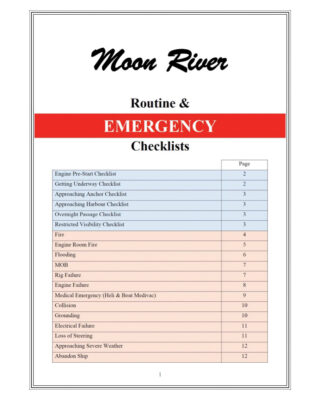
One of Tom’s checklists
Engine Pre-Start Checklist
- Oil level
- Coolant level
- Fuel levels
- Operation of fuel lift pump to service tank
- Fuel cutoff valves to RUN
- Water strainer
- Engine intake seacock OPEN
- Leaks around the engine
- Full movement of engine throttle cable
- Full movement of engine stop cable
- Starter battery voltage
- Battery isolation switch to ON
- Battery master switch check ON
Starting engine checklist
- Operate engine blower for 1 minute
- Switch off unnecessary electronics
- Check engine stop cable is fully inserted in RUN position
- Operate glow switch (if appropriate)
- Start engine – revs as appropriate
- Confirm oil pressure rises
- Exhaust water discharge
- Alternator charging batteries
- Unusual noises or smoke
- Engine compartment
- Forward and astern power before letting go

When you prepare to anchor, is the windlass breaker made, are all lines clear of the water, and have you worked out the depths correctly? Photo: Hamish Southby Tailyour
Anchoring checklist
- Brief crew
- Planned: suitable depth, seabed type, and swinging circle
- Check for any anchoring restrictions, pipelines etc
- Calculate required chain: calm: 3 x depth of water; moderate conditions: 5 x depth of water; strong winds, rough weather, or overnight: 7 x depth of water
- Prepare anchor, rode and windlass
- Crew in lifejackets on foredeck
- Drop anchor and mark on GPS
- Revs astern and monitor position to check holding (transits, GPS)
- Secure anchor and log position and time
- Raise anchor ball
- Turn on anchor light
- Anchor alarm set appropriately
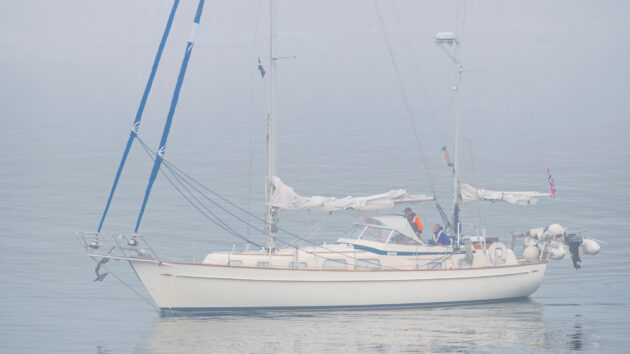
Lookouts, lifejackets, lights… what else would you need for entering fog? Photo: Universal Images Group via Getty Images
Restricted visibility checklist
- Alert crew, extra lookout
- Switch on navigation lights & RADAR
- Start sound signals
- Confirm navigational situation and proximity of traffic
- Logbook entry and ongoing observations
- Ensure crew wearing lifejackets and harnesses on deck
Emergency checklists / Fire checklist
- Alert crew members
- Close gas shutoff valves (galley) from cockpit locker
- Isolate affected electrics (switch off at breaker if possible)
- Use extinguisher / fire blanket if safe to do so
- Close hatches / doors/ ventilation
If unable to extinguish fire:
- Send MAYDAY (VHF 16, DSC, EPIRB)
- Prepare to abandon vessel (raft leeward side, grab bag, lifejackets)
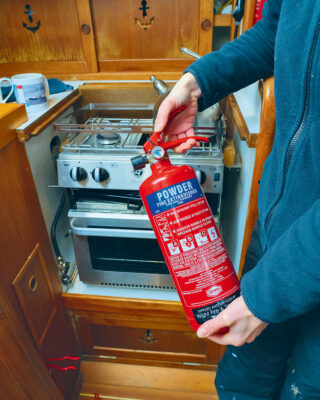
Under pressure, would you remember what to do for the different types of fire on board? Photo: Miranda Delmar-Morgan
If fire is extinguished successfully:
- Assess navigational situation/hazards
- Proceed to nearest safe-haven
- Inform/update coastguard of situation and intentions.
- Treat crew for injuries/smoke inhalation
- Ventilate cabin
- Monitor for re-ignition (hot spots, smouldering wires, fuel sources)
- Break up remaining embers and continue cooling
- Determine cause of fire
- Log incident (time, location)
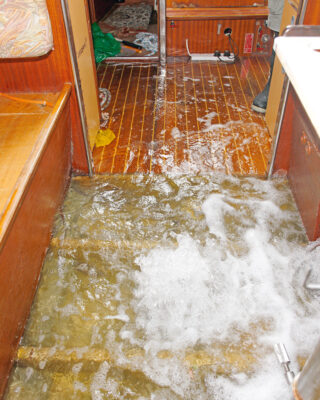
Being methodical will increase your chances of finding and stopping the source of a flood. Photo: Graham Snook/Yachting Monthly
Flooding checklist
- Alert crew members
- Assign roles (bailing, investigating, navigating)
- Activate manual and electric bilge pumps (confirm successful activation)
- Locate source of flooding:
- Check bilges
- Check through-hull fittings, seacocks, shaft seals, transducers, a node through bolts
- Check water tank and connections
- Check lockers
- Check engine compartment
- Check steering gear compartment
- Close seacocks as required
- Use wooden bungs, rags, or sealant to plug leak
- Consider heeling vessel to stop/reduce ingress
- Mayday or Pan-Pan as required
- Seek assistance from nearby vessels
- Consider turning off electrics as required
- Proceed to nearest safe haven or shallow water
- Monitor battery levels
- Monitor bilge water level constantly
- If flooding continues despite all efforts, issue ‘Mayday’ and prepare to abandon vessel. (See abandon ship checklist)
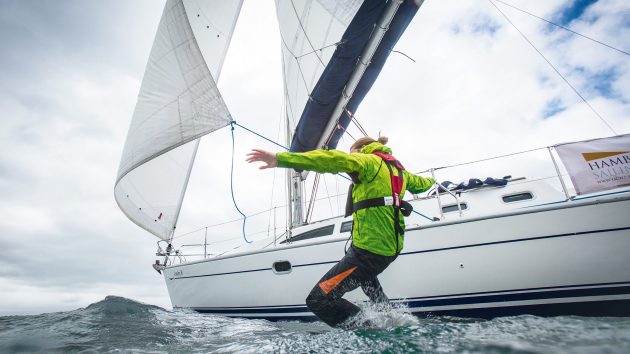
MOB Checklist
- Alert crew members
- Maintain visual contact
- Mark position on electronic plotter
- Deploy safety gear (Lifebuoy/ Jonbuoy/ MOB Light)
- Start engine
- Proceed to MOB
- Prepare to approach safely (slow down/ reduce sail)
If unable to Locate MOB:
- Send MAYDAY (VHF 16, DSC)
- Conduct expanding square search pattern or sweep
- Consider sending crew aloft for better view
After recovering MOB
- Keep MOB horizontal and treat for injuries/hypothermia
- Remove wet clothing and keep warm
- Proceed to nearest safe haven
- Inform coastguard of situation and intentions – ask for Medevac if appropriate.
- Log incident (time, location)
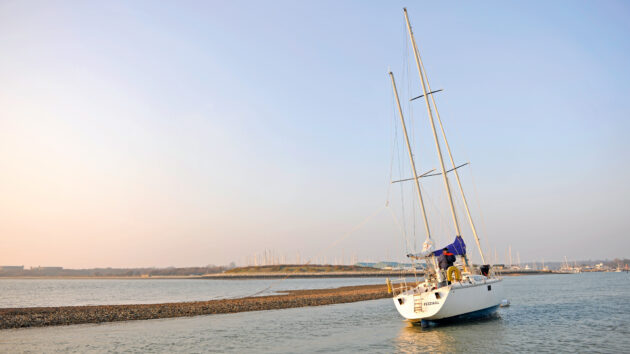
Going aground can be highly stressful, so pre-plan how you should react. Photo: Lester McCarthy/YM
Grounding Checklist
- Alert crew members
- Ensure no one fell overboard, treat injuries
- Stop engine/ lower sails
- Prepare anchor to prevent vessel from being driven further aground
- Assess for damage
- Check for flooding and activate bilge pumps if needed
- Check rudder and steering gear for damage
- Establish position, depth, seabed type, tide and weather
- Determine direction of deeper water
- If safe, attempt to refloat: engine astern, back jib, kedging or heeling techniques
- Send Pan-Pan or Mayday as appropriate
- If unable to refloat, prepare for external assistance or rising tide
- Secure items above and below deck
- Record and log incident
Please note: These are just a few sample checklists are specific to my vessel and personal to me. They may be incomplete and every skipper needs to develop their own, following best practice safety advice as appropriate for your vessel
Enjoyed reading this?
A subscription to Yachting Monthly magazine costs around 40% less than the cover price, so you can save money compared to buying single issues.
Print and digital editions are available through Magazines Direct – where you can also find the latest deals.
YM is packed with information to help you get the most from your time on the water.
-
-
- Take your seamanship to the next level with tips, advice and skills from our experts
- Impartial in-depth reviews of the latest yachts and equipment
- Cruising guides to help you reach those dream destinations
-
Follow us on Facebook, Twitter and Instagram.
Note: We may earn a commission when you buy through links on our site, at no extra cost to you. This doesn’t affect our editorial independence.