



Society and sailing have both changed dramatically in 60 years. We explore how new tech and yacht design influence our approach to cruising
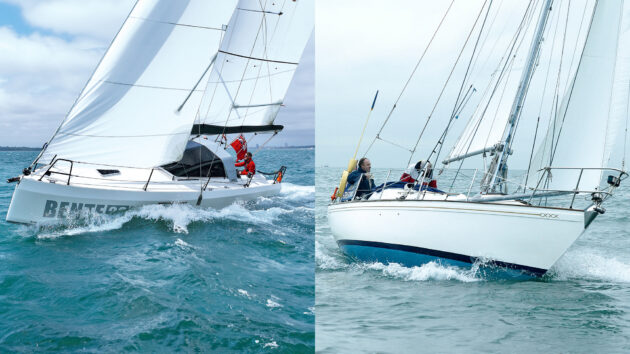
Bob Dylan’s ageless song was released at about the same time as I started sailing yachts. Its aim was to influence people’s views about society, so it seems to be an appropriate title for an article about how we have been influenced by developments in yacht design and equipment over the last or so. The views, however, are entirely mine!
I would have sailed anywhere, in any conditions, with Patrick O’Brian’s Jack Aubrey in the early 1800s. He was the consummate mathematician and seaman, but his only knowledge of electricity was thunder storms. Electronics would have totally bewildered him, and he would have refused to believe that ships of the future could be made out of iron or steel, let alone plastic and glass fibres. If he were around today, we would have a very baffled man on our hands, but I think he would envy our ability to keep going when the wind fails.
As for the capability to communicate with the Admiralty when on the far side of the world, he would doubtless resent being told in real time where to go and what to do next. That was not his style at all. However, this is not a rant about ‘the good old days’ and how everything was better when Nelson was a lad. It wasn’t.
Nevertheless, much has changed: GPS has largely replaced sextants and three-point visual fixes. Electronic charts are rapidly displacing paper charts and pencils. To ‘hand, reef and steer,’ the traditional qualification for seamen, can now often be achieved by pressing buttons and programming the autopilot. By comparing what was the norm in the 1960s with what we take for granted in the 2020s, we can speculate how our approach to sailing has been affected.
It depends, of course, on why you go sailing: racing or cruising; for relaxation or for a challenge; to develop new skills or to put old ones to good use? As most YM readers, like me, use their boats for cruising, that is what I will focus on. At the end of most sections, I have attempted to assess how things, and we, have changed. These assessments are: Generally positive, Generally negative, or Overall assessment.
As some of the most significant developments involve electronic devices, I will resist the temptation to bang on about how vulnerable these are in a marine environment. Any electronic device depends on a reliable power source. Although ones made specifically for marine use will be robust and (probably) waterproof, many tablets, laptops and phones will be susceptible to damage or moisture. If necessary, we need to be able to revert ‘back to basics’ to keep our boats and crew safe.
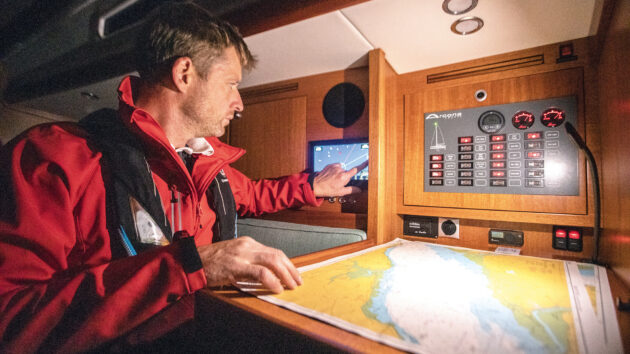
Many sailors still have paper charts for planning and as a backup to their electronics, or running them in parallel
Navigation
Position and Passage Planning
The old saying, ‘You don’t need to know where you are, you just need to know where are not’ still holds true. We need to be sure that we are in safe water and not running into danger, but our exact position is rarely necessary. The advent of radar, followed by GPS and chart plotters, means that it is now possible to quickly determine our precise position at any time of the day or night.
Coastal navigation used to involve taking frequent three-point fixes with a hand-held compass of doubtful accuracy. This was followed by plotting the bearings on the chart and working up a DR/EP (Dead Reckoning/Estimated Position) until the time of the next planned fix. This left little time (when short-handed) for keeping a good lookout or actually enjoying sailing. In pilotage waters, the ability to ‘translate’ the information on the chart to the features and marks you could actually see was essential.
Now, it is perfectly possible, and usually quite safe, to drive a boat symbol around a screen without looking further than the cockpit coaming. As for planning a passage (now a legal requirement when outside sheltered waters), you can put a waypoint at your departure port, and another at your destination. You can then let a passage-planning app or program do the rest.
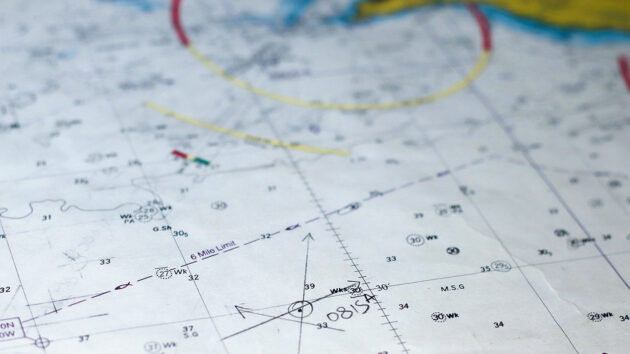
The three-point fix was the staple of paper navigation pre-GPS
It will take into account the tides, tidal streams, the characteristics of your boat, and any wind or weather data you care to input. All you have to do is sit back and follow a dot on a screen. Would you actually do this? No, me neither. However, people do, and some have come to grief as a result.
-
Generally positive: We can save a huge amount of time and effort by getting electronic devices to take the donkey work out of passage planning. Position accuracy is vastly improved. This allows us to navigate in areas which we might have previously avoided.
-
Generally negative: We risk losing both the ability of getting a ‘feel’ for the waters we are navigating, and also the knack of taking all factors into account in order to apply our own knowledge and experience to draw up and execute a safe plan. We also risk eroding sufficient skills to recognise when the electronic plan needs modifying.
-
Overall assessment: Electronic navigation aids must be seen as a welcome addition to our sailing lives, bringing, as they do, the benefits of accuracy and safety.
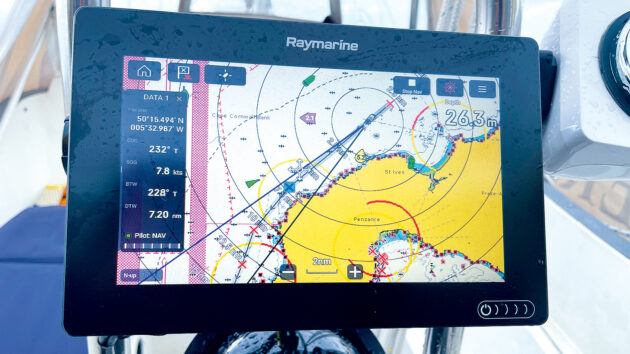
Position finding and navigation has become vastly easier in the age of the chartplotter
Collision avoidance
The Colregs require us to monitor the bearings of other vessels to determine if a risk of collision exists. We can do this by using a hand-held compass, but AIS, radar and electronic displays have all made the job much easier, and possibly more accurate. However, AIS is not mentioned anywhere in the Colregs, and its use for collision avoidance is discouraged.
This is because courses and speeds from AIS are ‘over the ground’ whereas collision avoidance is all about courses and speeds through the water. In most cases, this doesn’t make much difference, and I suspect that most of us use AIS more and more, at least in the early stages of a possible close-quarters situation. Radar in yachts was almost unheard of ago. It later became widely fitted but, despite the accuracy of modern displays, it seems to be taking second place to AIS for collision avoidance.
This is an important issue in poor visibility, and it is folly to assume that everyone transmits on AIS. They don’t.
-
Generally positive: AIS contacts displayed on an electronic chart can provide an overview in busy shipping lanes, and real-time information of courses, speeds and CPAs (Closest Point of Approach) can be seen at a glance.
-
Generally negative: We will inevitably lose the skill of assessing relative bearings of other vessels by eye. Despite the obvious benefits of AIS for collision avoidance, there is a temptation to ignore the traditional methods.
-
Overall assessment: We still need to keep our eye in – the Rules say so!
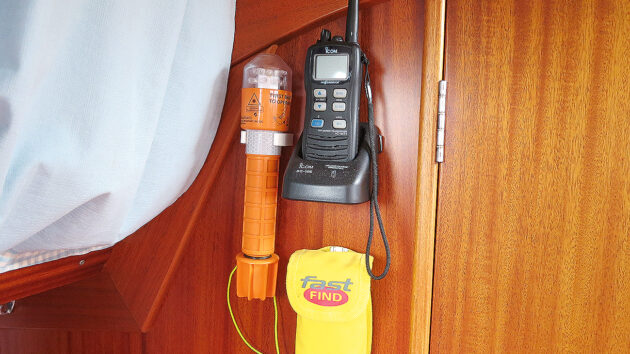
Handheld VHF radio, a PLB or EPIRB and an LED flare enable modern distress signalling
Comms
Safety
Even ago very few vessels were fitted with a VHF radio. It wasn’t until the 1980s that VHF became widespread in private yachts. Now, almost any craft which takes to the water has a radio or mobile phone. This is a huge benefit for safety: we don’t hesitate to call for help or advice when the chips are down, and routine, up-to-date weather forecasts can be obtained in all our usual cruising areas.
With the help of GPS and DSC (Digital Selective Calling) emergency services can be informed of your exact position and predicament without you saying a word. Waving your arms over your head, hoisting flags ‘NC’ or burning a tar barrel on deck are now old hat. Even pyrotechnics are being overtaken by LED ‘flares’.
-
Generally positive: Instant assistance and advice can be obtained so long as you are in VHF range of a shore station. Alternatively, another vessel could relay your messages. This is hugely beneficial when we are out of ‘self-help’ options – many lives have been saved this way.
-
Generally negative: Because it is so easy, there is an increasing tendency to call for help even when the situation doesn’t warrant it. I have overheard a Distress (MAYDAY) call from a yacht becalmed in the upper reaches of Portsmouth Harbour! We are losing the ethos of self-reliance and the will to solve a problem without outside help.
-
Overall assessment: Modern communications easily outstrip all the old methods of calling for help. Safety is enhanced and fewer lives are lost. We do need to remind ourselves of the definitions of Distress and Urgency calling. Sailing is a potential hazardous pastime, so we should be fully prepared to deal with most problems as they arise.
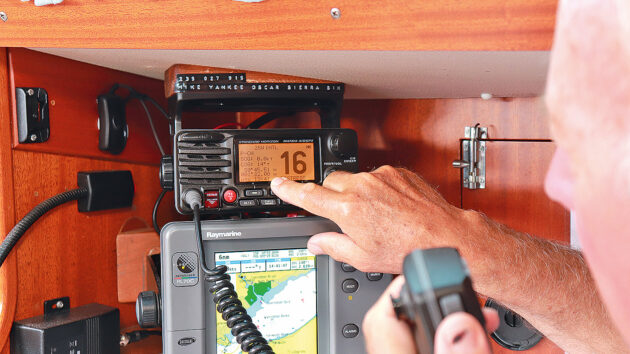
On a busy summer’s day Ch16 is frequently bombarded with unnecessary chatter and radio checks
Radio chat
The ability to call other vessels or shore stations at the press of a button has certainly changed our approach to organising our sailing lives. We can discuss plans with our friends, book a berth in a marina, and negotiate our way out of a potential close-quarters situation. The latter is not officially recommended but is sometimes justifiable. All this is good so long as we abide by the relevant rules and regulations.
-
Generally positive: Gone, thankfully, is a reliance on passing messages by flashing light or signal flags. Used properly, VHF is a quick and convenient method of organising our sailing lives when underway. It does not take much skill to use a VHF radio (but you must have a SRC (Short Range Certificate) to use one), and the social and domestic benefits are enormous.
-
Generally negative: Long conversations on Channel 16 are unacceptable but happen nonetheless. Are we, in this respect, becoming blasé and inconsiderate about the needs of others? Safety can be compromised if the rules and regulations are ignored. The increasing amount of ‘chat’ and other unnecessary transmissions are irritating at best, dangerous at worst.
-
Overall assessment: Significant safety and social benefits if the radio is used sensibly. Mobile phones, including apps like WhatsApp over mobile or satellite signals, also allow for private conversations at sea.

The accuracy and accessibility of forecasts has improved no end
Weather
The Shipping Forecast on the BBC Home Service used to be the only source of weather information when offshore. The forecast sea areas were, and still are, very large, and the forecast itself was consequently very general. However, it was all we had (Navtex didn’t appear until the 1970s), so we paid much more attention to meteorological observations and barometric trends.
Although accurate, timely weather forecasts can now be obtained by listening to MSI broadcasts via VHF or by Navtex, there is a growing trend to make weather-based decisions by referring to one (or more) of the many apps which are now readily available. Fine, but not many weather apps have any human forecaster’s input, and they focus on pinpoint locations, rather than giving you the bigger picture. They display an enormous amount of computer-derived data which, because of the equally vast number of little wind arrows, can imply indisputable accuracy.
-
Generally positive: We now have access to much better weather forecasting, enabling us to make better-informed decisions which, in turn, must enhance safety. Ubiquitous sources of weather forecasts can certainly assist in making weather-related decisions. Where we might have set out assuming the fine weather would continue, a detailed, recent forecast may present a very different picture. Conversely, a favourable forecast might justify sailing even when the current local conditions are less encouraging.
-
Generally negative: We may ignore ‘gut feelings’ about the weather, and the ability to read the signs (barometer, cloud types et al) of impending weather. Have we become somewhat naive in this respect? I think we have. The more sources you consult, the more likely it is that you will be presented with varying forecasts. You can always choose the one which best suits your plans, cross your fingers and hope it holds true.
-
Overall assessment: Forecasting has improved in leaps and bounds, and potentially safety has thus been greatly improved, but we must understand the limitations of computer-generated forecasts.
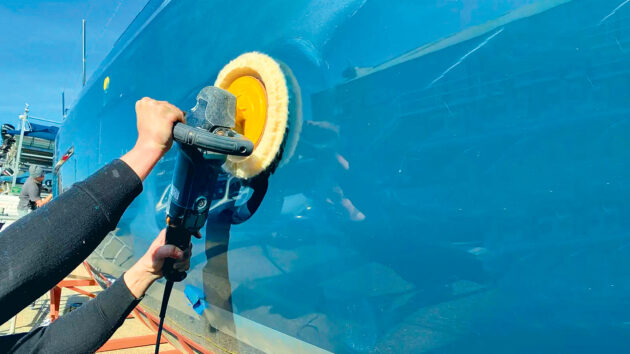
Polish helps protect gelcoat, but in reality it’s largely for cosmetic reasons
Seamanship
Some things never change, and the need for good seamanship is one of them. The sea doesn’t care if you are in a supertanker or a dinghy; you ignore its power at your peril. But good seamanship is more than just handling your boat in rough weather or bringing her neatly alongside in marginal conditions. It is also about timely maintenance of the hull, rigging and sails so that you and your boat are fully prepared to go to sea safely.
Materials
The main changes over the years are in materials. GRP has superseded wood; synthetic ropes have replaced natural fibres; most fittings are now made of stainless steel; and sails are made from synthetic cloth which is long-lasting, spurns mildew and holds shape. Whereas wooden topsides needed rubbing down and repainting regularly, if not every year, GRP does not rot, and cleaning and polishing is mainly for appearances rather than preservation. Below the waterline, osmosis is now rare except in older boats, and we no longer have to worry about the curse of gribble.
-
Generally positive: The amount of work needed to keep your boat in sound condition has reduced dramatically. The hull is almost maintenance-free except for an annual coat of antifouling, and the standing rigging typically has a life of .
-
Generally negative: We tend to ignore routine maintenance because materials have advanced so much over the years. Although rigging failure is rare, a missing split pin can cause the mast to fall down just as easily. There is an increased risk of complacency in this respect, and of a failure to spot problems before they become a safety issue.
-
Overall assessment: A ‘seaman’s eye’ is as important as ever when it comes to maintenance.
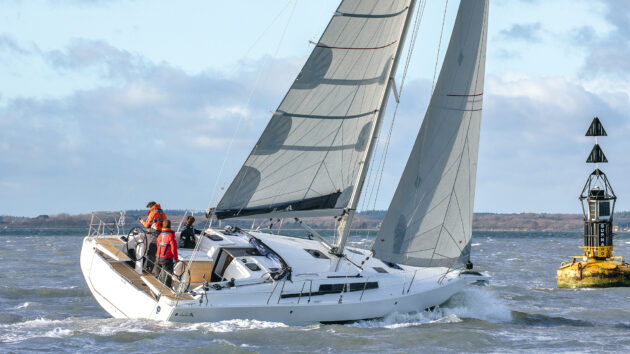
Modern laminate sails are lighter, more robust, hold their shape better and aren’t prone to mildew
Boat handling
Powerful engines, bow thrusters and hull design have all made close-quarters manoeuvring much easier. Unlike traditional boats with feeble engines and long keels, steering astern with a fin keel is a doddle. A thruster can enable you to turn the boat in her own length or control the bow when in tight spaces.
-
Generally positive: Boat handling is generally easier and therefore safer and less damaging.
-
Generally negative: Some skippers seem to use their bow thrusters just because they have them. Not only is the noise disturbing for the rest of us, but the skill (and fun) of boat handling is being lost. This is not good for those occasions when the thruster does not work or becomes blocked.
-
Overall assessment: An experienced hand on the tiller or wheel is still vital when it comes to boat handling, and extra power isn’t always the answer.

Powerful bow thrusters make manoeuvring easy
Propulsion
By the 1960s most yachts had engines, but they were usually small and slow, and designed mainly for just getting in and out of rivers and harbours. Small fuel tanks meant limited range, so it was not normally practicable to use them for passage making. If the wind died, you waited for it to fill in again, possibly lying to a kedge anchor in the meantime. Almost all engines used petrol, so the risk of fire or explosion was very real, particularly as most people smoked in those days!
Diesel engines and larger fuel tanks allow us to motor whenever our planned arrival time is in jeopardy because of light winds. Motoring for to cross the Channel in a flat calm is far from unusual. Modern engines are much more reliable, and diesel fuel has a low flashpoint, making it infinitely safer than petrol.
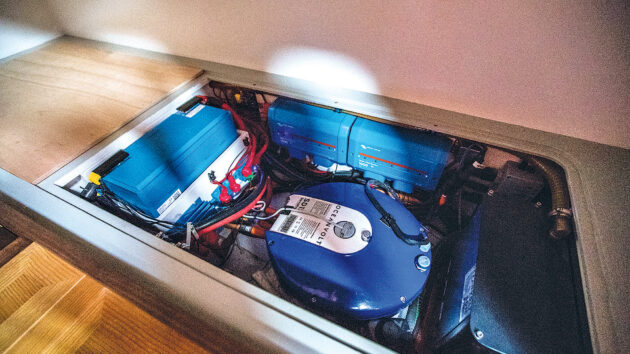
Electric motors are becoming more common, though largely still lack range without a generator backup
Inevitably, due to the busy lives we lead, we are less willing to accept delays, and we make plans based on a particular passage speed which we know we can maintain almost regardless of wind conditions. Electric propulsion is now emerging, but so far it offers limited range. This can be supplemented with a generator, albeit at the cost of having two systems on board. Electric is not yet practicable for most smaller cruising yachts. If this can be overcome, the ecological advantages would be considerable.
-
Generally positive: There is much less uncertainty in achieving passage plans, and a reliable engine allows us to explore more places. Most yachts now berth in safe and secure marinas. Without engines, this option would be quite impracticable. The power of modern engines is also a major safety factor when we find ourselves dangerously close to a lee shore or if we need to get out of the way of a large ship.
-
Generally negative: We have become more impatient and less tolerant! Like our attitude to electronic nav devices, we are tempted to rely totally on the ‘trusty diesel’ to get us out of trouble, rather than make use of the wind and sails. We don’t ask ‘what if…’ as often as we should.
-
Overall assessment: We need to remember that a sailing yacht is just that; she is not a motor boat with sails. Perhaps we should be more willing to make less ambitious plans which we can enjoy to the full, rather than rush around under power in order to stick to the programme. Easier said than done.
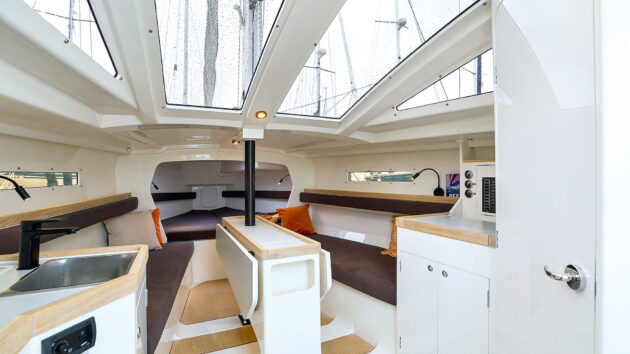
The Bente 28 is the same length, but offers far more space down below
Living on board
Below decks
Spartan conditions on board have given way to comparative luxury. Small, cramped saloons with plastic cushion covers and smelling vaguely of mildew, varnish and bilge water belong to a bygone era. Life afloat, even in smaller yachts, has improved beyond recognition. Fitted carpets, comfortable upholstered settees, standing headroom, good lighting and a built-in sound system are now the norm – and that’s just in the saloon.
Cabins now have doors, soft mattresses, plenty of lockers for your personal gear and reading lights for each bunk. The deckhead is watertight—no more drips on sleeping bodies—and the whole boat is warmed with a built-in heater, or even cooled with air-conditioning. Almost invariably, there have had to be some compromises.
Yachts have become longer and beamier, and coachroofs tend to be wider and higher. In turn, seakeeping qualities have tended to take a bit of a hit. The pleasing hull shear lines and long counters have largely been replaced with bluff ends and muscular shapes.
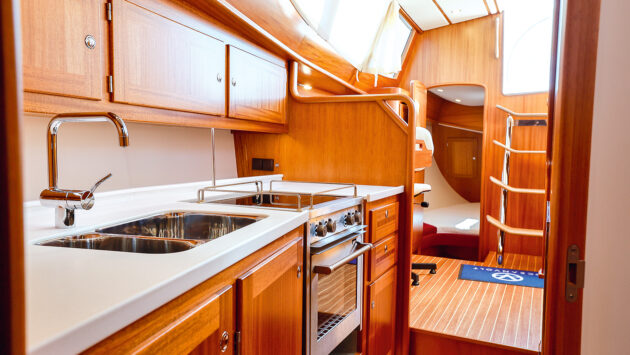
Large galleys and even induction cooking are more common afloat
Galley
Long gone is the fixed primus stove with, at best, a couple of rings. Gas stoves with three or four rings, a grill and oven are common, and more use is being made of induction hobs, electric kettles and toasters when on shore power. This is even possible at sea if an inverter is fitted. Pressurised water, hot and cold, is available at the turn of a tap, and a fridge keeps food fresh and drinks cool.
Heads
Forget ‘bucket and chuck it’! Modern marine loos are reliable and easy to use. If they become blocked or an internal valve fails, it is (or should be) within the capabilities of almost anyone to fix the problem with simple tools. Holding tanks have done much for convenience and the environment. A washbasin, again with hot and cold water, and a shower complete the modern yacht’s ‘bathroom’.
-
Generally positive: Life on board is much more comfortable.
-
Generally negative: We are perhaps forgetting that a cruising yacht is a very small vessel in a potentially dangerous environment. Being warm and cosy is fine so long as it doesn’t blinker us from the reality outside the hull. The expense of boats large enough to accommodate all these mod cons and the desire for more comfort and convenience has made sailing more expensive, and some of the adventurous spirit has been lost.
-
Overall assessment: We have to remember that we are small fry sailing in a wide ocean, and things can and do go wrong, however ‘luxurious’ and comfortable our surroundings may feel.
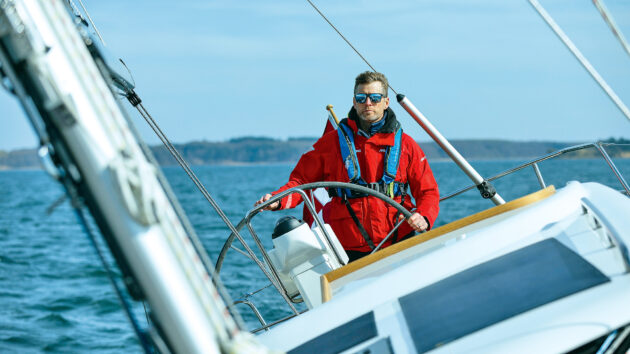
Modern lifejackets are comfortable enough to wear all day
Safety
Awareness
There is no doubt that we are now more safety conscious. This is due to several factors. First, it reflects the ever-present health and safety rules and advice which affect every aspect of our daily lives, ashore and afloat. Secondly, the RNLI, RYA and others have run almost continuous awareness promotions, notably the RNLI’s ‘Useless Unless Worn’ campaign urging the wearing lifejackets. Thirdly, a huge range of safety gear is now available online and in chandleries.
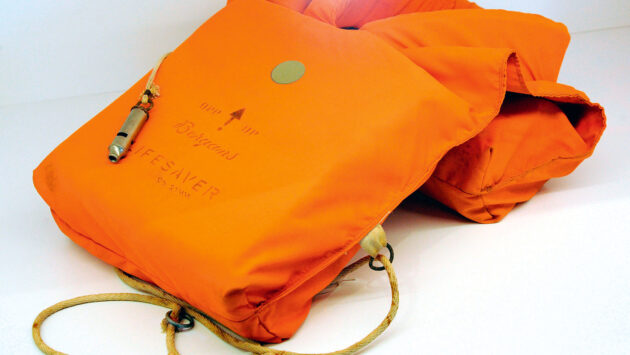
Old foam-filled lifejackets were too bulky to be worn unless in an emergency
Equipment
In the ‘old days’, it was unusual to routinely wear lifejackets, although we did don harnesses in heavy weather and at night. Few yachts were equipped with self-inflating liferafts or MOB recovery gear other than a couple of lifebelts. And, of course, VHF radios, EPIRBs, PLBs, AIS and active radar reflectors were still years away.
If I were to pick out one safety item which has improved beyond measure, it would be the lifejacket. From cork lifebelts, through kapok and foam rubber-filled floatation devices, we now have access to sophisticated self-inflating lifejackets. These come with lights, whistles, reflective tape, crotch straps, hoods and visors. Above all, they are comfortable. It used to be a relief to take off your lifejacket when safely alongside. Now, you hardly notice you are wearing it at all.
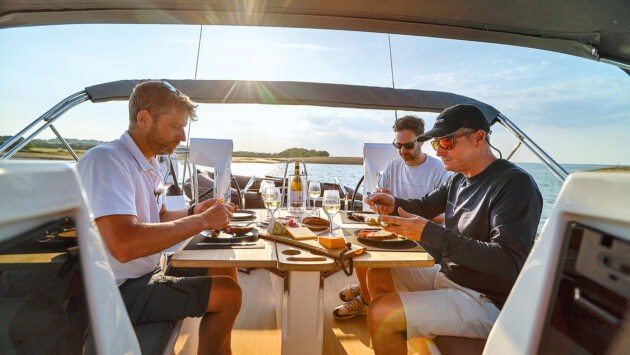
Legislation to make skippers at least abstain from alcohol until they are at anchor or alongside, may be on its way
Alcohol
Statistically, alcohol plays a significant part in many boating accidents. Limits are already in force for professional skippers and now, at last, there are positive moves to introduce legally enforceable alcohol limits for recreational sailors as well. The days of rum rations are behind us, and drinks should wait until the lines are secure.
One aspect which must be addressed, though, is exactly who the rules would be applied to. A few years ago, it was being suggested that everyone on board who had any ‘responsibility for navigation’ would be subject to an alcohol limit. It would be more sensible, and make enforcement much more straightforward, I suggest, for the limit to apply only to the skipper. He or she is always entirely responsible for the conduct and safety of the whole crew, and this includes the control of alcohol consumption.
-
Overall assessment: Greater awareness and advice, backed up with far more effective safety gear. We just need to be wary of over-regulation. As with any other activity, skippers must accept that they’re ultimately responsible for their crew’s safety and wellbeing.
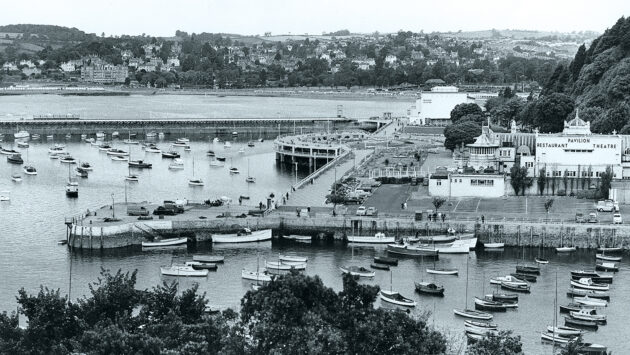
Torquay harbour in the 1960s had moorings but no pontoons – like all harbours at the time
Ashore
Facilities
I have a 1962 copy of South Coast Harbours by Adlard Coles. It covers the area between the Isles of Scilly and Ramsgate, and there is no mention of even one marina. There are now over along the same stretch of water—an average of about one every five miles! Almost all have electricity, water and wi-fi on the pontoons, and showers and laundry facilities ashore. Many have their own restaurants, bars and food outlets. Harbours which cater for yachts will almost certainly boast lift-out and repair facilities, chandleries, sailmakers and engineers.
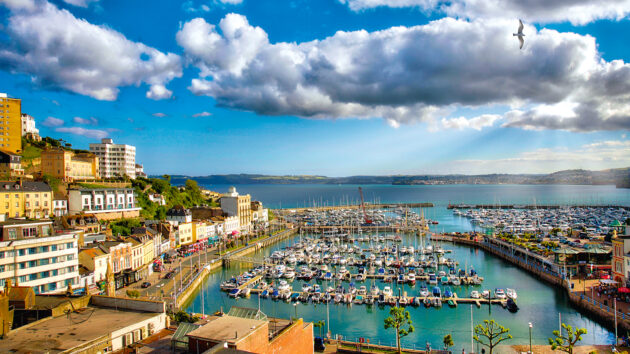
Torquay harbour is now almost entirely full of pontoons. There are now nearly 70 marinas on the south coast alone
-
Generally positive: If you opt for a marina as a visitor, you should have everything you could possibly need for a safe and comfortable stay.
-
Generally negative: So much space is taken up in many harbours, marinas or private moorings that there is often little left for a peaceful night at anchor. Our appetite for comfort and convenience has again pushed up the price of sailing, both for a home mooring and for overnight stays, and some feel harbours have become uniformly dull carparks for boats.
-
Overall assessment: Try to find shelter elsewhere and avoid increasing marina fees and harbour dues.
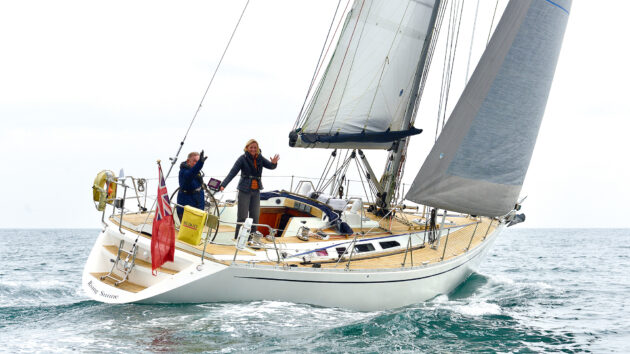
Does being glued to screens mean we notice others less, or is the lack of waving a sign that we’re just less friendly?
Social
Yachting has always been, and still is, a very sociable pastime, but there is a certain etiquette involved. It is perfectly normal to exchange a few friendly words as you raft alongside another boat, then feel free to sit a couple of metres apart in your respective cockpits without saying another word! On the other hand, firm and lasting friendships can be made after just a short stay alongside another boat. It all works very well.
It is at sea, however, where it appears that things might be changing. It has long been the custom for the person on the helm to raise an arm in greeting as they pass another yacht, and I have always regarded this as an acknowledgement of friendly mutual respect between fellow yachties. But it now seems to be on the wane. Indeed, some people don’t even make eye contact as they pass close by.
Is this rudeness? I don’t think so, but it could be that modern boats can now be sailed and navigated almost entirely by looking at instruments. Wind speed and direction, log speed, chart plotter and AIS obviates the need, it seems, for any imperative to look around you, judge how the boat is sailing, see where you are or what other vessels may pose a risk of collision. Are we now sailing in our own little bubbles with scant regard for others—like many car drivers—or is it because we are becoming less sociable? I don’t know the answer, but I find it rather worrying.
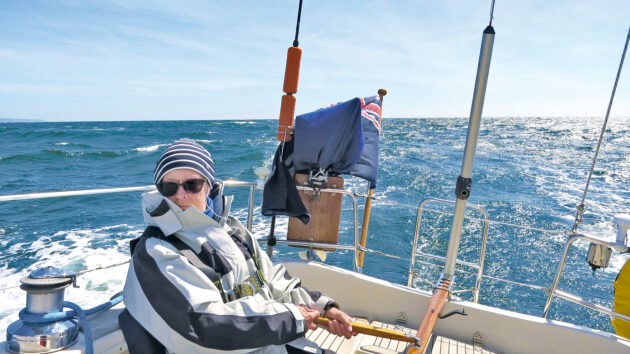
The sea is the same as it ever was, and needs to be treated with the same respect
Conclusion
There is always a tendency to see the past through rose-tinted binoculars. I have tried not to fall into that trap, and I believe we, as yachties, have continued to adapt well to all the changes over the last . It is easy to hark on about losing traditional skills, and worry about how the future generations will cope if they can’t ‘hand, reef and steer’. Of course they will cope, just as we are coping now.
The trick is to recognise the limitations of modern equipment and changes. Almost all of them are hugely beneficial to our safety and enjoyment of sailing. Looking ahead, if I were to pick one change that may have a major impact on us and the environment, it would be the demise of diesel engines. It’s inevitable, but any alternative—electric, hydrogen or something else—comes nowhere near to offering the power and range we enjoy today. Watch this space.
Enjoyed reading this?
A subscription to Yachting Monthly magazine costs around 40% less than the cover price, so you can save money compared to buying single issues.
Print and digital editions are available through Magazines Direct – where you can also find the latest deals.
YM is packed with information to help you get the most from your time on the water.
-
-
- Take your seamanship to the next level with tips, advice and skills from our experts
- Impartial in-depth reviews of the latest yachts and equipment
- Cruising guides to help you reach those dream destinations
-
Follow us on Facebook, Twitter and Instagram.
Note: We may earn a commission when you buy through links on our site, at no extra cost to you. This doesn’t affect our editorial independence.