


Celebrating 100 years of the BBC Shipping Forecast, Jane Russell explores some special places by sailing in the Plymouth area
Plymouth
Westwards from Berry Head, and pointing its toes out into the Atlantic, the Plymouth sea area stretches beyond Land’s End almost to the Isles of Scilly. It extends southwards to Tregastel and along the North Brittany coast to just south of L’Aber Ildut, continuing westwards offshore to well beyond Ouessant.
These coastlines are first choice summer holiday destinations for countless crews. Most of the big names in West Country sailing locations are within the area; Dartmouth, Salcombe, the River Yealm, Fowey, the River Fal and Helford, as well as Plymouth itself. On the French coast, Morlaix and L’Aber Wrac’h have long been favourite havens amidst the rocks and shoals of this more challenging section of coastline.
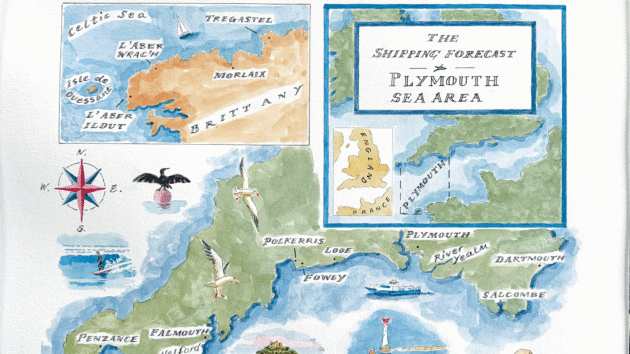
Photo: Joanna Martin, Curlew Cottage Design
These are all places where the temptation to linger may prove greater than the urge to move on, which can be a very good thing when the prevailing westerlies strengthen and the westerly swell rolls in. In those conditions, these are exposed, rocky, unforgiving coastlines and being tucked away up a cosy river holds considerable appeal.
On the English coast, tides run more strongly around the headlands, sometimes creating overfalls, with potentially dangerous races off the Lizard and Start Point. The tidal flows into and out of the rivers can also be accelerated at narrow pinch points. Tides also run strongly along the French coast where squeezed into channels or over shallows.
Passages should take account of the Land’s End and Ouessant TSSs and the shipping heading between them and the Casquets TSS further up Channel.
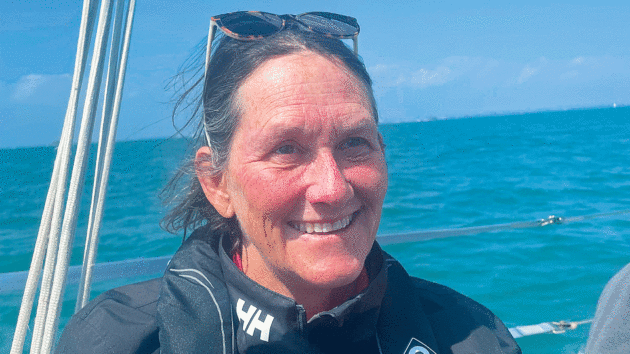
Jane and David Russell have been cruising together for more than 30 years, including a five year circumnavigation with their first Tinfish. Photo: Jane Russell
N or NE 4 to 6. Slight or moderate. Good.
Serene seas and a sense of homecoming drew us into the night and into sea area Plymouth. This coast, centred for us on Millbrook Lake on the west side of the Tamar, had been our home waters for several years. From there we had explored many of the nooks and crannies between Dartmouth and the Isles of Scilly in our Woods Strider Club 24’ catamaran, first with babies, then toddlers.
Now we were heading for an extended Plymouth stopover on our voyage around Britain on Tinfish, with multiple rendezvous planned with local friends and grown up offspring. We had crossed Lyme Bay in light variables that had eventually settled and strengthened from the north and we were now making good progress under the stars.
If it had all been new to us we would, of course, have paused in Dartmouth and Salcombe and enjoyed these quintessential West Country harbours. Part of our childhoods, and imbued with layers of nostalgia, their age-old appeal remains, despite the crowds and the rattle of the Harbourmaster’s tin, which is likely to find you even at anchor in the uppermost drying creeks.
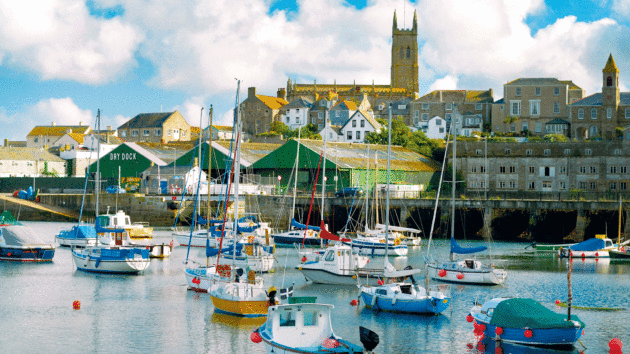
Penzance harbour, Cornwall on a summer evening with St Mary’s parish church in background. Photo: John Boud / Alamy Stock Photo
Salcombe punished our passing with grumpy gusts off Bolt Head that kept us both awake putting reefs in. Bigbury Bay beseeched us to stay by dropping the wind out completely. Our catamaran had been perfect for drying out there on the sands or tucking into the River Avon, but this time we weren’t to be persuaded and we used the engine to push on through the calms.
Into Plymouth Sound the northerlies found us again with full vigour and we tacked across towards Cawsand, too exposed tonight, and then back into the Western Channel.
We struggled to see any of the navigation lights against the glare of the Plymouth waterfront, but this patch of water is well imprinted in our minds and we worked our way past Drakes Island and through the Cremyll narrows to anchor on the eastern edge of St Johns Lake, clear of the Torpoint moorings.
A few days of catching up took us to the weekend and a boatful of our young and their friends to sail us to the River Yealm for the night. The winds were light and we had a lovely sail with the cruising chute keeping everyone busy. It was bank holiday and the river was abuzz with vessels of all shapes and sizes but it was a perfect evening to enjoy all the comings and goings from the anchorage off Cellar Bay.
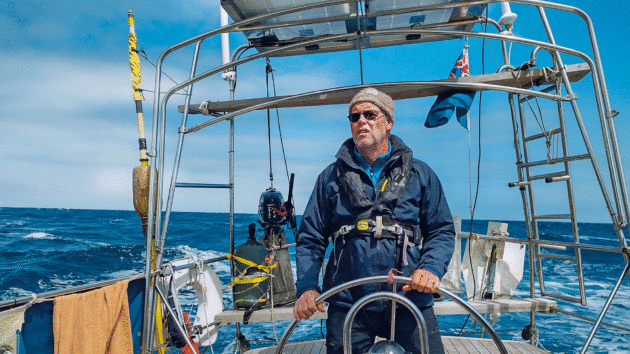
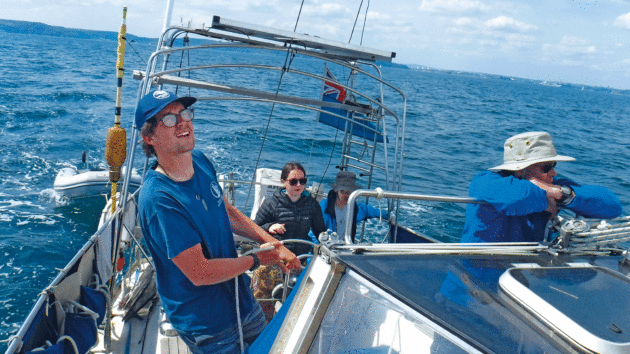
David helms Tinfish. Photo: Jane Russell
E or NE 5 to 7, decreasing 4 at times in north. Moderate or rough. Fair. Good.
With winds still firmly in the east it was time to move on. An easy downwind sail returned us to Torpoint where we dropped off the youngsters and picked up our local sailing friend, John, who was coming with us to Scotland.
The forecasts had been a bit boisterous but we were in the north of the area and staying inshore, so by mid-afternoon we were on our way again, out through The Bridge channel and on past Cawsand. Off Penlee Point we dropped the mainsail, bore off and set both headsails, one poled out on each side.
This is our standard, stable, downwind set up. Time to make some tea and enjoy some shore gazing as we reminisced our way past the chapel on Rame Head and on past the golden sands of Whitsand Bay. Off Looe the wind got up a bit and veered south of east so we rolled the port genoa away to hold our course.
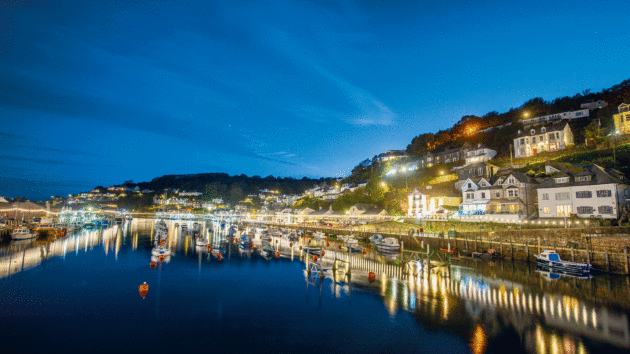
Looe Harbour in the evening, Looe is a seaside Town and fishing port in Cornwall. Photo: Roy Riley / Alamy Stock Photo
Quite a rolling swell was beginning to build behind us and we began to worry whether the wind might veer even more. We had decided to carry on past Fowey, another of the usual and most popular stops, to anchor off Polkerris. With so much east in the wind it wasn’t the time to stop at Mevagissey which is usually a good spot in the more common westerlies.
We’d never yet found the right moment to stop at Polkerris and settled offshore winds gave us the chance. But if the swell started to roll in from any further south it might not be such a good idea.
We held our nerve. Past Gribbin Head we began to turn up into its lee and the swell diminished steadily. We felt our way in over the shoaling flats and anchored in the evening light in complete tranquility, rocked gently by just the faintest gesture from the seas we had left behind.
It was summer half term and the following day we dinghied in to the beach amidst the squeaks and laughter of children as they played in the sand or leaped from the breakwater. After an excellent fish lunch in the pub we walked off some of the calories up the steep climb of the coastal path, rewarded with views across Par Sands and over towards the tiny historic harbour of Charlestown.
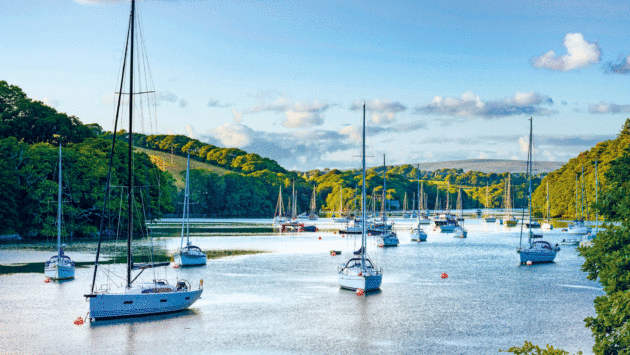
Yealm River in Devon with moored yachts. Photo: Robert Styring / Alamy Stock Photo
NE 4 to 6, becoming variable 2 for a time in north, increasing 7 at times. Moderate, occasionally slight. Fair. Good, occasionally moderate later.
By now we hadn’t been alongside for a few weeks and we wanted to fill up with water. Falmouth Haven was a good option. In the light northeasterlies early the next morning we sailed off the anchor and headed downwind towards Dodman Point.
Falmouth Haven was looking very busy but there was just space for us behind the pilot boat. We agreed a four hour stop off which allowed us to fill up with water and have showers. We were feeling encouraged to move off promptly, not just by our time limit but because the northeasterly had strengthened enough to bring a bit of a chop in against the outer pontoon where we were. Getting off might prove interesting.
A speed shop at all-providing Trago Mills and a dash for pasties gave us everything we | needed. Or so we thought. With John aboard to help, all was well and we extricated ourselves without too much drama. As we headed out past the moorings we put the kettle on for some tea and, Sod’s Law, the gas bottle ran out. Typical! Should we go back?
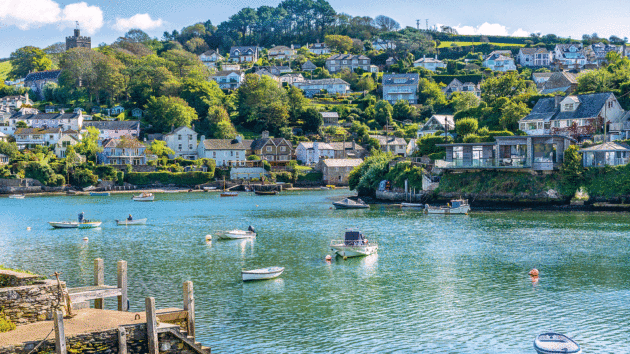
Noss Mayo on the River Yealm in Devon. Photo: Gordon Bell / Alamy Stock Photo
We decided not to, but that was to prove an expensive decision. At this point David and I had not yet realised that John’s enthusiasm for making sourdough bread every day, an undeniably delicious treat, was accelerating our gas use by two or three times our usual consumption. Nor had we realised quite how expensive gas would be on Scilly.
So, happily oblivious, we motored off into the wind and anchored on the east side of the Fal just south of Carclase Point, south of St Just. There are so many options on the Fal or in the Helford River but here we were well protected from the easterlies. We swam, then walked ashore, scrambling over ancient Cornish banks and brushing through meadows cast golden by the evening light.
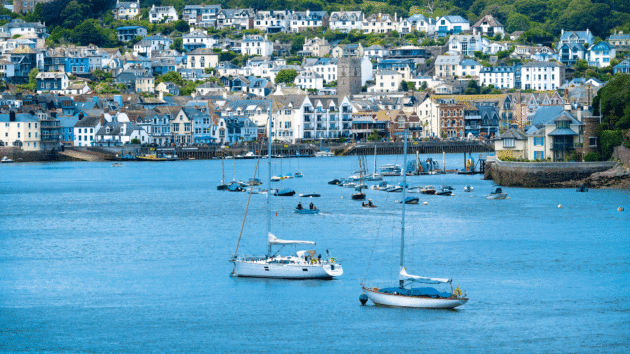
View from Dartmouth Castle looking up the River Dart with Dartmouth on the left and Kingswear on the right. Photo: Jonathan Somers / Alamy Stock Photo
NE 4 to 6. Slight or moderate. Fair. Good.
We were now pinching ourselves that the easterly winds were still blowing. There was mention of heatwaves, not just in England but in Scotland too. We headed out under full sail and passed under a huge cruise ship that wasn’t anchored but holding station in Falmouth Bay.
The wind was coming in more south of east and we were quite hardon the wind to the Manacles buoy. The easterly beam seas were bigger than we expected and it was a relief to free off a bit towards the Lizard. Rounding the Lizard was a rollercoaster and timing our gybe and hardening up amidst the breaking seas gave us a few anxious moments.
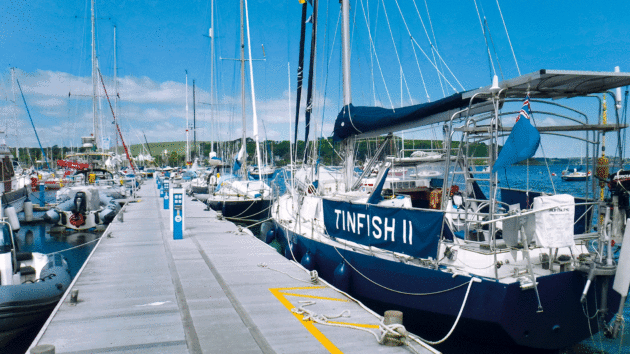
Tinfish stocks up on almost all essentials at Falmouth Haven. Photo: Jane Russell
Thankfully we soon found protection under the west side of the headland and we were back into another world of flat seas and smooth sailing. They were perfect conditions for anchoring at Mullion Cove, beautifully protected under the high cliffs and a short dinghy ride from the picturesque little harbour.
More swimming, particularly for John who swims year round and is used to chilling down, his body sometimes taking hours to come back up to normal temperature. But that’s a valid excuse for a snooze in the cockpit in the warmth of the afternoon sun. Then a walk ashore, up through the holiday haven and back via the cliff paths beneath the hotel, blooming with pinks and other lovelies.
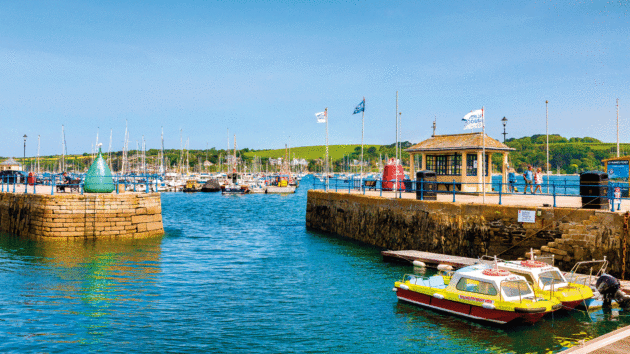
Falmouth, Cornwall, the busy harbour on a bright spring day. Photo: travellinglight / Alamy Stock Photo
NE 4 to 6, decreasing 3 at times in north. Slight or moderate. Fair. Good.
After a tranquil night it was tempting to have a lazy day and head to St Michael’s Mount to anchor off Marazion in the protection of the mount and the causeway. We had magical memories of going in with the catamaran and drying out on the beach inside the little harbour beneath the castle.
The visitor moorings off Penzance certainly wouldn’t be comfortable in the ongoing easterlies and Newlyn didn’t appeal for the same reason. No, we had the Isles of Scilly in our sights and it would be downwind all the way.
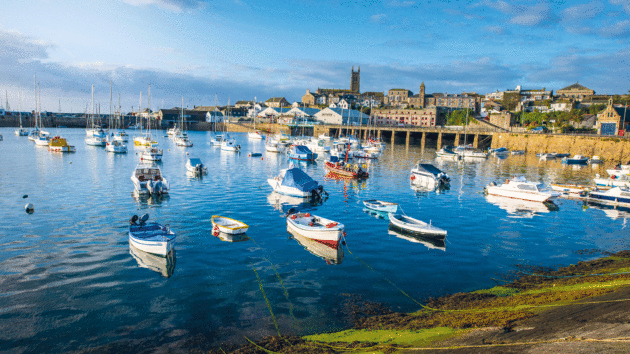
Penzance is the most westerly major town. Photo: Robert Evans / Alamy Stock Photo
On Scilly we would be into the top corner of Sole but from there we would be heading into the wide wedge of the Lundy zone. We sailed off the anchor, set the twin headsails, and romped across the flat seas of Mounts Bay. After days of sunshine we were leaving the Plymouth sea area under grey skies. It was time to move on.
Article continues below…

Day sailing to the Isles of Scilly: Dodging a 35,000-tonne cargo ship
Quaker Girl is waiting patiently at the end of steep granite steps for her third skipper. Not that she needs…
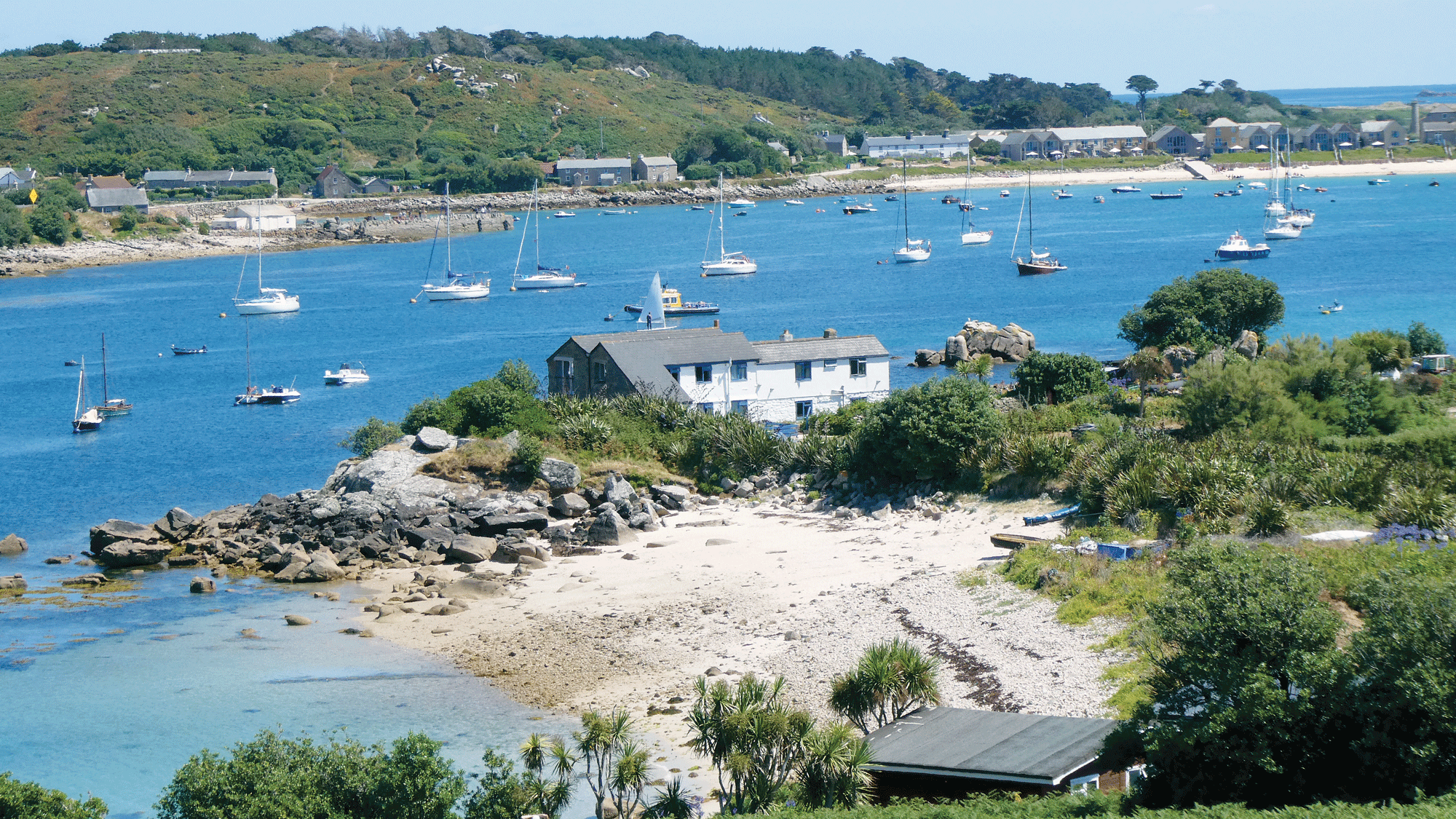
Isles of Scilly Storm Dodging: ‘We had to gain steerage way from a standing start while neighbouring boats were dancing around wildly’
Mary and I are very fond of the Isles of Scilly. In fact, we regard the archipelago as the most…
Tips and contacts – Places to stop
On the West Country coast the perennial delight of the many navigable rivers is that you can lose yourself within each one for many days at a time.
Sometimes because you are content to explore or simply to pause for a while, other times because the wind is howling or the rain is pouring. Either way, when conditions outside are good, you only have a short hop along the coast to the next river, maybe enjoying some of the more exposed anchorages along the way if the weather is settled. The rivers offer plenty of options for marina berths, moorings or anchoring.
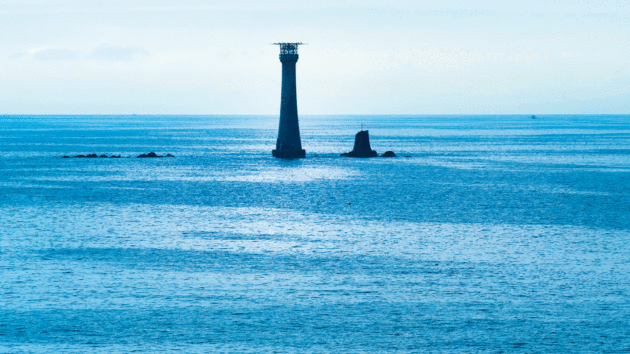
Eddystone Lighthouse, Plymouth. Photo: Alan Gardiner / Alamy Stock Photo
The northwest corner of Brittany is more challenging but Roscoff is a good first base. From there you can take the flood and lock into the warm embrace of old Morlaix, spanned by the impressive two-tier railway viaduct.
Or, if the wind and swell is more settled, head to Ile de Batz where life seems barefoot and time slows. Pick the weather to head to the ‘Abers’ – the navigable rivers on the corner of the continent. L’ Aber Wrac’h is the best known and is navigable on past the marina up to Paluden, with cosier anchoring and mooring options there in a more rural setting.
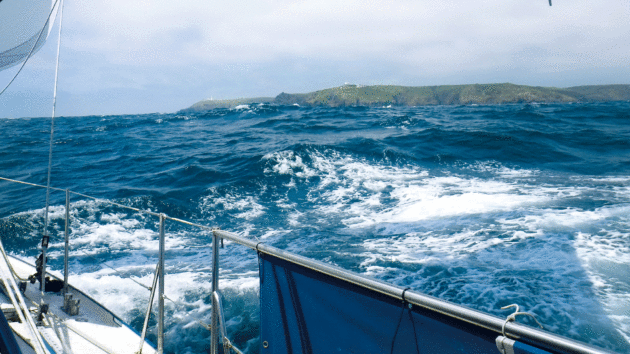
There were boisterous seas around the Lizard. Photo: Jane Russell
Dartmouth
Home to the Royal Naval College, Dartmouth is steeped in history. From Kingswear take the heritage train to Paignton. Or head upriver between steep, wooded banks to the visitor moorings at Dittisham from where you can visit Agatha Christie’s Greenway House www.nationaltrust.org.uk Further upriver it broadens out into rolling Devon countryside.
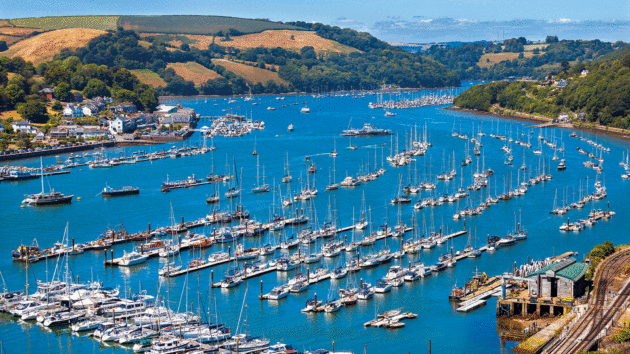
The River Dart is full of luxury yachts and boats showing the wealth of the historic town of Dartmouth. Photo: Mark Passmore / Alamy Stock Photo
Salcombe
In onshore winds against the ebb The Bar across the entrance can be dangerous. Aim to go in on the last of the flood. Call the HM if in doubt. With the right vessel you can venture up the creeks and dry out in rural tranquility.
Fowey
A favourite yachting haven but also a deep water port with a long maritime heritage. The woodlands of ancient oak along the river open out across the tops. There is a good circular walk via ferry crossings at Bodinnick and Polruan. With shallow draught and modest mast height explore the creeks up to Lostwithiel.
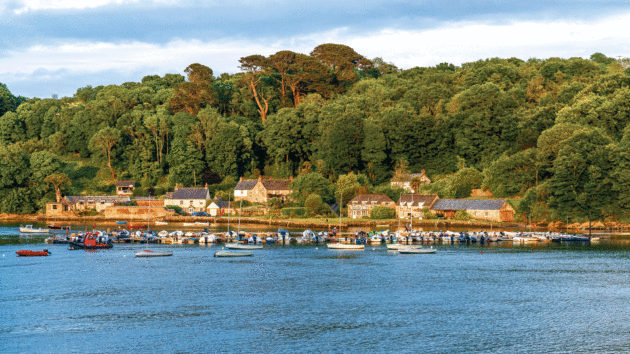
Boats on the banks of the Helford river. Photo: Bernd Brueggemann / Alamy Stock Photo
Falmouth and Helford
In westerly winds the two rivers are joined by relatively protected waters and there are weeks of exploring to be had; up to Gweek on the Helford and up the many side branches of the Fal. Falmouth rewards shore days with the National Maritime Museum and Henry VIII’s Pendennis Castle. Gardeners will want to visit Trelissick.
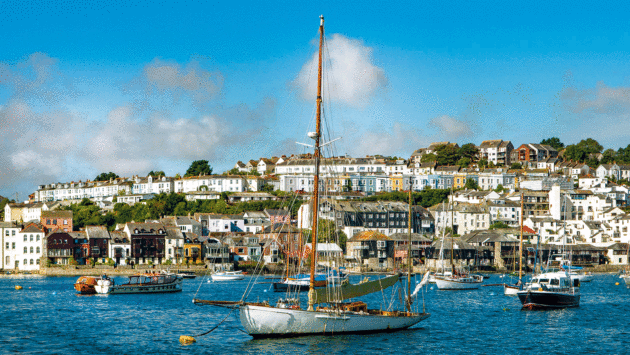
View of Falmouth from River Fal, Cornwall. Photo: Robert Wyatt / Alamy Stock Photo
Getting Around
Marinas and crew changes
On the English coast there are several marinas and mooring options in Plymouth and Falmouth with good rail connections nearby. A car and foot ferry links Plymouth to Torpoint across the Tamar and foot ferries connect the city to Mount Batten, Cremyll and Cawsand.
A foot ferry also runs across the Fal between Falmouth and St Mawes. Trains stop at Penzance where there is a tidally restricted wet dock (HW-2hrs to HW+1) or drying harbour. A ferry connects Penzance to St Mary’s, Scilly. Other harbours are not well served by train unless you can wriggle to the tops of the rivers; to Totnes up the Dart, Lostwithiel above Fowey and Truro up the Fal.
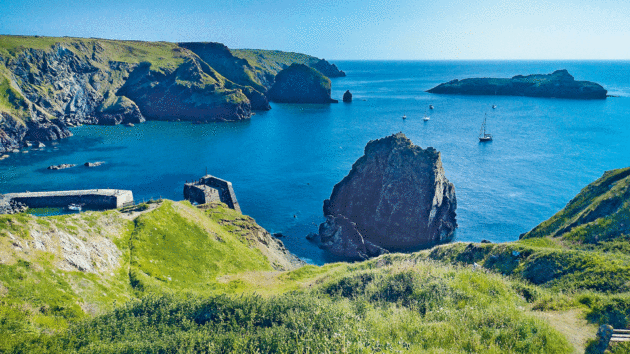
In the easterly winds it was a tranquil night at Mullion Cove. Photo: Jane Russell
Otherwise there are bus connections but they require some patience. There are direct flights from Newquay to Scilly, London Stansted and Gatwick, Dublin, Belfast, Manchester, Newcastle, Glasgow and Edinburgh.
On the French coast there are all-tide marinas at Roscoff and L’Aber Wrac’h. Trains from Roscoff connect to Morlaix and beyond. Cross-Channel ferries connect Plymouth to Roscoff: www.brittany-ferries.co.uk
Cross-Channel exit/entry formalities have been changing over time, as have the regulations around travelling with pets. Before you go, check the latest at www.theca.org.uk > Information and Advice.
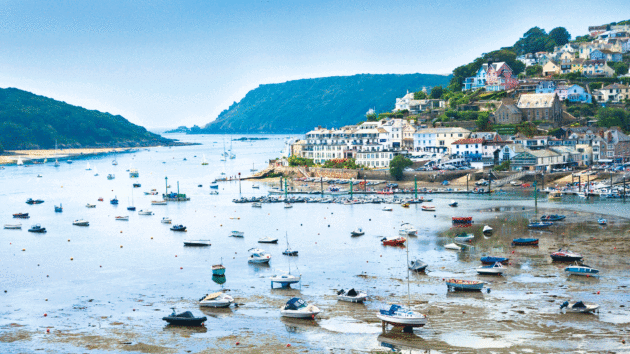
View from Snapes Point looking out to Salcombe town. Photo: Chris Harris / Alamy Stock Photo
Pilotage information
The Shell Channel Pilot (Imray) advises on passagemaking and Channel crossings, also covering harbours on both coasts. West Country Pilot (Imray) and West Country Cruising Companion (Fernhurst) will enhance your cruising. Royal Cruising Club Pilotage Foundation’s Channel Islands, Cherbourg Peninsula and North Brittany (Imray) is essential for details of northwest Brittany.
Enjoyed reading this?
A subscription to Yachting Monthly magazine costs around 40% less than the cover price, so you can save money compared to buying single issues.
Print and digital editions are available through Magazines Direct – where you can also find the latest deals.
YM is packed with information to help you get the most from your time on the water.
-
-
- Take your seamanship to the next level with tips, advice and skills from our experts
- Impartial in-depth reviews of the latest yachts and equipment
- Cruising guides to help you reach those dream destinations
-
Follow us on Facebook, Twitter and Instagram.
Note: We may earn a commission when you buy through links on our site, at no extra cost to you. This doesn’t affect our editorial independence.