


For migratory birds, as much as sailors, climate change means actual change. Jasper Winn welcomes many small birds as passengers as he sails across the Celtic Sea
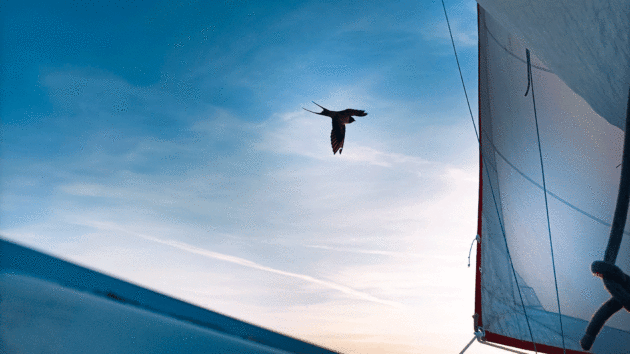
Sailors and seabirds share the same weather. They ride the same winds, are hit by the same storms, feel the same calms. And, now, we all – birds and seafarers – are having to navigate the changing conditions brought on by climate change.
I came to the sea early and to sailing late. Swimming, kayaking and fishing on the coast.
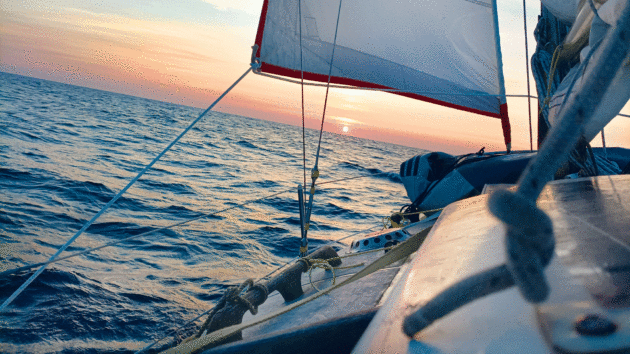
Photo: Jasper Winn
A solo sea-kayaking trip the thousand miles round Ireland in 2007. But only in the first months of 2020 did I bow to the inevitable and buy my own boat.
‘Get the smallest that has full headroom, something from the 1970s because the glass-fibre was massively heavy back then and with bilge keels if you want to save on mooring fees,’ my most experienced sailing friend advised. So a Westerly Pageant it was. Keel Over would become my home and transport for the coming years. I’d planned on sailing east, in a haphazard way, into European waters.
Covid freedom
Then there was Covid. During a window of freedom in that strange summer, I launched Keel Over and rather than going east, headed west across the Solent.
It was my first time alone on a sailing boat. The weather goddesses gave me their blessing. Favourable and moderate winds took me as far as Portland Harbour where I rode out three days of gales.
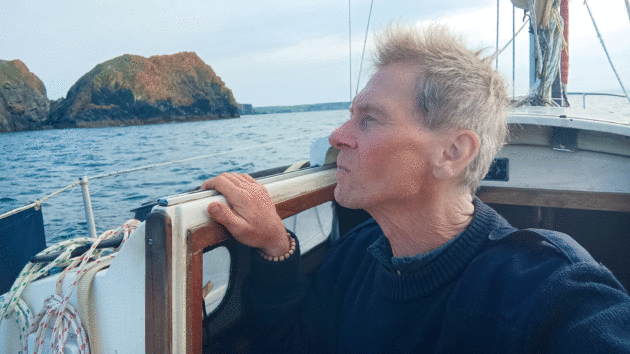
Jasper surveys the scene at Mullion Bay in Cornwall. Photo: Jasper Winn
I’d learnt that engines and I had a mutual antipathy, which soon became a series of wildcat strikes and then a full downing of tools from the lump of metal in the bilges. I outsourced most, and then all, of the work to the sails. I took Portland Bill very seriously. I felt at home when I got to Cornish waters.
Charts and compass, VHF and pilots gave me information. But birds gave me inspiration. I’ve always been a birder. I’m not an ornithologist, nor a twitcher; I’d rather see a common bird doing something interesting than gawp at some poor American catbird or African collared dove blown off course and expiring in a bush on the British coast.
What brings joy is sharing this planet and especially the seas with birds. On my kayak trip around Ireland birds had become friends, subtly telling me things if I cared to listen.
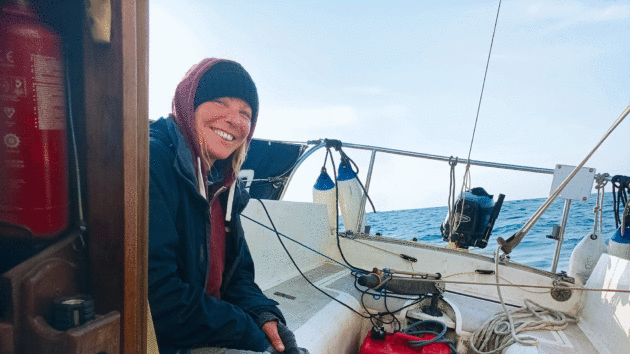
Jasper’s partner, D, happy to have worked out a sail-to-tiller self-steering system. Photo: Jasper Winn
I could tell the depths of sea under me and how far offshore I was and the weather by the birds around me. Cormorants and shags meant I was in shallowish water. Guillemots foraged further out. Gannets told me where the fish were and when to drop a line.
The time between their Exocet plummet into the water and resurfacing suggested how deep sprat and mackerel were shoaling. Skuas and petrels contour flying the swells meant I was miles off shore. Fulmars became my totem bird, for never a one passed without swinging in over my head and dipping a wing in salute.
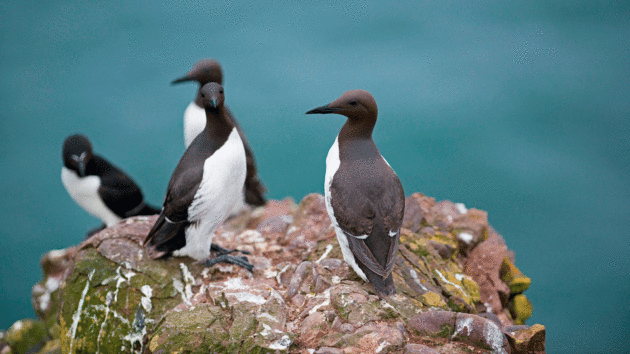
Jasper noted that guillemots forage further out at sea than other birds. Photo: birdphoto.co.uk / Alamy Stock Photo
Flying, swimming or diving
Sailing west along the south coast of England I looked to the birds to make the seas familiar. If there were birds flying or swimming or diving, all was well. Through the first winter of lockdown birds became even more of a consolation.
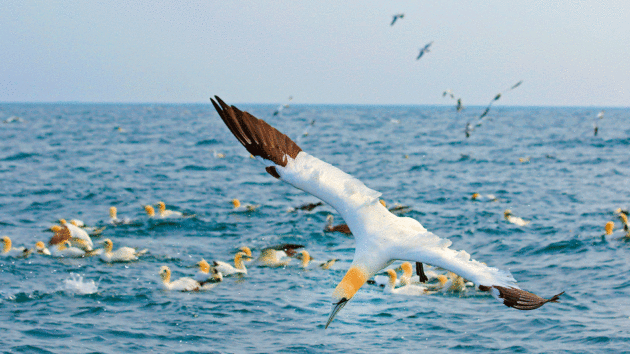
Gannets put on a diving display that would put Tom Daley to shame. Photo: Arterra Picture Library / Alamy Stock Photo
I’d found a foreshore mooring on a ‘lake’ off the Tamar. Restrictions meant that I was living in an off-grid cabin in winter gloom with little contact with other people. I ran, I swam off the beach at Cawsands, I read by the light of a paraffin lamp. Above all I took consolation from the birds I shared my length of shoreline and patch of tidal water with.
Birds aren’t feathered humans but they do have individual personalities, whether it’s a brave mallard exploring the foreshore, a young peregrine falcon playing chicken with a heron, or the black-headed gull, that took up a station behind KO and got first go at the waste jettisoned from the galley.
Birds which learn to coexist with humans get the scientific label of ‘confiding.’ It’s a species trait, like robins following a gardener to pick up worms.
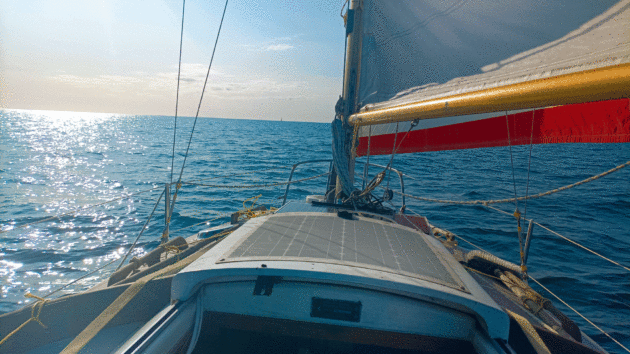
‘I lived aboard Keel Over, off grid, on the anchor for three years’. Photo: Jasper Winn
I like to think that ‘my’ gull thought of me as ‘his’ human. I lived aboard Keel Over, off-grid, year round, on the anchor for three years. Covid passed, then faded from memory. I met a soul-mate, also on a small Westerly, though D had real sailing experience behind her.
We sailed in tandem along the Cornish coast through the summers and anchored up creeks through the winters, drying out on our bilge keels sometimes, but as much as possible we stayed afloat in sheltered nooks and bends, changing anchorages as the weather changed.
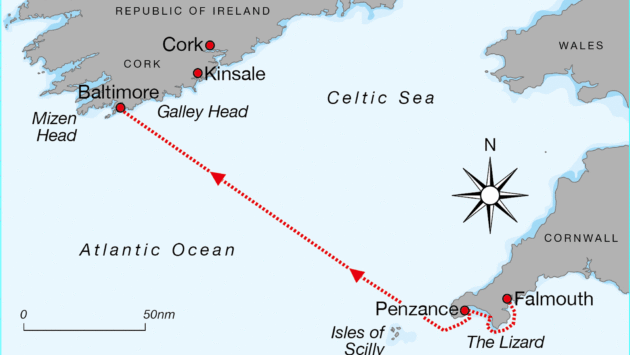
The route
The autumns and winters on drying mud flats or under steep wooded shores gave me more insight into the weather and the changing climate that I was sharing with birds. Because change there was.
In the winter weathers we and the birds were brought closer. Little egrets, who through global warming had moved from being very rare vagrants to
breeding residents across the south of England and Ireland, stalked the shoreline.
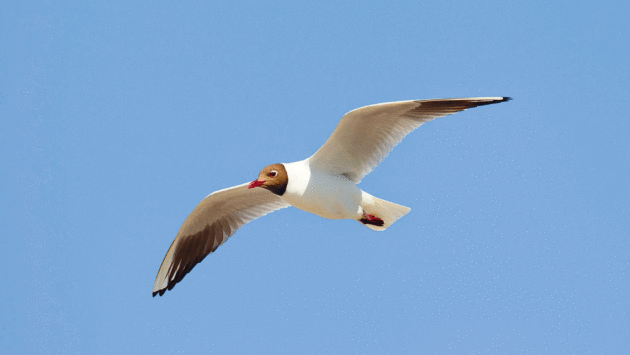
Jasper made a special bond with a black-headed gull. Photo: Alamy Stock Photo
There were curlews, their mournful piping calls in harmony with the rain and the grey slicked mud. For lack of breeding habitat curlews as a breeding species were heading towards extinction in much of their range, I’d been told, but I heard and saw so many that at first I questioned this gloomy prognosis.
Until, that is, I discovered that individuals could live for 30 years and so the birds I saw happily probing the mud banks were the equivalent of DINKIES; Double Income No Kids.
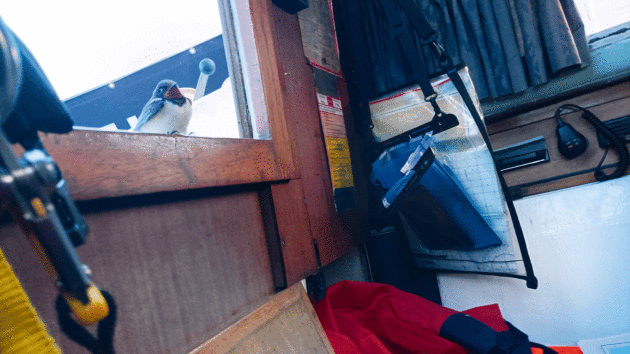
The exhausted swallow peers into the saloon. Photo: Jasper Winn
Unstable weather patterns
Maybe I wasn’t motivated enough to get Keel Over across to Ireland. Perhaps I’d become a bit too much ‘curlew,’ happy where I was. Very likely I was apprehensive, being in a slow boat that was now engineless.
But D and I felt it was the change in what had once been normal seasonal weather that made us cautious. Patterns seemed to be unstable. Atlantic storms produced unpredictable results.
The jet stream stumbled around the upper stratosphere like a drunk on an escalator. Twice we rounded the Lizard in summer months to head to Lands End in the expectation of finding the ‘usual’ window of SW winds for a run to Ireland and twice we’d been driven back by sudden and violent changes from the forecast conditions.
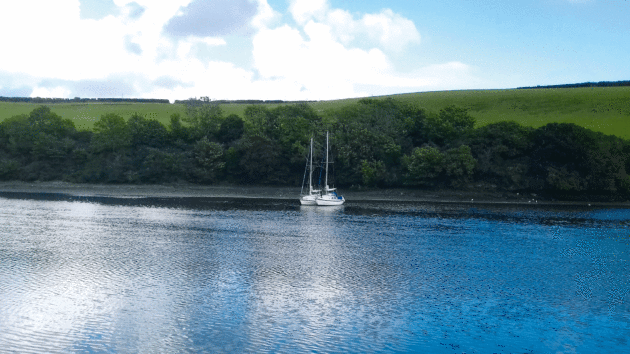
D and Jasper anchored in company off the Cornish coast. Photo: Jasper Winn
We’d been caught in unforecast squalls. Hiding from a summer storm far up the Helford I had the surreal experience of being on the foredeck checking my anchor in flying spray as the boat pitched up and down and the wind threw her from side to side, whilst listening to an unhappy cow lowing in a field a stone’s throw away.
Both D and I had seen plenty of bad weather over the years. When I kayaked around Ireland there were 19 consecutive small craft warning days of Force 6 and over, in July. It’s an Atlantic climate, we agreed, and changeable weather is the norm. But it seemed the changeability had changed. Instability was the new normal. Past experience was a thing of the past.
Article continues below…
Is a yacht the best way to go seabird spotting in Scotland?
Braced against the rolling of the boat, I sipped scalding tea from the mug cradled in my cold hands and…

Carbis Bay & St Ives: shelter on Cornwall’s north coast
Safe anchorages are hard to come by on Cornwall's north coast. Carbis Bay and St Ives are two options for…
Migrating birds
When we left for Ireland it was in the spirit of migrating birds. We felt and saw a window of opportunity in mid May. We weren’t confident enough to take two single-handed boats when we might be at sea for several days, so we left Mo in Penzance and D and I left in Keel Over.
Whilst I was on an adventure, D was using all her experience to make it a passage. The forecast winds were NE, possibly going round to N. Maybe NW. Strengths, as forecast, were all over the place. I thought back to when I paddled around Ireland with just the 0520 LW shipping forecast and maybe a coastguard update later in the day to make decisions on.
Now we had a choice of numerous apps and real-time updates and online weather charts to consult, and still the weather seemed to be unreadable.
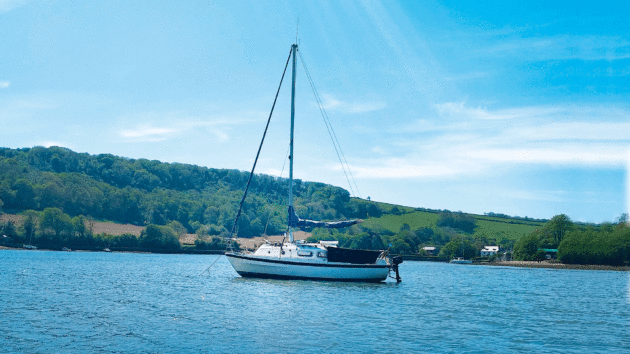
The jet stream stumbled around the upper stratosphere like a drunk on an escalator. Photo: Jasper Winn
I took consolation from the birds. As we made our way down to Land’s End towards the Longships I saw a peregrine slip off a cliff and soar upwards.
The cormorants and shags fished the inshore waters. Gulls slipped in to investigate our wake and left disappointed. By dusk, on the far side of the shipping lanes, there were no birds except the occasional shearwater razoring through the brisk wind.
The 200 miles from Cornwall to West Cork took 80 hours. The wind shifted round from the NE and then to the north and then the north west. It blew
up into squalls and died to calms. There was a quartering swell. Then chop on swell, then flat water. Dolphins. No other boats.
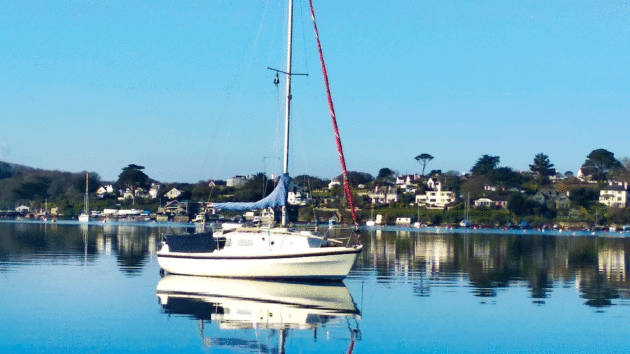
The weather was extremely varied along the Cornish coast, but it was sunny skies at anchor opposite St Mawes. Photo: Jasper Winn
The first bird lands aboard
The first bird came at the second dusk. An exhausted swallow. The SW winds that should have carried it easily to Ireland had failed and like us it was beating and tacking against unfavourable and energy sapping headwinds.
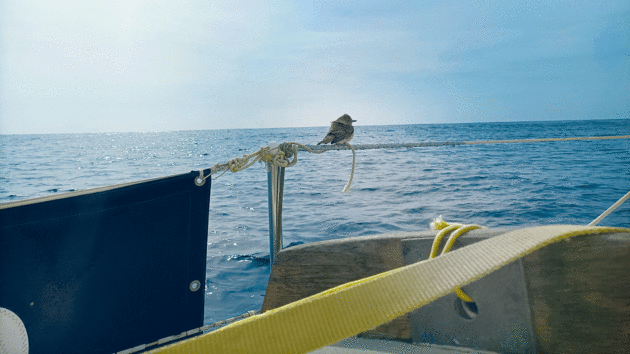
An unidentified small bird drops in for a few hours’ rest. Photo: Jasper Winn
It swooped and fluttered around the mast before the need for shelter and rest overcame its fear. It pitched onto the companionway step and perched there for a few minutes before darting across the cabin to roost on the bulkhead chronometer. It fell into a torpid state and I moved it into a dark corner of the forepeak.
The next day three more birds arrived. LBBs – little brown buggers. Hard to identify as they clung to the rigging or tucked themselves away in folds of the deflated tender for warmth. Warblers of some kind, two of them. The more ‘confiding’ bird that came into the cabin and perched on my head for warmth as I slept? Probably a chiffchaff.
The LBBs all rested and then flew on when we were within smelling distance of the coast of Cork. When I checked on the swallow I found it dead.
For migratory birds, as much as sailors, climate change means actual change. Weather patterns that have been relied on for centuries or even millennia are failing.
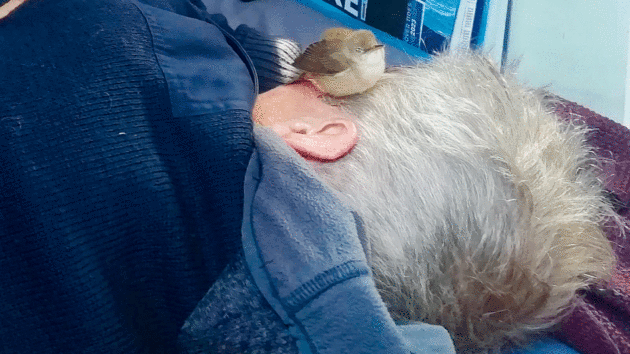
Two crew getting some shut-eye. Photo: Jasper Winn
Every migrating bird trusting itself to the air, and then to the winds, becomes an individual. Some will make it through but countless, and uncounted, others will be lost as they fall exhausted into the sea. The swallow that came to us and died was a rare individual whose death was marked and mourned.
Some individual birds will change their nature, and might become the new norm for the species.
Now the climate across southern England and Ireland has become milder, there are reports of swallows and chiffchaffs overwintering rather than taking the risk of migrating.
As sailors we’ve all experienced the changes brought on by global warming in the same way that migrating and coastal birds have. I look to them for guidance. Do we still put to sea? Or do we stay ashore? What changes will we have to make?
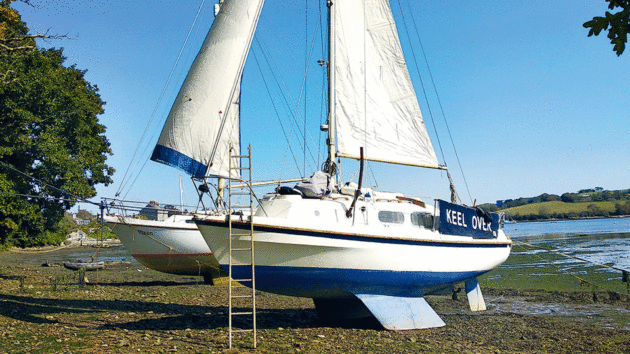
Keel Over’s berth for our first live-aboard winter. Photo: Jasper Winn
Brian Black Memorial Award
Brian Black was as passionate about the marine environment as he was eloquent in his writing and filmmaking about the crises facing fragile Arctic ecosystems.
A television journalist for RTE in Ireland, UTV in Northern Ireland, and later through his own production company, he was also a lifelong sailor
and contributor to Yachting Monthly.
His wife Lesley was a sailor and author in her own right, becoming Northern Ireland’s first female yacht club commodore, blazing a trail for women in sailing.
Lesley passed away in 2019, and Brian in 2020.
As a memorial to them both, the Black family, in conjunction with Yachting Monthly, established an award to celebrate sailing adventures, which shed a fresh light on marine environmental issues through inspiring journalism.
The award aims to find the very best writing that gives voice to the marine environment and brings a new perspective to readers.
The judges include round the world race winner, multiple world champion Mike Golding OBE, six-time circumnavigator and Volvo Ocean Race skipper Dee Caffari MBE, conservation expert Dr Robert Brown OBE, expedition leader, broadcaster and marine biologist Monty Halls, writer, marine environmental consultant and daughter of Brian and Lesley Black, Sarah Brown and the Yachting Monthly editorial team.
The award is sponsored by B&G and supported by The Green Blue, the RYA, Imray, the Royal Highland Yacht Club, the Irish Cruising Club, and the Ocean Cruising Club.
The winning entry and best video entry both receive a cash prize of £2,000. The award includes a donation of £1,500 to the marine conservation charity Sea-Changers; publication of their work in Yachting Monthly magazine and website; a presentation hosted by Yachting Monthly and the judging panel; a physical award, and the right to use the award logo.
www.yachtingmonthly.com/brianblack
Enjoyed reading this?
A subscription to Yachting Monthly magazine costs around 40% less than the cover price, so you can save money compared to buying single issues.
Print and digital editions are available through Magazines Direct – where you can also find the latest deals.
YM is packed with information to help you get the most from your time on the water.
-
-
- Take your seamanship to the next level with tips, advice and skills from our experts
- Impartial in-depth reviews of the latest yachts and equipment
- Cruising guides to help you reach those dream destinations
-
Follow us on Facebook, Twitter and Instagram.
Note: We may earn a commission when you buy through links on our site, at no extra cost to you. This doesn’t affect our editorial independence.