


While the sailing may be awe-inspiring in the southern Caribbean, the Tobago Cays' true magic lies beneath the surface
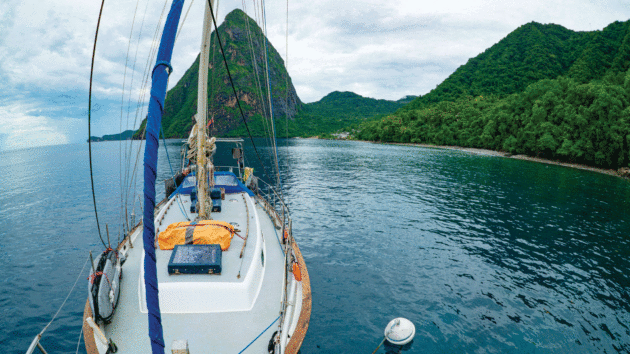
Well, we seem to have arrived in paradise,’ Tom exclaims as we sail smoothly through the shallow channel and drift into the anchorage. Green turtles pop up to breathe, one then two close by, and a third in the distance.
A lively gathering of terns wheel over the water ahead, dropping in succession to snatch at fish. We’re surrounded by a sparkling sea and the island’s beaches blaze scorching white under a high sun.
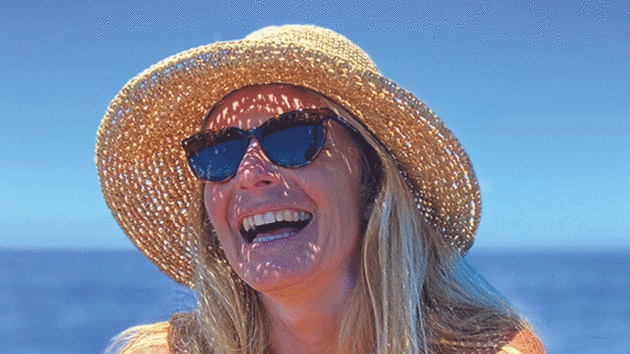
Lou Luddington is an ocean storyteller, nature photographer and writer who uses her work to give a voice to the natural world. She holds a PhD in marine biology and is author of the book Wondrous British Marine Life: A Handbook for Coastal Explorers.
Photo: Dr Lou Luddington
The realisation that we’d sailed ourselves here from our home port of Milford Haven in west Wales struck like an arrow. It was a profound moment, particularly for Tom who’d captained our well-provisioned little ship on some serious passages to get here. But we’d made it. The pinnacle of a hard-won voyage was arriving in tropical utopia, thousands of miles from first casting off as liveaboard sailors.
We suddenly felt a long way from home. ‘I think we can call ourselves sailors now,’ Tom said with pride.
While the sailing may be sublime in this corner of the Caribbean, the true magic of the Tobago Cays lies beneath the surface. Protected as a marine park, our general mission to seek out and freedive in marine protected areas across the Atlantic had brought us here.
In this article I’ll share the highlights of our brief trip to the Tobago Cays, that we managed to squeeze into a weather window between rainy season storms. The focus was below the waterline, and the wondrous marine life that lives on the reef and in the seagrass meadows.
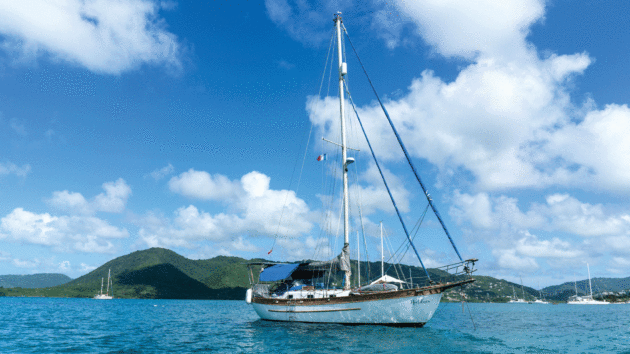
For three years, Lou and her husband Tom lived aboard their 1982 Westwind 35, Noctiluca. Photo: Dr Lou Luddington
Exploring the Tobago Cays: Getting there
We set off south from Martinique on the 25th September, with around three weeks to explore St Vincent and the Grenadines (SVGs) but with the main aim of reaching the Tobago Cays Marine Park. Our route took us from Le Marin, Martinique, to Rodney Bay, St Lucia, where we checked in with customs.
From there we cruised down the west coast and stopped for one night at Anse de Cochon. In order to check out, we made a quick stop at Soufriere, then moved to the Anse des Pitons marine protected area mooring buoys for the night. Here, at 1800 on the dot, the ranger paid us a visit to collect our mooring fee.
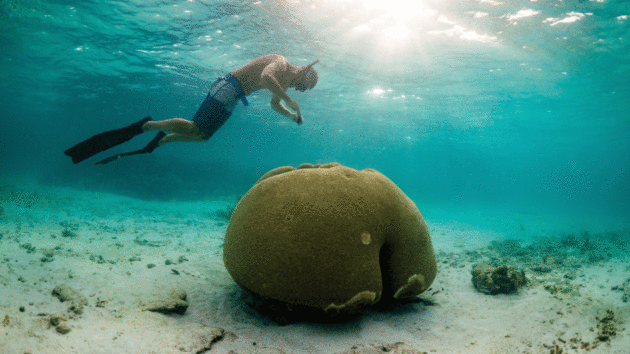
Exploring brain coral in the fascinating Horseshoe Reef. Photo: Dr Lou Luddington
The next day we enjoyed a freedive on the reef, then island hopped to Chateaubelair, St Vincent, then to Admiralty Bay, Bequia to check in with customs. From here we decided to stop over at Petit Nevis, a small island to the south of Bequia where we’d heard there was a sheltered anchorage and interesting diving near an old whaling station.
From there it was a half-day sail to the Tobago Cays. Setting off the next morning at 0830 into ideal winds of 12-16 knots on the beam, we surfed along at 5-8 knots, arriving at Petit Rameau in the Tobago Cays Marine Park at lunchtime.
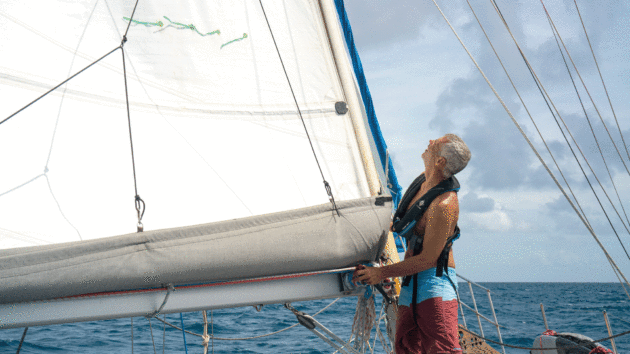
Reefing ahead of a squall. Photo: Dr Lou Luddington
Following the advice of the Chris Doyle guide we approached between Mayreau and Baleine Rocks, staying south of One Fathom Bank and headed for the anchorage south of Baradel island.
Here, we were greeted by park rangers who took payment of the park entry fee and advised us about park guidelines. Since 2023, anchoring costs have been fixed to be the same as a mooring in an effort to protect seabed habitats from anchor damage.
Marine park rules
The popularity of the Tobago Cays Marine Park (TCMP) with visiting sailors and local tour operators means it requires careful management to protect the surrounding waters and reefs. Hurricane damage, diseases, rising sea temperatures, ocean acidification, and overfishing are impacting reefs and seagrass meadows worldwide, and reach beyond protection afforded by local marine protected areas.
Following the TCMP guidelines: being mindful of waste water, not anchoring on the reef or seagrass meadows and minimising disturbance to wildlife, are hugely important steps we can take as visiting sailors. By not adding to the pressures on these sensitive habitats we can help to mitigate the wider effects on this special slice of the Caribbean.
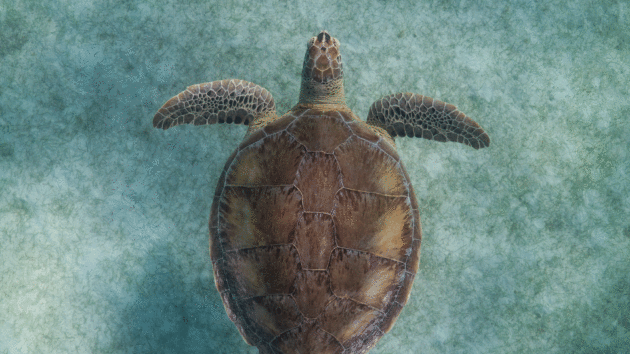
A graceful green turtle makes a fly-by. Photo: Dr Lou Luddington
The underwater world
The sweep of Horseshoe Reef, a giant semi-circle that curves around the islands of Petit Rameau, Petit Bateau, Baradal and Jamesby, creates a sheltered, sandy lagoon. In its calm, shallow water, seagrass meadows grow providing a rich habitat for all sorts of marine life and a feeding ground for green turtles and stingrays.
Once settled in the anchorage we were excited to get in the water and explore. Jumping off the side of the boat we swam towards Baradal island and the turtle sanctuary, a protected area for foraging green and hawksbill turtles. Our route took us over sand with sparse seagrass meadows bustling with life.
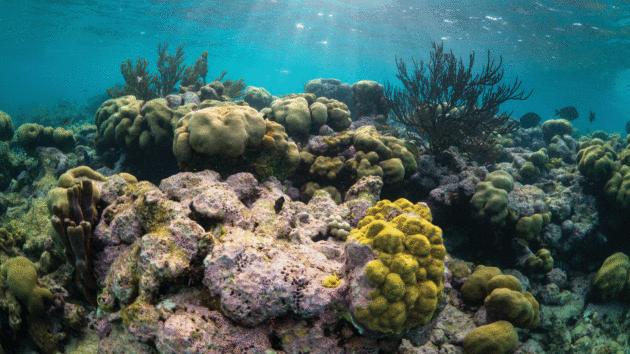
The corals may be damaged but they are still beautiful. Photo: Dr Lou Luddington
Conch, with their stalked eyes and proboscis extended, grazed; bar and horse-eye jacks patrolled, and cowfish and spotted trunk-fish worked the sand for tiny shrimps. Although we saw several turtles from the boat on arrival, underwater they seemed rather aloof. A single green turtle treated us to a swift fly-by before disappearing out of sight with a few powerful flipper strokes.
Article continues below…
Your guide to navigating Caribbean island customs and immigration while sailing
There are great pilot guides written by the likes of Doyle and constantly updated online resources like Noonsite, noforeignland and…

Sailing in the Caribbean: ‘Turtles grazed on seagrass meadows as we snorkelled around them’
The first night on an unfamiliar boat can be a bit restless. You listen to the creaks and groans of…
Stingray encounter
It wasn’t long before we spotted a southern stingray cruising over the seabed, following a chunky bar jack fish. At the surface I trailed the stingray’s wing beats, waiting for her to settle on the sand. Pausing, she started to undulate her whole body and rummage. This was my signal.
Inhaling deeply I hinged at the waist and dived headlong. With a few fin kicks I was at the bottom and level with the ray. I lay, camera poised, ringside to the action. Clouds of sand and broken seagrass shoots engulfed her as she got to work, rooting out the prey. Using powerful electroreception to first detect worms and shellfish hidden in the sand, the ray then uncovers them with the beating action of her muscular wings.
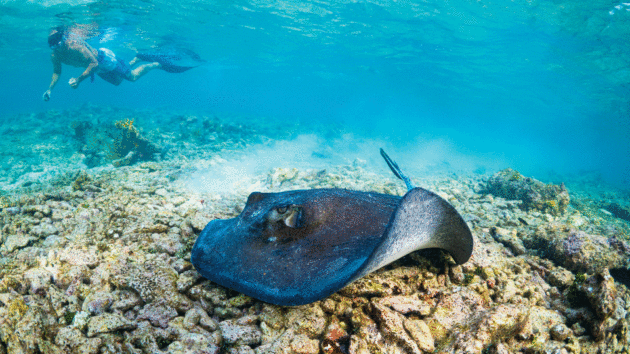
Stingrays use electro-reception to sense the electric fields of prey in the coral. Photo: Dr Lou Luddington
Bold and focused on her foraging path, she aimed right for me before whipping a turn, her elegant tail and jagged sting arcing in front of my camera. Spotlit by beams of golden light, I marvelled at this splendid creature going about her day, a gift from the Tobago Cays. She entertained us for half an hour or so,
before deciding the show was over and zipped off to deeper water.
With full hearts and the quiet contentment gained from spending time in nature, we headed back to the boat.
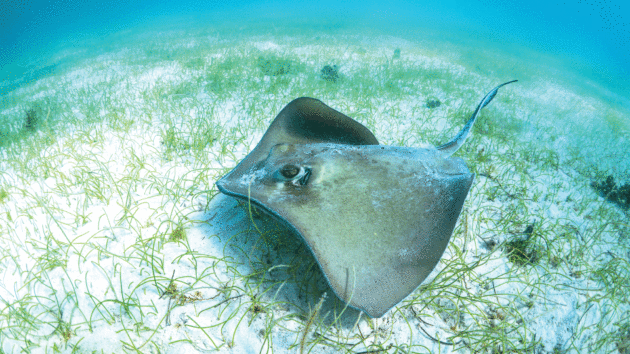
Snorkelling with
stingrays was a highlight. Photo: Dr Lou Luddington
Darkness brought an evening of star-gazing and shining the torch over the side for nocturnal fish spotting. Several garfish and a single flying fish that spread its wings, a pair of splendidly modified fins for gliding through the air, slipped in and out of the torch beam. Our friends who had sailed to the Tobago Cays recently also enjoyed watching spotted eagle rays at night in the deck lights of catamarans anchored nearby.
Horseshoe Reef snorkel
On the morning of our first dive on the reef I felt rather flustered after an anxiety dream where I couldn’t get myself ready. But by 0730 we had loaded our double kayak with freediving and camera gear and were setting off towards the reef.
Our route took us past an anchored trimaran wreck that had been taken over as a roosting and nesting spot by terns, pelicans and brown boobies. They chattered and called to each other, and as we cruised by the whiff of fishy guano reached our nostrils.
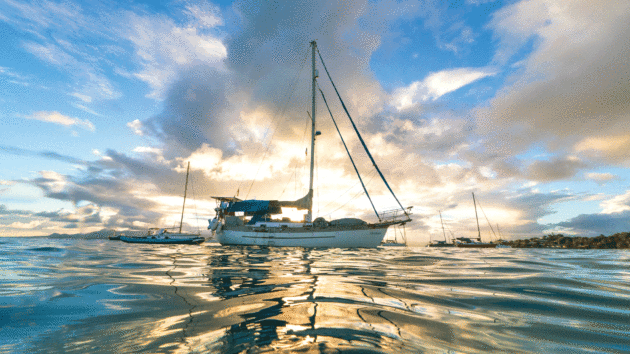
A peaceful sunset evening at anchor for Noctiluca. Photo: Dr Lou Luddington
Paddling on, we arrived at the inner reef and a small mooring buoy where we secured our kayak. Quickly putting our weight belts, snorkels, masks and fins on, we flopped over the side to a view of sand with broken coral heads and swam towards the reef. As we got close, the water was shallower and wave action increased, so that we had to weave around to find the deepest route.
In places the coral poked up into the air and was washed with white water and breaking waves. Here the reef looked storm-ravaged – huge three-dimensional structures toppled and split apart. The stone trunks of elkhorn coral spoke of former glory, its branches lying felled. The stony greyness was brought to life by the glow of yellow and gold coral colonies settled and growing upon it, and broad sea fans, swaying in the swell.
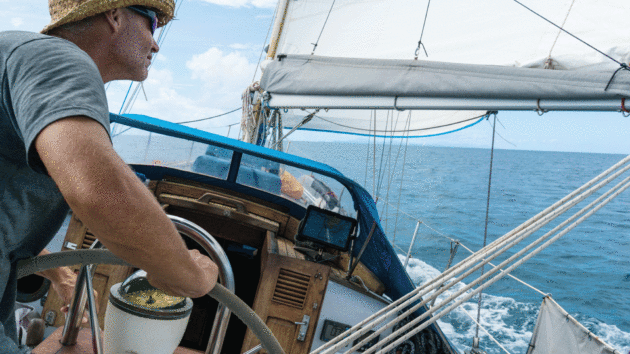
A contemplative moment at the helm of Noctiluca. Photo: Dr Lou Luddington
Beyond the reef’s shallow plateau, the water deepened as it sloped off to 10m depth or more. On this outer edge, the coral remains are glued together by the corallinaceae – red seaweeds that grow as thin crusts with a limestone skeleton. They appear painted on, a wash of pastel pinks and pale reds over the coral rock.
Clouds of fish rose up from the reef in a blaze of colour like fireworks. Many pecked at the coral for algae to eat, or dashed in to steal eggs from damselfish. Others picked at the parasites of bigger fish that hung and postured to invite their cleaning services.
As we swam over deeper water, we discovered patches of reef that had survived the storm damage, and grew strongly. Their structures towered above us when we dived down, castles beneath the surface. In the channels between, we spotted nurse sharks lying like sleepy dogs in front of the hearth.
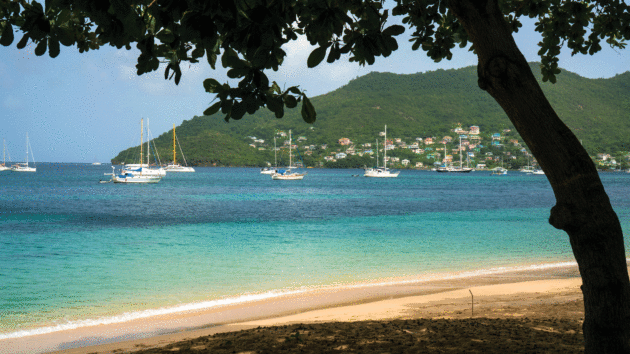
Anchoring in Admiralty Bay, Bequia. Photo: Dr Lou Luddington
Cautiously at first, we dived down and peeped at them from behind coral heads. They continued to doze unaware of our presence. Unlike most other sharks, nurse sharks don’t need to keep swimming to oxygenate their gills. Instead they use their cheek muscles to pump water across their gills and breathe, allowing them to rest on the seabed.
Damaged but beautiful
Drifting on we saw several large snapper fish, curious barracuda and a spotted eagle ray gliding past, wings flapping like a giant bird. Even in its hurricane-damaged state, the reef was a wonder to behold. Forty or 50 years ago, before mass bleaching events, coral disease, overfishing and hurricanes changed it irrevocably, it would have been truly magnificent. But for now, I’m thankful that it has protection as a marine reserve, from at least some of these woes.
After two hours and with a chill creeping into our muscles, we headed back over the reef, and paddled home to the mother ship in a dreamy daze of snoozing sharks and fishy fireworks. We had planned to go ashore to explore one of the islands in the afternoon but we found ourselves paddling back to the reef, for more time underwater instead.
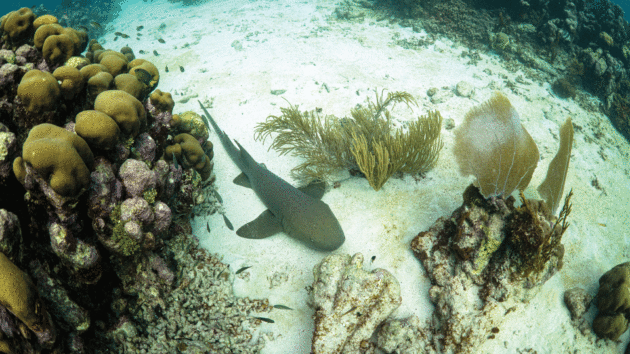
A sleeping nurse shark. Photo: Dr Lou Luddington
The next day an approaching tropical storm forced us to move along. Reluctantly, we turned our attention to deciding which of the surrounding islands would provide the most shelter. We deliberated, had a swim, watched the birds fishing and turtles popping up to breathe, then made a decision.
Tyrrel Bay, Carriacou would be our best option, via customs sign out at the port of Clifton on Union island. As we lifted the anchor, cumulonimbus clouds grew ominously to the north-east and we hurried on our way. With that, our door to the Tobago Cays slammed shut.
Out of Season
The downside of visiting the SVGs in October was that on every passage we experienced intense squalls with burly wind and torrents of rain. This made for hairy sailing and interesting arrivals at anchorages. We would often debate, ‘swimsuits, waterproofs or naked for this one?’ Caught up by a squall on the approach to the Rodney Bay anchorage Tom asked for his diving mask whilst at the helm, ‘So I can see!’
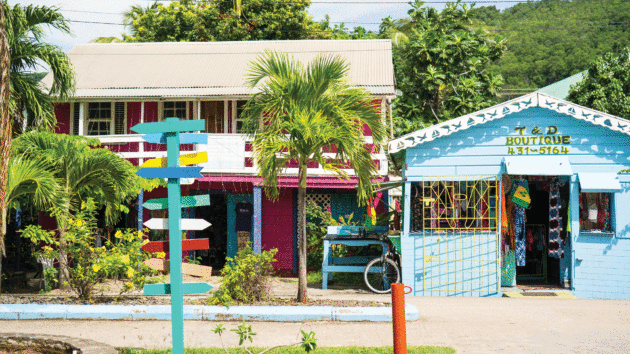
Colourful streets in Port Elizabeth, Bequia. Photo: Dr Lou Luddington
And yet this also made our time at the Tobago Cays more magical. Instead of being one of 80 plus boats in the marine park, as our friends experienced in February, we felt like we had the place to ourselves.
Yet, whichever month you choose to visit, the real allure is underwater, on the reef and in the seagrass meadows. Here, the wildlife will make your day and remind you that we must protect the ocean at all costs.
In the words of Sir David Attenborough, ‘After almost one hundred years on the planet, I now understand the most important place on Earth is not on land, but at sea.’
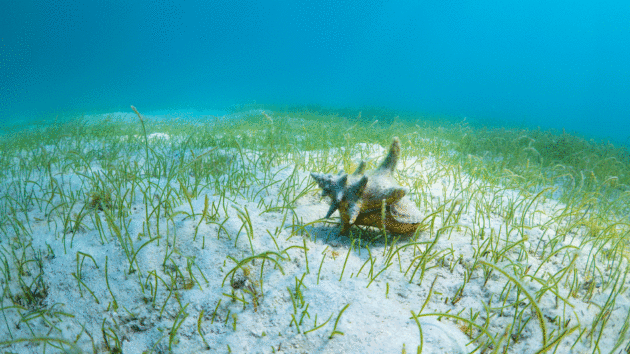
A conch nestled in a seagrass meadow. Photo: Dr Lou Luddington
Advice for cruising the Tobago Cays
Planning and preparation:
■ Charts and guides: The Cruising Guide to the Windward Islands, Chris Doyle and Lexi Fisher (www.doyleguides.com/tobago-cays) and Imray charts B5 and B6.
■ Customs and immigration: Many of the islands are independently governed, so careful route planning is required for customs and immigration. Alternatively, if you are island hopping without going ashore make use of your yellow flag. Clearing customs is never a quick process and often involves reams of paperwork and much loitering in sleepy offices.
■ Provisioning: Best places to stock up before heading to the Cays are Rodney Bay on St Lucia, Admiralty Bay on Bequia, Tyrell Bay on Carriacou, Port Louis Marina, Grenada.
■ Water and fuel: Limited availability in the Cays; plan accordingly.
On-site essentials:
■ Tender/kayak/paddleboard for exploring on-site
■ Snorkelling/freediving gear (no spearguns allowed)
■ Cash for boat boys, beach BBQs, park fees ($15 per person) and mooring/ anchoring fees ($60 per 24 hours).
Booking and payment of park fees and mooring fees are now available online via the marine park website.
www.tobagocays.org/regulations-fees
■ Respecting the environment: Be mindful of marine park guidelines to minimise environmental impact during your stay. Use mooring buoys when you can or anchor in sand patches with no seagrass. No fishing or spearfishing. Use reef friendly sunscreen.
■ BBQs on the beach at Petit Bateau: Friends who visited in February 2025 said they enjoyed supporting these local entrepreneurs from Union island, who reported still having no power after Hurricane Beryl hit Union, Canouan and Carriacou islands on 1 July 2024.
■ Safety: Check local Facebook groups and sailing forums for up-to-date information about crime hotspots. For example, the anchorage at Soufriere, St Vincent experienced several incidents of violent crime a few years ago.
■ Best time to go: Dry season (December to May) is peak season and the best for water quality and weather. Rainy season (June to November) is risky but much quieter for those enjoying solitude.
Enjoyed reading this?
A subscription to Yachting Monthly magazine costs around 40% less than the cover price, so you can save money compared to buying single issues.
Print and digital editions are available through Magazines Direct – where you can also find the latest deals.
YM is packed with information to help you get the most from your time on the water.
-
-
- Take your seamanship to the next level with tips, advice and skills from our experts
- Impartial in-depth reviews of the latest yachts and equipment
- Cruising guides to help you reach those dream destinations
-
Follow us on Facebook, Twitter and Instagram.
Note: We may earn a commission when you buy through links on our site, at no extra cost to you. This doesn’t affect our editorial independence.