



Soldier and solo sailor Henry Wootton takes a deep dive into his motivations as he prepares to sail around the world solo, nontstop, and unassisted in the 2026 Golden Golden Race.
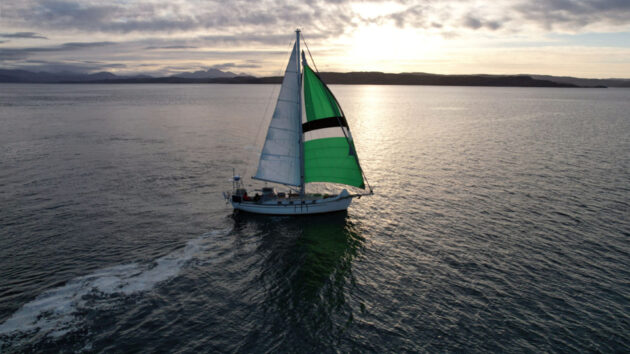
Henry Wootton isn’t put off by the Golden Globe Race‘s reputation as ‘the Voyage of Madmen’ and ‘The Loneliest Race in the World’. Far from it.
As he prepares to sail around the world solo, nonstop, and unassisted using only traditional navigation techniques, he answers one nagging question for Yachting Monthly readers:
Why?
‘The last real challenge’
In what he has previously called an ‘increasingly over-protected society’, many outdoor challenges have become ‘over-commercialised and commonplace,’ Wootton has said, naming ‘the jamboree that is Everest Base Camp’ as an example.
He counts the Golden Globe Race as ‘one of the last real challenges standing,’ and says he feels ‘a gravitational pull’ towards the idea of sailing unsupported, single-handed, and non-stop around the world in a retro race without modern assistance.
‘It attracts me like a moth to a flame.’
But Wootton’s not shy about acknowledging the inherent risk, and admitting it’s part of the appeal.
‘The dangers of single-handing in the Southern Ocean are obvious and unavoidable,’ he says. Facing it is, ‘An inherently selfish endeavour. I am doing this for my own gratification.’
He maintains, ‘Everyone has an ego, and I aspire to join that small group of humans (around 230, I think) who have completed the feat.’ Some sources report an even lower number, even under 200. Regardless of the precise figure, it is less than half the number of people who have been to space.
Still, Wootton is keenly aware that ‘any potential tragedy would be borne long-term by my friends and family,’ and feels lucky that his family has been so supportive. ‘It feels like we are doing it as a team.’
Soldiers make good sailors, says Henry Wootton
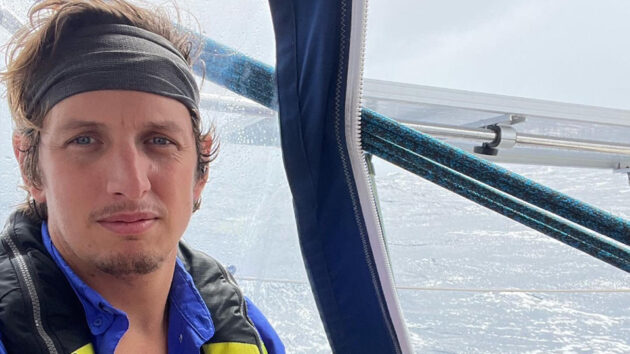
Photo by Henry Wootton
Despite sailing in dinghies as a child, Wootton didn’t set foot on a yacht until 2018.
The experience clicked something into place for him. He bought a small boat for coastal sailing in Dorset, ended up taking 18 months off work to refit an old wreck, and sailed it to New Zealand.
It was on that voyage that he discovered the parallels between the overlap between the skills needed for blue-water sailing and his training as a military officer.
‘The military mindset is about effective planning, managing risk, making decisions under pressure, and having the mental and physical resilience to continue in adversity,’ Wootton tells Yachting Monthly.
‘When I found myself alone, 2000 miles East of Tahiti in a F11 storm, on fire and flooding, my first instinct was to curl up into the foetal position.’ Instead, ‘I could just kick into gear and start dealing with the emergency.’
‘I have no illusions that I was ‘born this way’,’ he reflects. ‘I think this is trained behaviour. Simply put, I wouldn’t be here if it wasn’t for my military background. Not just because of the encouragement and support the British Army has given me, but because of those transferable skills.’
He says his approach boils down to, ‘Mental transference,’ and ‘Not allowing yourself to worry about that which you cannot control. Nothing outside the boat exists. Get the next job done, make a cup of coffee, get comfortable.’
Throughout his race preparations, Wootton is still working around his regular job as a Rifles Officer in the British Army (until April 2026, he is commanding the Chosen Men of C Company, 3 RIFLES).
He says the Army has been ‘incredibly supportive,’ and hopes to compete on duty as an Ambassador for Army Sport.
Choosing the Cape George 36
Wootton had his eye on a Cape George 36 as his Golden Globe Race boat even before Kirsten Neuschafer‘s Minnehaha won the 2022 edition.
‘It was already my favoured choice based on the numbers. The CG36 has an enviable reputation for seaworthiness. I was attracted to her heavy displacement because it improves the sea-keeping and reduces the relative weight of equipment and provisions for 300 days of passage,’ he says.
‘Equally, her proper cutter rig offers lots of sail plan options and her waterline length is up there with the longest in the race,’ making for one of the fastest boats in the class.
He found Privateer in ‘fantastic’ condition on the Merrimac river in Massachusetts in 2024 and sailed her back to Largs, Scotland solo.
‘She lived up to my wildest dreams – it was a nasty passage but I felt safe and fast all the way. She’s an absolute rapier. I spent most of the passage trying to slow her down.’
He foresees light winds to be her ‘Achilles heel,’ but expects the vast majority of the route to bring higher winds, particularly in the Southern Ocean.
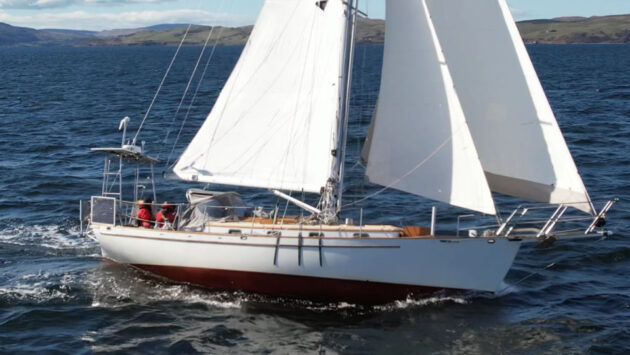
Photo by Henry Wootton
Privateer has been out of the water since June 26, undergoing a refit at Fairlie Quay Marina in the Clyde.
‘I wrote a long list of all of the single points of failure in my whole system,’ Wootton says. ‘All the work goes towards reducing this list to maximise my chances of finishing.’
Unhappy with the existing cast aluminium gooseneck, he replaced the whole boom (‘painful financially but, if that one piece of metal goes, it’s curtains’).
He also switched to a cockpit-centred reefing system to minimise time on deck and made structural changes to the cockpit and cabin, enlarged the chart table to accommodate full size paper charts, and replaced almost all the rigging, strengthening and reinforcing wherever possible.
Now he’s looking forward to leaving the preparations behind him, ‘Crossing that start line and letting refit stresses, financial pressure and all the chutney just drain away. Just me and my boat.’
The mental challenge of solo sailing
Wootton’s longest passage so far was a 42 days crossing in the South Pacific.
‘I found that after a few days, you get into a peaceful, transcendent, almost infinite rhythm,’ he says, but admits that the GGR is very long by comparison.
When discussing the GGR with friends and family, that prolonged solitude often emerges as a concern.
‘I think there is a view that single-handed sailors must be antisocial misanthropes or hermits,’ he says. ‘But in today’s world of instant communication and sensory overload, it can be a pleasure to get away from it and focus on yourself and a specific challenge. It makes it all the sweeter when you return – absence makes the heart grow fonder!’
Having tasks underhand will help him take on the mental challenge of spending the better part of the year alone. A tinkerer by nature, Wootton says he enjoys ‘the practicalities of setting up a boat for blue-water passages and then repairing it to keep it going.’
‘The reality is that if isolation is the disease, then busy-ness and a challenge are the cure.’
Henry Wootton’s road to the race
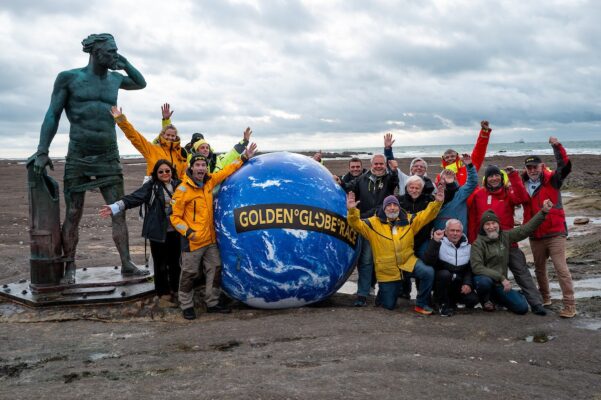
Photo by Golden Globe Race
As for racing, Wootton says he is relaxed about ‘the likely prospect of being out-sailed by a better sailor,’ adding that there are some ‘seriously impressive’ mariners on the ticket.
‘I expect that we will form a real community at sea,’ he says. ‘Although it is a race, we will be undertaking a shared endeavour to do something extraordinary.’
Still, he wouldn’t mind a win.
Though visualising the feeling of holding flares aloft as he arrives in Les Sables d’Olonne has helped him face down some tougher days and maintain motivation throughout his race preparation, Wootton is weary of flying too close to the sun.
‘I am grasping firmly to some wood, crossing my fingers, and addressing a quick prayer to Old King Neptune so that he understands that I am hopeful and not hubristic. There are a lot of sea-miles to cover before then.’
He’s looking forward to casting off and leaving the busy race preparations behind him.
He still fears being foiled by a last minute issue, or by ‘A failure that causes me to retire, particularly if it is one I could have foreseen and mitigated against. That would be incredibly tough to come to terms with after all the work to get to the start line.’
As for what he’ll miss most once the race kicks off, Wootton has an easy answer: ‘Hot showers.’
Quick facts: Henry Wootton / Privateer (Cape George 36)
Sail Plan?
Main, Yankee, Staysail. Asymmetric Spinnaker and double-sided yankee for downwind running.
Furler or hank on?
Furler. Safety over flexibility.
Self-steering set up?
Hydrovane.
I have crossed oceans solo using both auxiliary rudder and servo-pendulum systems; for me the former is more robust, reliable and offers independent spare steering.
Antifouling?
Classified! (Sounds more swept-up than the truth, which is ‘don’t know yet!’)
Sailing Inspirations:
Sir Robin Knox-Johnston is the obvious one. I would like to be the first Brit to finish the GGR non-stop since he did in 1967. But even more for me, its Major Bill Tillman [also cited as an influence by sailor/adventurer Skip Novak].
I feel a sense of awe for his military service in two Wars. His books about sailing his pilot cutters to the ends of the earth resonated powerfully.
Three unexpected items you’ll take onboard:
1. Complete Works of William Shakespeare (for the liferaft)
2. Tinned duck
3. Regimental Memorabilia – Rifles Guernsey and Rifles Budgie Smugglers, for the two extremes of weather. Swift and Bold!
Enjoyed reading this profile of Golden Globe Race skipper Henry Wootton?
A subscription to Yachting Monthly magazine costs around 40% less than the cover price, so you can save money compared to buying single issues.
Print and digital editions are available through Magazines Direct – where you can also find the latest deals.
YM is packed with information to help you get the most from your time on the water.
-
-
- Take your seamanship to the next level with tips, advice and skills from our experts
- Impartial in-depth reviews of the latest yachts and equipment
- Cruising guides to help you reach those dream destinations
-
Follow us on Facebook, Twitter and Instagram.
Note: We may earn a commission when you buy through links on our site, at no extra cost to you. This doesn’t affect our editorial independence.