



Sailing past the iconic Fastnet Rock marked an unforgettable and foggy trip for Jane Russell off Irish shores
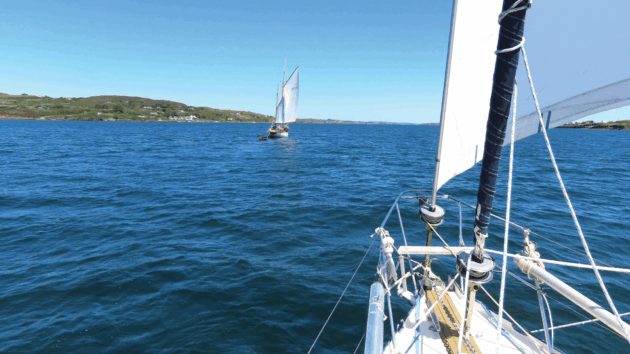
Fastnet
Fastnet is arguably the shipping-forecast sea area that most persistently stirs our sailing ambitions and dreams. Whether we race or cruise, our collective memories of Fastnet races and storms, together with the iconic nature of the Fastnet Rock itself, give this stretch of water a particular significance.
Squaring out west and north from the Isles of Scilly across the Celtic Sea, the Fastnet sea area encompasses the whole of the southern coast of Ireland, from just north of Wexford on the southeast corner, to Blackball Head, just west of Bere Island in Bantry Bay.
Weatherwise, Fastnet holds its arms wide open to the North Atlantic and to prevailing winds and swell from the westerly quadrant. Low-pressure systems usually bring plenty of rain. It is also the outer end of the funnel of tides that squeeze into the Bristol Channel and Irish Sea.
Currents can run strongly around headlands, becoming dangerous with wind against tide at Mizen Head, Old Head of Kinsale, Hook Head and between Tuskar Rock and Carnsore Point.
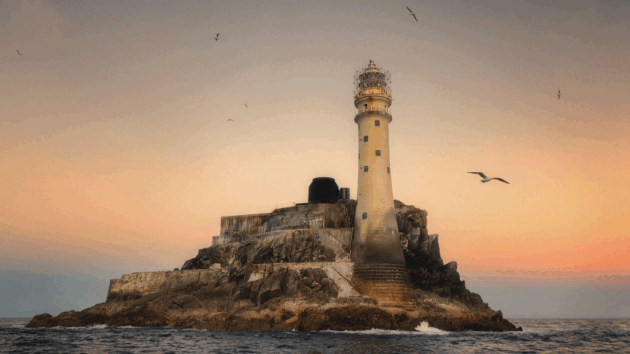
The Fastnet Rock after which the area is named, and an icon for sailors both practical and mythical. Photo: Amazing Aerial / Alamy Stock Photo
All of this can add to the sense of challenge these waters present to first-timers. But – and it’s a big but – this section of Irish coast is softly rolling and well indented. There are many lovely natural harbours offering refuge and hospitality along an extensive cruising ground.
There is a traffic separation scheme (TSS) to the south of the Fastnet Rock and another that wraps around the Tuskar Rock at the southeast corner of the Irish coast.
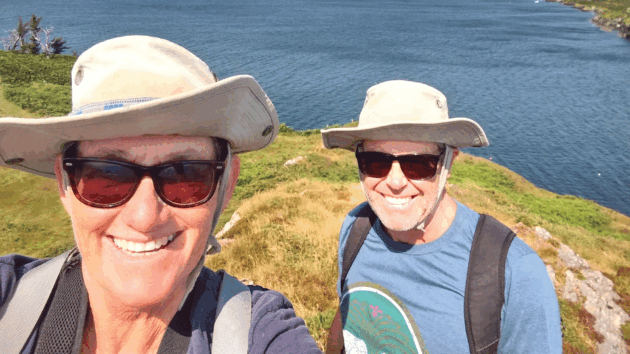
Jane and David on Sherkin Island. Photo: Jane Russell
W or SW, veering W or NW later, 3 to 5. Slight. Occasional drizzle, fog patches. Moderate or good, occasionally very poor.
Entering the Fastnet sea area we were welcomed by a pod of large and very active dolphins. They added to the sense of homecoming that had started further out, as we said goodbye to the shearwaters – our constant companions for so long – and started to see gannets tracking in and out, fast and focused. Soon there were kittiwakes and gulls, then, closer in, razorbills, guillemots and puffins.
A big Atlantic grey seal watched us as we passed. The high pressure had moved northeastwards with us on our passage from the Azores, the final leg of our Atlantic circuit, and we had used every sail onboard in a succession of light winds from every direction, with our horizon often shrouded in banks of fog.
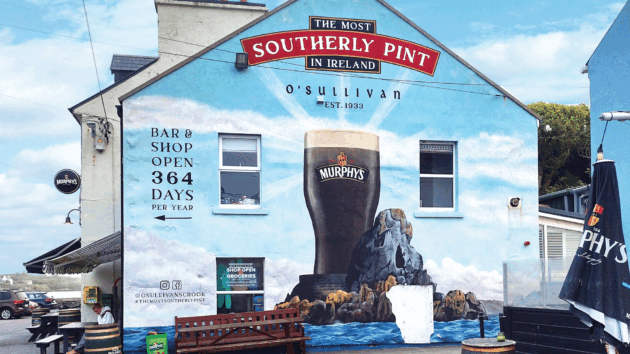
O’Sullivan’s helped lift spirits… and Murphy’s. Photo: Jane Russell
Now, with the air clear, Fastnet Rock stood sentinel to starboard over a calm sea. With only a light breeze behind us – not enough to fill any of our sails – we motored in towards Crookhaven.
As we closed the coast, our phones began to ping with incoming messages. One was from an American yacht we had met in the Azores whose crew were now motoring into Bantry. We were tempted to join them, but it would have meant several more hours under engine and an arrival after dark. Crookhaven was the better option.
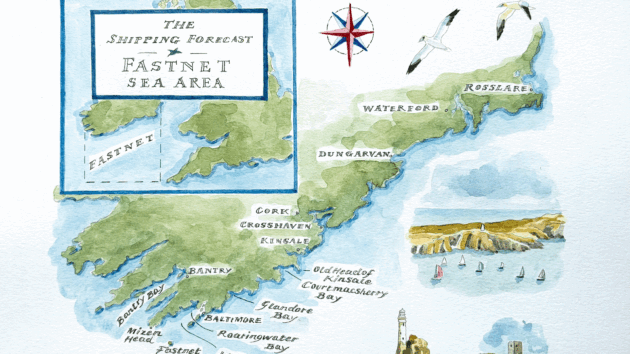
Photo: Joanna Martin, Curlew Cottage Design
We arrived in Crookhaven that evening and were very happy to pick up an available visitor mooring and then head ashore to the warm and welcoming O’Sullivan’s pub for ‘the most southerly pint in Ireland’. After 10 days at sea, the bar room was swaying before we’d even had a sip, but the Murphy’s soon restored our equilibrium.
While much of Europe had been baking in a heatwave, we had spent most of our time creeping through the mist, so it was lovely to wake to blue skies and sparkling water. We walked to Brow Head, where Marconi – whose Irish mother was a Jameson, of whiskey fame – established the signal station that first received transmissions beyond the horizon.
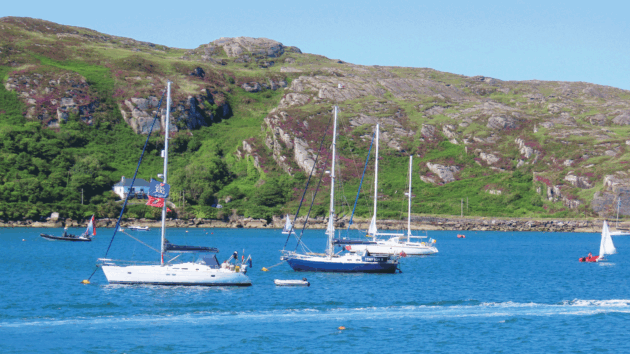
We were happy to pick up one of the visitor moorings in Crookhaven. Photo: Jane Russell
The buildings on Brow Head are all in ruins, but the views along the coast and out to Fastnet are stunning, and the walk was a good way to stretch the passage from our legs. Back in the haven, junior dinghy sailing was in full swing, and the pub and cafe were crowded with parents watching on.
We found a table on the quay and enjoyed a celebratory lunch in the sunshine. By teatime, the wind was funnelling down off the high ground, bringing with it a dramatic overfall of fog once more. We piled on the fleeces and retreated to the cabin, still passage-weary and content with an early night.
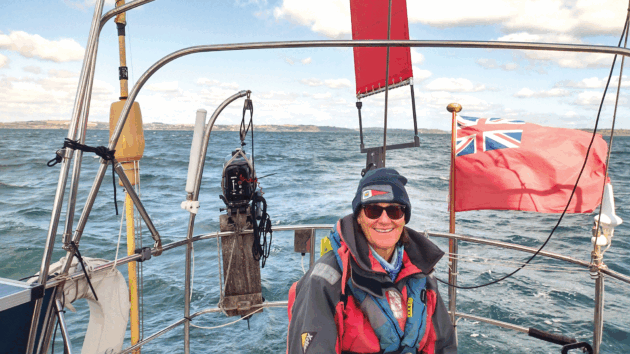
Jane left the beguiling Irish coast knowing they would return. Photo: Jane Russell
Variable 2 to 4, becoming NW 3 to 5 for a time. Smooth or slight, occasionally moderate in southwest Fastnet. Fog patches. Moderate or good, occasionally very poor.
Eastwards from Crookhaven towards Baltimore lies a scattering of rocks and small islands within the evocatively named Roaring Water Bay. Cradled within the bigger islands of Clear and Sherkin, this is a relatively sheltered playground with numerous places for a small boat to explore. Tinfish II was slightly more restricted by depth, but we still enjoyed some interesting pilotage and wriggled through.
With the wind again gusting down the harbour, we left Crookhaven under just our genoa. Clear of the lighthouse on Rock Island, the NW breeze settled down and we had an easy reach across a very flat sea towards the Long Island Channel. Overseen by one of the many medieval stone castle towers built by the clans along this section of coast, we negotiated our way past the rocks into Barrel Sound and then up inside the protection of Long Island with the tide.
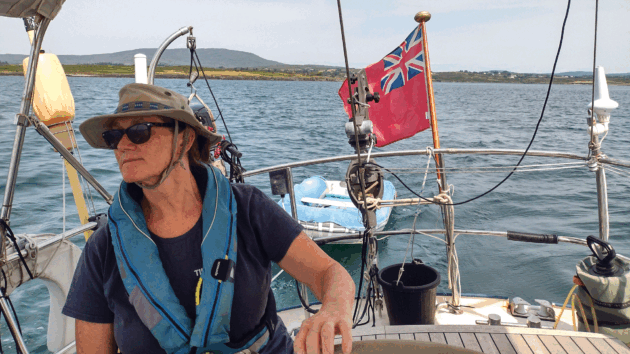
Jane takes Tinfish II to the inner channel towards Baltimore. Photo: Jane Russell
A gaggle of black guillemots took to the wing, flashing their red legs as they went. The slate shores lifted up to banks of bracken and purple heather, topped with rolling green pastures. In the distance, the huge white radar spheres glinted high on Mount Gabriel. Beyond the entrance to Schull, the channel narrowed and shallowed inside Castle Island.
Past the spit, we rolled away the sail and felt our way around the corner into Rossbrin Cove, where we had arranged to pick up a vacant mooring beneath the ancient castle tower. This teetering ruin was once a stronghold of the O’Mahony clan and a centre of learning and culture. It overlooks a sublime little haven, embraced between the islands and the mainland shore, that becomes utterly tranquil come the evening calm.
Another good leg-stretcher took us to Schull along quiet lanes between hedgerows of fuchsia and crocosmia, passing one of the area’s many megalithic ‘wedge tomb’ burial sites in the area. Schull Harbour and village were busy with boats and holidaymakers. It was definitely an ice cream sort of day.
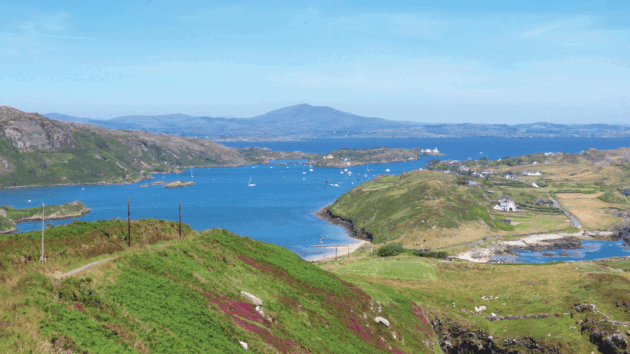
The walk to Brow Head was worth it for the view back over Crookhaven. Photo: Jane Russell
N or NE 3 to 5. Slight or moderate. Fog patches at first. Good, occasionally very poor at first
The following morning brought a light NE and we dropped the mooring and sailed out between Castle Island and Horse Island before heading up as much as we could and then tacking up into Carthy’s Sound. We were feeling a bit nervous about the depths through the inner channel to Baltimore, but it was high water and we motored into the wind across the shallows with nothing less than 1.9m below our 2m keel.
On down the channel and into the Sound there was a holiday feel as RIBs and small motor boats whizzed to and fro, waving as they passed, and dinghies and small keel boats played in the distance. The plentiful waterways branching off between all the little islands make for an extensive playground.
We had originally planned to anchor off Sherkin Island, but with the easterly winds now filling in quite fresh, and wanting to leave the boat for a while, we decided to pick up a visitor mooring at Baltimore and then dinghy across. Sherkin Island was once a stronghold of the O’Driscoll clan, who for centuries controlled fishing and trading in this neck of the woods.
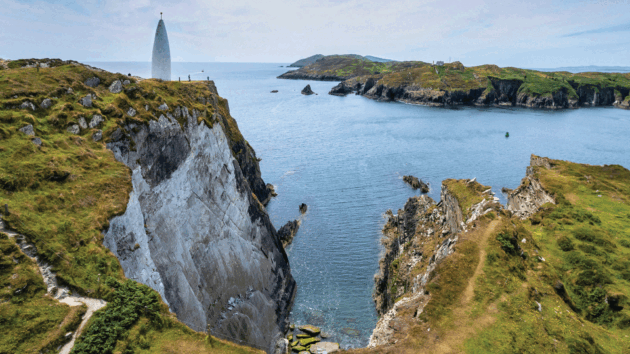
The white conical tower of Baltimore Beacon lies at the entrance to Baltimore Harbour. Photo: Michalis Palis / Alamy Stock Photo
Their trading merged with piracy and, eventually, the capturing and looting of a wine ship from Lisbon led to a 1537 reprisal raid that left the friary, Dún na Long Castle and much of Sherkin in ruins. Now the shell of the abbey nave and chancel serves as a cemetery and is a very peaceful place, with framed views out across the harbour.
We walked on up through the farm, busy with the hay harvest, and round the edge of Horseshoe Cove up to the lighthouse keeper’s cottage. Perched precipitously on the headland opposite ‘Lot’s Wife’ – the striking ‘pillar of salt’ that is Baltimore beacon – the lighthouse hill is a good high point for wonderful views of the coast and islands.
Back in Baltimore, the waterfront was a melee of dinghies and families overflowing from the sailing club; the bars and restaurants were packed with weekend visitors. We were tempted to join the throng, but it was going to be a very early start the next day.
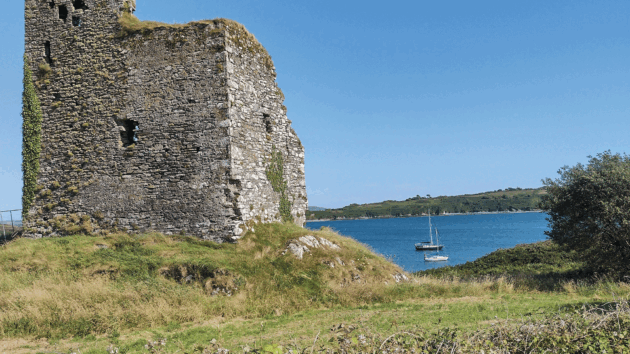
The ruins of the ancient castle tower overlooking Rossbrin Cove. Photo: Jane Russell
N or NE 4 to 6. Mainly slight or moderate. Moderate or good.
With ongoing easterlies forecast, we wanted to make use of the overnight influence of the land. We were rewarded with plenty of north in the wind and headed out from Baltimore Harbour under mainsail, with the windows facing Sherkin aflame with reflected sunrise. Out through the heads, the wind was gusting fresh already and we needed to reef, but the sea was flat and we had a reasonable angle eastwards.
A pink horizon flared into a blazing orb above Kedge Island. Out past the ragged teeth of The Stags, the wind settled down but the water boiled with hunting dolphins and plunging gannets.
We had expected to stop at Glandore, but we were making very comfortable progress, so, with much stronger easterly winds forecast in the coming days, we decided to keep going. About eight miles south of Seven Heads, the wind veered and we tacked back in. With the help of a favourable current, we were lifted steadily into Courtmacsherry Bay.
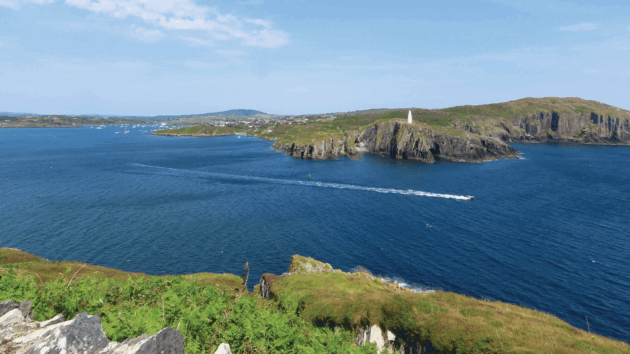
The view from Sherkin across to ‘Lot’s Wife’ at the entrance to Baltimore Harbour. Photo: Jane Russell
Under the Old Man of Kinsale, the breeze began to drop out on us and it was briefly quite an uncomfortable slop through the overfalls as we turned the corner towards Kinsale. We ended up motoring up the river and anchored in the evening sunshine, right in front of the Bulman pub in Summer Cove, just above Charles Fort.
In the stronger easterlies, Summer Cove was a perfect spot to spend a few days enjoying Kinsale. We explored the fort and strolled into town along ‘The Scilly’ waterside promenade. Holidaymakers wandered the picturesque lanes of boutique shops and eateries. Back on the water, we swam, paddleboarded and enjoyed watching the evening racing.
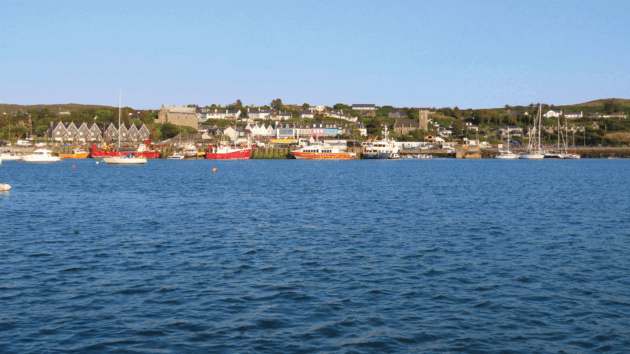
Baltimore waterfront was pretty in the evening light. Photo: Jane Russell
E or NE, backing N later, 3 or 4, occasionally 5 at first. Smooth or slight. Good, occasionally moderate.
An afternoon of lighter winds allowed us to reach out of Kinsale under bright blue skies and continuing sunshine. We managed a couple of long tacks before we lost the wind and motored into Cork Harbour up the western side of the channel past Roches Point. Into the Owenboy River, we picked up a friend’s mooring off Curraghbinny. It was an ideal location in the heart of Crosshaven, home to the historic Royal Cork Yacht Club.
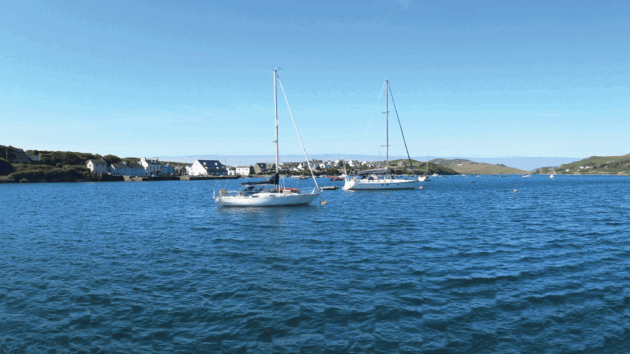
Visitor moorings in Crookhaven. Photo: Jane Russell
After a couple of weeks with family and friends, it was time to head on. Astonishingly, the easterlies were still prevailing, so when a brief 24-hour window of NW was forecast, we grabbed the chance to sail overnight direct to the Isles of Scilly.
Heading back out across sea area Fastnet with a fresh wind behind us, we left the beguiling Irish coast knowing that there was so much more to discover. We would return.
Article continues below…
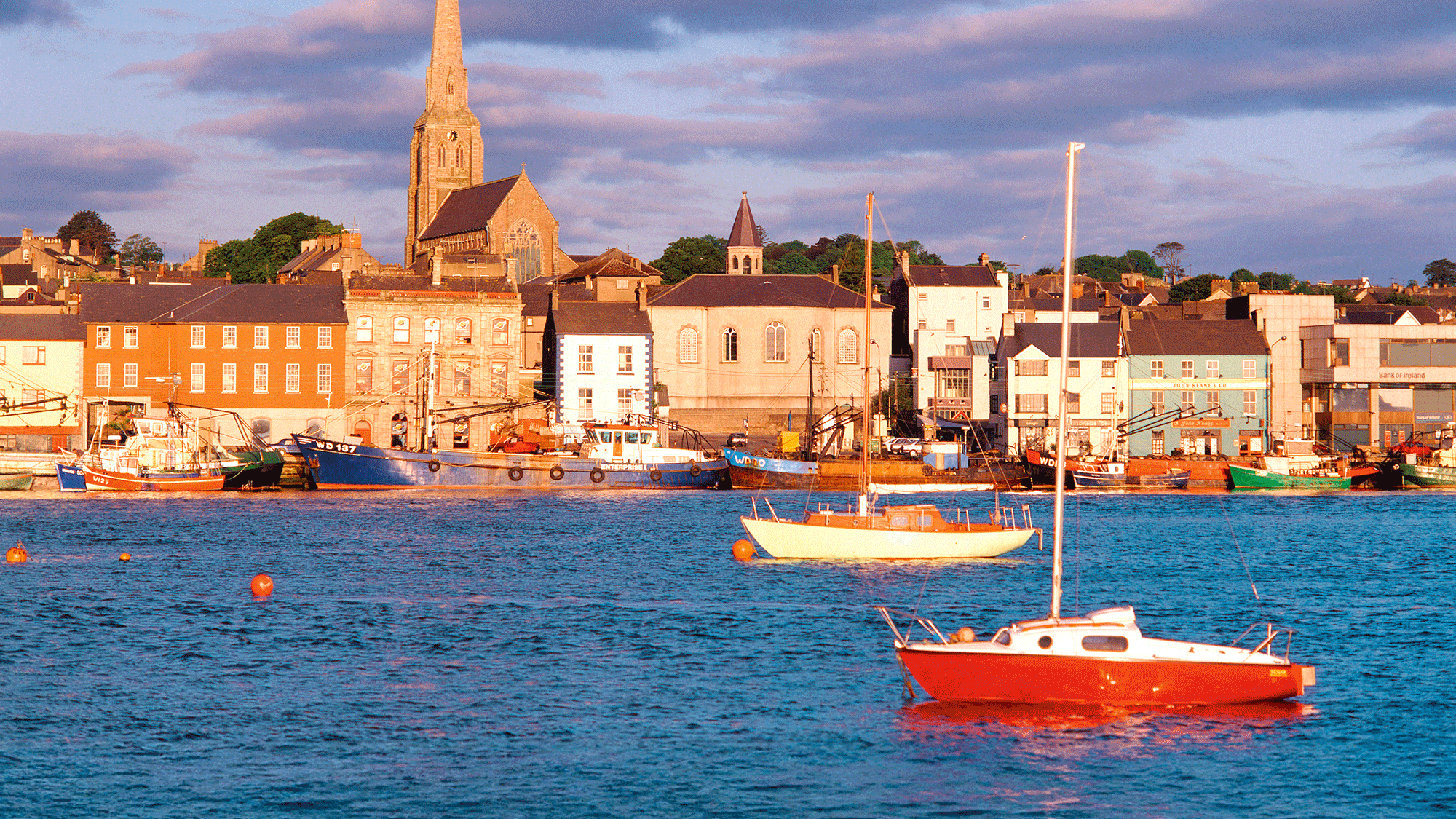
‘We were welcomed on a narrow approach by the resident seals’ – Sailing the Irish Sea
Irish Sea Uniquely amongst Shipping Forecast sea areas, the Irish Sea incorporates coastlines of every country in the UK as…
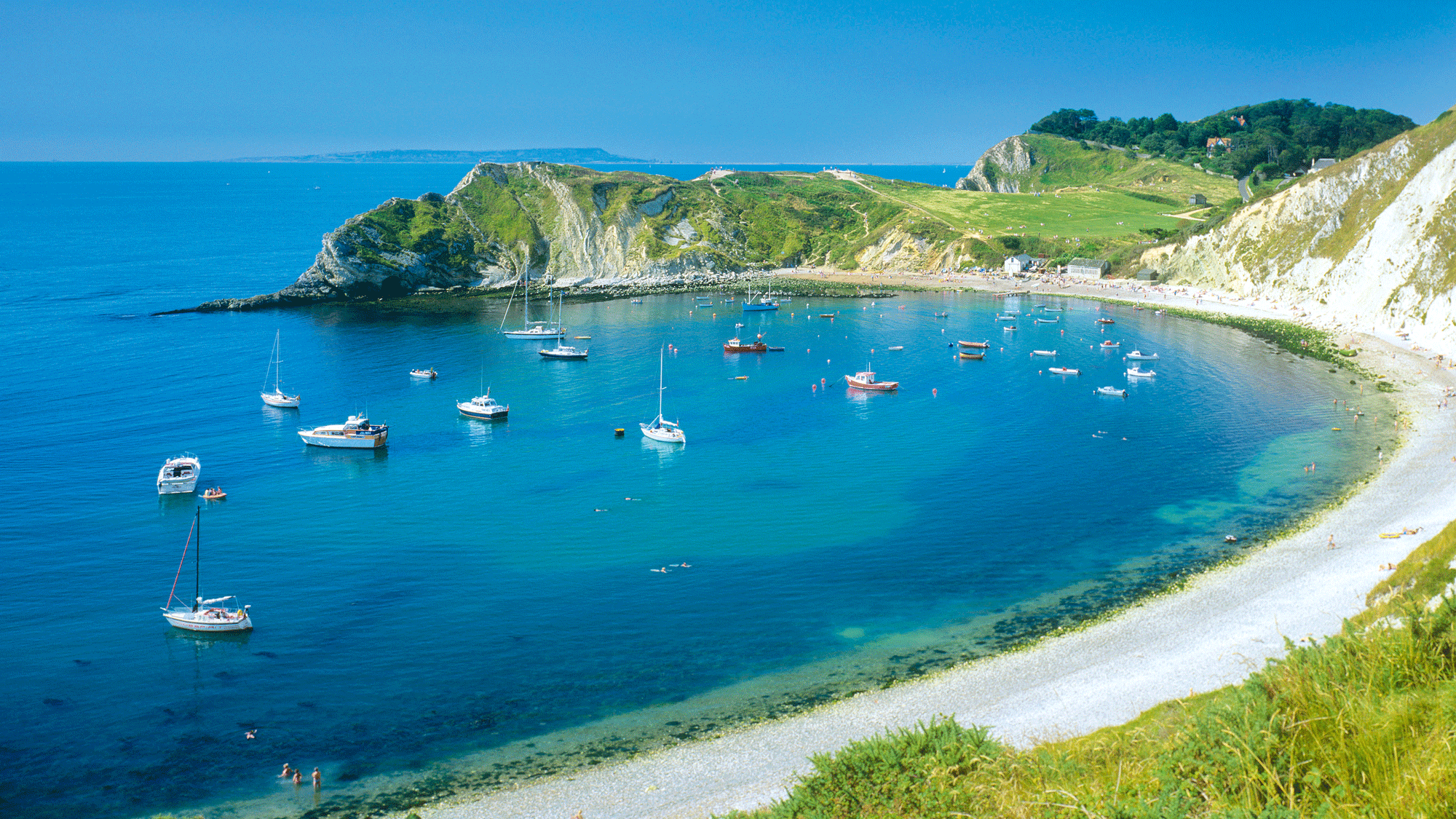
Sailing the Shipping Forecast: ‘A distant swell reminded us how lucky we were to have it so good’
Portland The sea area of Portland wraps around the Isle of Portland from just east of the entrance into Poole…
Places to Stop – Tips and Contacts
The southern coast and southwest corner of Ireland offer an almost limitless choice of harbours and anchorages, all within easy day-hop distances of each other, with plenty of options for deep- keeled boats and even more possibilities for those with a shoal draught.
In strong westerly winds and swell, the southwest corner becomes more challenging because you need to poke your nose out to get around the next headland. But in Bantry Bay or the Long Island/Roaring Water Bay area there are many days, if not weeks, of exploring to be had within. Northeastwards from Baltimore, each headland helps to create protection for the adjacent bays and inlets, and once you are up the rivers you are snug, whatever the weather.
Confidence in anchoring, including monitoring the tides and the wind and swell forecasts to select the most protected spots, is key to enjoying this coast to the fullest extent. The landscape is a bit more rugged in the west but is mostly softly rolling with a patchwork of crops and pasture. Ashore, there are plenty of friendly communities, pubs and ‘pop-ups’ offering good local fare, footpaths and quiet lanes to wander, and frequent ‘wild’ saunas with online booking and access.
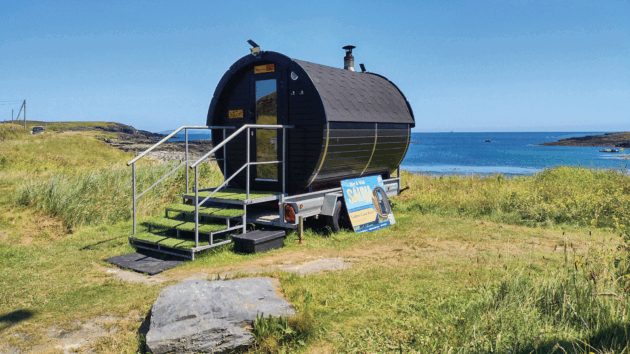
One of the many wild saunas on the Irish coast. Photo: Jane Russell
Bantry Bay
Bantry Bay is a little cruising ground of its own, with Bere Island and Whiddy Island creating protected waters and several anchoring or mooring options, including a marina at the historic harbour of Bantry itself. Glengarriff Harbour offers complete shelter beneath the backdrop of West Cork’s Caha mountains and lovely gardens on Garinish Island.
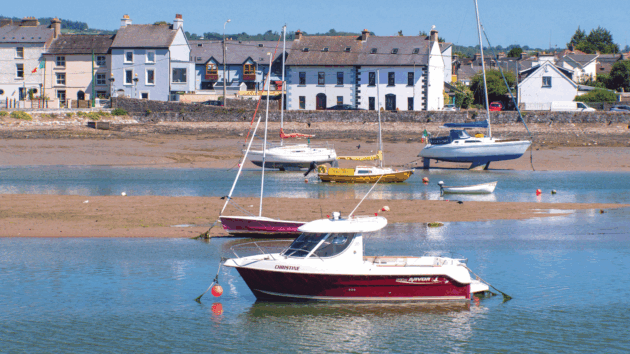
Boats at low tide in Dungarvan Harbour, County Waterford. Photo: Eye Ubiquitous / Alamy Stock Photo
Baltimore
Protected by Sherkin Island, Baltimore Harbour has a well-marked entrance and is safe in most conditions. Baltimore itself is a busy fishing village with an active summer sailing club and some very interesting nauticalia in Bushe’s Bar. Ferries run to Sherkin for some lovely walking and The Jolly Roger pub.
Cork
The centre of sailing is Crosshaven, which is home to both the historic Royal Cork Yacht Club and Crosshaven Boatyard. Both welcome visitors on their pontoon berths. The busy village has shops, pubs and good bus connections. Walk in Curraghbinny Woods or up to Camden Fort Meagher and along the cliff path.
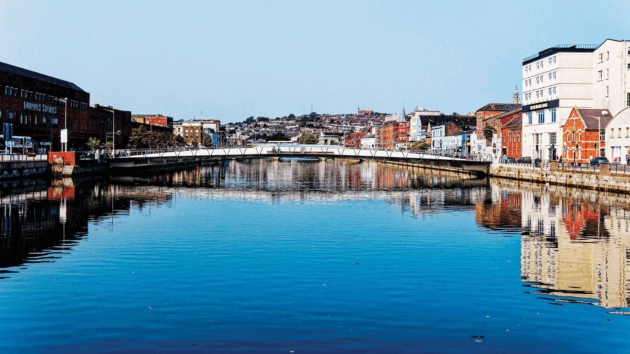
A quiet morning view across the River Lee in Cork. Photo: Darryl Brooks / Alamy Stock Photo
Waterford
This ancient port has a rich history. The extensive harbour incorporates picturesque Dunmore East which has a visitor pontoon and good bus connections into the city. Factor in the tide to go upriver to the City Marina pontoons in the heart of it, close to the 12th century Reginald’s Tower and the Medieval Museum.
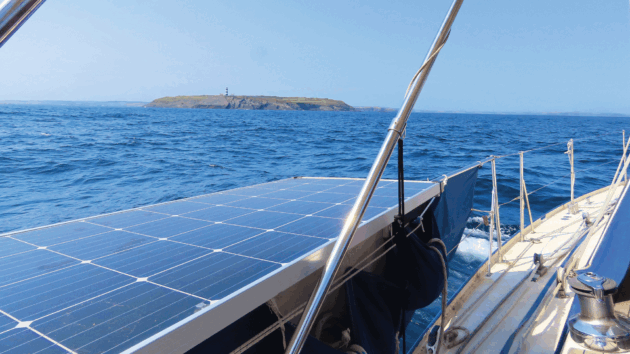
Old Man of Kinsale is a
milestone on the Irish coast. Photo: Jane Russell
Enjoyed reading this?
A subscription to Yachting Monthly magazine costs around 40% less than the cover price, so you can save money compared to buying single issues.
Print and digital editions are available through Magazines Direct – where you can also find the latest deals.
YM is packed with information to help you get the most from your time on the water.
-
-
- Take your seamanship to the next level with tips, advice and skills from our experts
- Impartial in-depth reviews of the latest yachts and equipment
- Cruising guides to help you reach those dream destinations
-
Follow us on Facebook, Twitter and Instagram.
Note: We may earn a commission when you buy through links on our site, at no extra cost to you. This doesn’t affect our editorial independence.