



The feeling of sun and wind on our faces is a magical part of sailing, but we need to take protecting our eyes and the skin around them seriously, says Richard Newsom
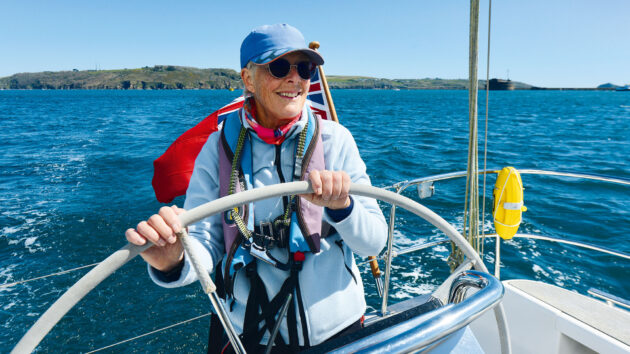
The sea is a beautiful but harsh environment. It requires a variety of safety equipment to keep sailors safe. This is particularly true for those lucky enough
to spend time in remote, sun-drenched shores.
Vision is vital when sailing, and for the rest of our lives ashore, but our eyes are vulnerable to high intensity ultraviolet (UVB) light, of which there is plenty at sea, as well as the potential for physical and chemical trauma from the substances and moving parts on a boat.
All of these can cause serious eye problems. Some simple measures can protect your eyes and improve your sailing experience.
Think of the eye like a camera. At the front, the cornea and the lens focus light onto the retina at the back of the eye. The cornea is surrounded by a transparent loose skin – the conjunctiva.
The eye lids and tears protect the cornea from drying and becoming cloudy. Behind the cornea lies the iris and then the lens.
This lens focuses light onto the retina, a light sensitive film at the back. The high levels of ultraviolet B (UVB, wavelength 280-315 nm) light in the maritime environment can affect all parts of the eye, even on hazy or overcast days.
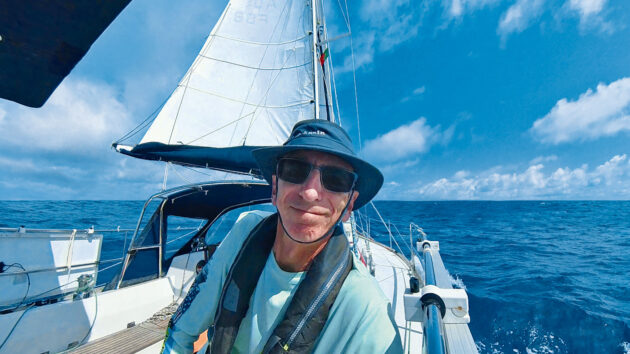
Eyelids
One of the most striking features of a sailing club is the number of sailors who have developed small skin cancers on their faces, heads and backs. The UVB light damages the skin DNA and causes cancers.
The three most common are basal cell carcinoma (BCC), squamous cell carcinoma (SCC) and malignant melanoma (MM).
The key is to detect them early and get referred for appropriate treatment. These cancers are malignant; however, melanoma can also rapidly spread around the body.
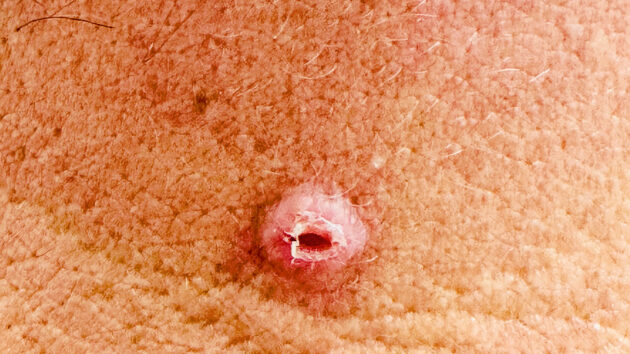
Basal cell carcinoma is common on ears and nose. Photo: Getty
Basal cell carcinoma
The commonest form of cancer, basal cell carcinoma, often forms on the ears, on the lower eyelids, the forehead, or on a the top of a balding head, or anywhere that is a sun exposed area.
It usually appears as a painless, raised area of shiny skin with enlarged blood vessels running over it. It is a slow growing tumour that does not spread but can damage the structures (nose, ears, eyes) around it. It is diagnosed with a biopsy and treated with a small operation. They frequently re-occur and may require multiple operations and biopsies to cure.
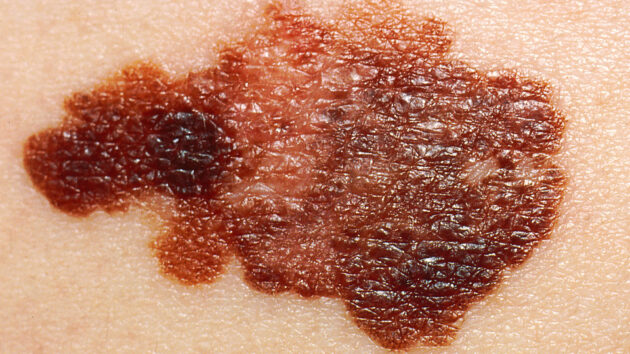
Melanomas like this should be treated quickly. Photo: Getty/Scott Camazine
Melanoma
Melanomas are typically larger moles (but not always) with uneven edges; they have uneven colours and typically grow over time and can itch or bleed.
They occur more often in certain families and among people with many moles or fair, burn-prone skin. An early biopsy is vital as these cancers commonly spread undetected through the body.
There is now treatment for melanoma, both with surgery and with immune therapy. Early detection is important and is best with Total Body Photography (TBP). This service is now widely available privately and on the NHS for high-risk patients. These are easy to book and generally cost around £200.
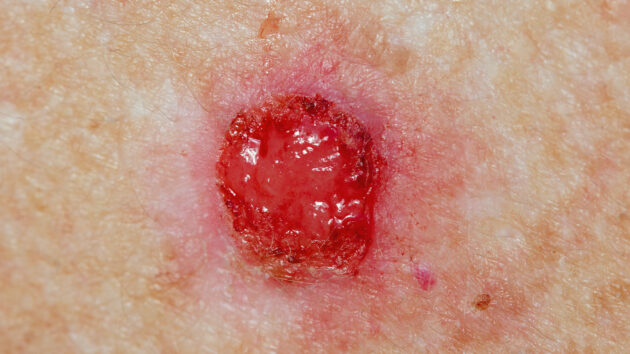
Squamous cell carcinoma also tend to grow slowly. Photo: Getty/jax10289
Squamous cell carcinoma
Appearing as a firm bump on the skin, a squamous cell carcinoma may have the same or a different colour, looking pink, red, black or brown, or as a flat sore with a scaly crust. Treatment for these is effective in the early stages by attending a dermatologist for a biopsy. These tumours rarely spread.
Prevention of these tumours is mainly down to using UVB blocking hats or caps to keep the sun off the face, eyes and ears, and the use of high sun protection factor (SPF) suncream. SPF 30 blocks 97% of UVB and SPF 50 block 98%. These should be applied every 2-3 hours, so at least three times in a day
on the water (more frequently if swimming).
The risk of skin cancers is high in sunny parts of the UK, such as the south-west coast.
If you think yourself at high risk (pale skin etc) then Digital Mole Mapping is available at many private hospitals, where some centres are already using AI technology to analyse moles in detail.
Dark glasses with UVB filters are useful for eyelid protection even on cloudy days when UVB levels on the water are still high.
Conjunctiva
High levels of UVB light can also affect the white of the eye or the conjunctiva in a number of ways.
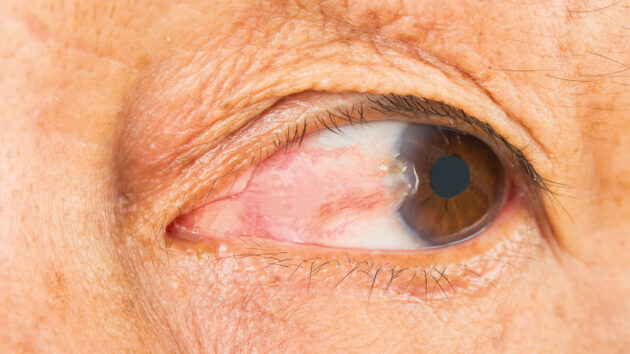
Pterygium (surfer’s eye) from years of UVB exposure. Photo: Getty/Srisakorn
Pterygium
Otherwise known as surfers eye, pterygium forms as a response to longer-term UVB exposure and is caused by the light damaging the DNA. Typically, a pink fleshy growth forms on the inner part of the cornea.
This can become stable for many years or grow slowly across the cornea and cause blurred vision. Surgery is a good cure for this type of eye problem, though wearing protective glasses also protects this part of the eye.
Pinguecula
Pinguecula is a similar type of problem. This is a small raised white or yellow lesion that is limited to the conjunctiva. It can appear on the inner or outer side and contains fats and calcium. This is generally symptomless but can cause dryness and inflammation.
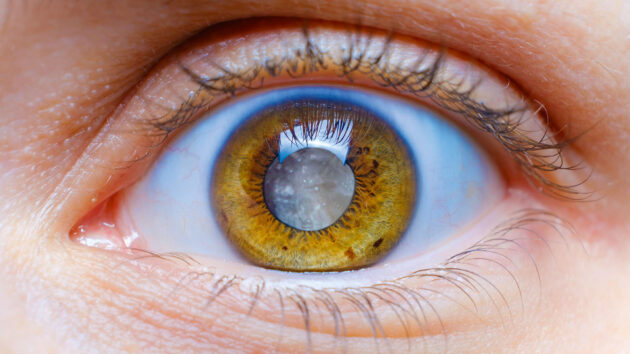
UVB can also lead to cataracts, affecting distance, night and colour vision. Photo: Getty/Zarina Lukash
Dry eye
The salty and windy environment can also cause a drying of the eye. This can blur the vision, as tears that are unstable are not lubricating the cornea. Simple measures such as wrap-around sunglasses help, as does regular eyelid cleansing with specialist lid wipes.
If you need drops, the best are preservative-free hyaluronic-based drops, such as Hycoscan or Hycoscan dual. These are ‘over the counter’ drops and bring immediate relief to dry-eye sufferers.
If the dry eye becomes more severe then vitamin ointments used at night, such as vita-pos or Hylonight, can help. You can purchase them from your local chemist or on Amazon.
Article continues below…

Best polarized sunglasses for sailors: 10 pairs tested
A decent set of sunglasses are essential on the water. Theo Stocker explains why they’re so vital, and tests nine…
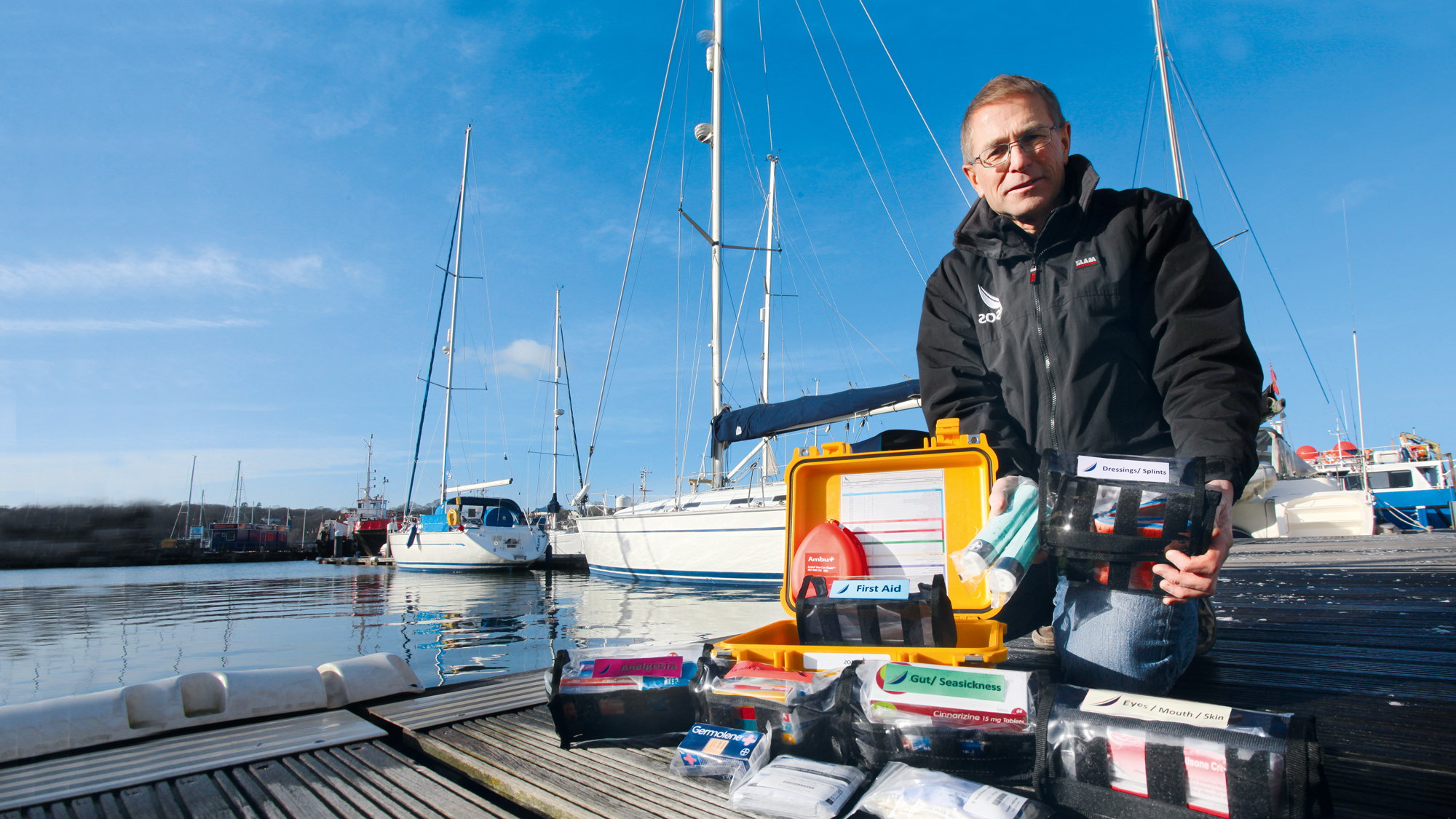
Navigating medical emergencies at sea
Why do accidents happen at the most inopportune times? Occurring when you least need them and potentially putting a crew…
Cornea
In severe exposure, UVB light can damage the outer surface of the cornea (photo-keratitis), leading to pain and inflammation. This is a type of snow blindness or ‘welder’s eye’. This is a very painful condition with severe loss of vision – again preventable with sunglasses.
UVB light can also generate cataracts, which is a clouding of the lens within the eye. Sailors notice a drop in distance vision, some reduction in night vision and a loss of colour vision.
Glare and double vision can be a problem when spotting navigational marks at night. Fortunately, cataract surgery is now a very safe operation with over 98% of patients having improved vision and 50% close to 20/20 vision post-surgery.
Again, dark glasses are important following cataract surgery to protect the delicate retinal structures.
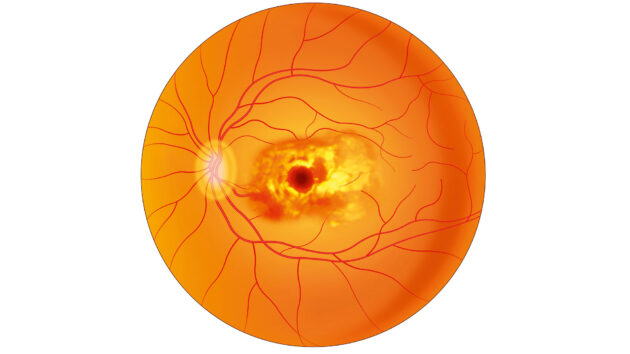
Macular degeneration can occur after cataract surgery when the protective lens is removed. Photo: ILUSMEDICAL/SCIENCE PHOTO LIBRARY, Getty
Retina
There is a strong link between UVB/blue light and macular degeneration (AMD). This is particularly so following cataract surgery, where the body’s natural UVB filter (its lens) has been removed.
Patients can experience distorted and blurred central vision. All patients start with dry AMD and some progress with wet AMD, where abnormal blood vessels grow under the retina.
An optical scan (OCT) check by your high street optometrist can diagnose whether this is wet or dry macular degeneration and, if needed, arrange treatment. There are US studies on patients who work on and around the sea that show increased rates of this disease, particularly following cataract surgery.
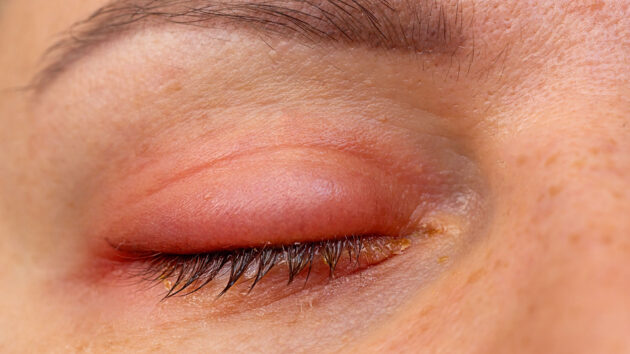
Minor infections can be treated with over-the- counter antibiotics. Photo: Iuliia Burmistrova, Getty
Common eye lid infections
Infections of the eyelid do occur commonly – mosquito bites or a small cut can lead to redness and swelling of the upper eyelid. This is usually best treated with penicillin-based antibiotics.
If the infection is severe with a temperature, possibly in a child or person who has recently had sinus surgery, the fat behind the eye can become infected and push the eye out. This is a more serious infection and may require admission to hospital.
Conjunctivitis or ‘red eye’ is relatively common, particularly after swimming in polluted water. The eye becomes red and gritty and produces surprising amounts of pus. A simple ‘over the counter’ antibiotic, such as chloramphenicol, will treat this.
The eye can also be infected with a variety of viruses including herpes conjunctivitis.
A red gritty eye without the presence of any pus should be examined for viruses, or possible ocular inflammation such as uveitis.
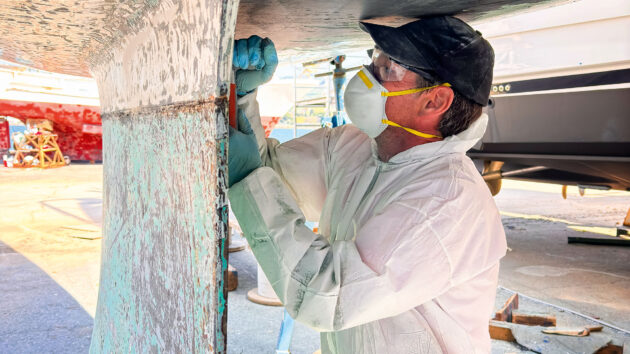
Eye trauma is a risk from debris during boat maintenance as well as from flogging sails and ropes. Photo: Mbbirdy, Getty
Ocular trauma
The eye can be assaulted in a variety of ways other than with UVB light. A common injury is with a flailing rope or sail hitting the eye. In a mild form this will simply remove the surface of the cornea – a corneal abrasion. Although it sounds simple – this is very painful, and the eye will become blurred.
Simple treatment with a patch and antibiotic ointment usually sorts the problem out in 24-48 hours. The eye may feel a little dry for many years afterwards.
With a more severe blunt injury the damage can be greater. The iris can be damaged, and this can lead to an eye full of blood. The pain will be significant and the vision will be much reduced.
This is a proper emergency as the blood will need to be washed out with surgery, and the eye may need long-term drops as the pressure can rise.
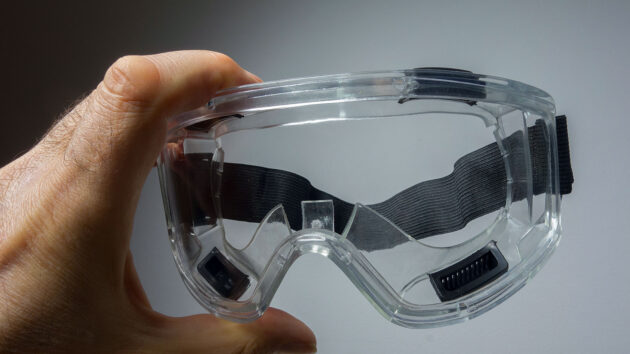
Safety goggles should fully cover your eye to provide protection for the lower eye lids, leaving no large gaps. Photo: Kypros, Getty
The same is true for even more severe injuries when sharp objects such as metal shards, glass or even fishing hooks penetrate the eye. Again this is an emergency, and you may see the iris poking out of the eye.
If this occurs a simple eye pad and shield and antibiotics may help, but surgery within a few hours is vital to stop ocular infection. Penetrating injuries with the use of power tools, often when the drill bit snaps, can lead to metal shards landing on the operator’s face.
Safety glasses can prevent this, though they need to be well fitting to give full protection. It’s worth wearing well-fitting glasses that also protect the lower lids during any maintenance jobs and especially during winter laying-up.
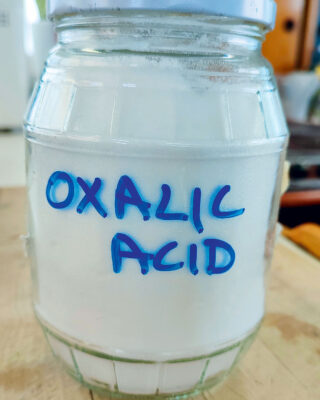
There are plenty of substances on board that won’t do your eyes any good
Chemical injury
Yachts tend to require strong solvents to remove dirt and keep the hulls and decks clean. Some of the most potent are either strong acids or strong alkali. These solutions can cause extreme damage to eyes and safety equipment is a must if using them.
Beware of getting these chemicals on your skin around the eyes as they will burn the skin and if they get into the eye then emergency eye wash is needed – using around 2-3 litres of water.
If there is some PH paper in the yard then this can be measured, and further wash out given if needed. A trip to A&E is then in order as starting treatment promptly is vital.
The same can be said for concentrated sun block. Although it is useful on the skin – in the eye it can become painful and swollen. Again, a through wash-out is helpful followed by chloramphenicol ointment if painful.
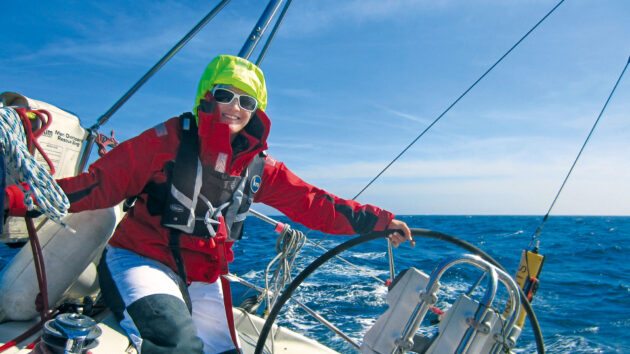
A hat or peaked hood will protect your face, ears and neck from the sun
Other eye emergencies
In general people are very sensitive to any change in vision – around 70% of our sensory information comes through our eyes. Slow, painless visual loss is best managed with a trip to the optician with examination and scans.
However sudden vision loss can either be painful or painless. Either should be assessed urgently. Peripheral visual loss is typically a retinal detachment or glaucoma, while central loss could be a small ocular stroke, a blocked vein or macular degeneration.
The speed of new symptoms (e.g. sudden vs slow) gives a good indication of how quickly to react to changes in vision.
Conclusion
I hope that this article has been useful. The main take away is that wearing polarised dark glasses on board does reduce the UVB light risks and safety spectacles during maintenance are vital to prevent injury to this delicate area.
To encourage dark glasses, I recommend that instruments should have screens that can be read at any angle with polarised glasses. The dark glasses can be made up with varifocal lenses which give real visual flexibility on board and will stop you from taking them off when reading charts, your plotter and instruments.
Enjoyed reading this?
A subscription to Yachting Monthly magazine costs around 40% less than the cover price, so you can save money compared to buying single issues.
Print and digital editions are available through Magazines Direct – where you can also find the latest deals.
YM is packed with information to help you get the most from your time on the water.
-
-
- Take your seamanship to the next level with tips, advice and skills from our experts
- Impartial in-depth reviews of the latest yachts and equipment
- Cruising guides to help you reach those dream destinations
-
Follow us on Facebook, Twitter and Instagram.
Note: We may earn a commission when you buy through links on our site, at no extra cost to you. This doesn’t affect our editorial independence.