


Jane Russell navigates the changing weather patterns along the South Coast as she sails the Shipping Forecast.
Portland
The sea area of Portland wraps around the Isle of Portland from just east of the entrance into Poole Harbour, westward across Lyme Bay to Berry Head at Brixham, and cuts due south to the French coast between Cap de la Hague and Trégastel, holding the Channel Islands in its embrace. It is a well-known stomping ground for countless South Coast sailors who are very familiar with its ways.
Much of the English coastline, particularly the wide expanse of Lyme Bay, is exposed to the prevailing southwesterlies, but protection can be found in Poole Harbour, behind the Isles of Purbeck and Portland, and in the western corner of Lyme Bay.
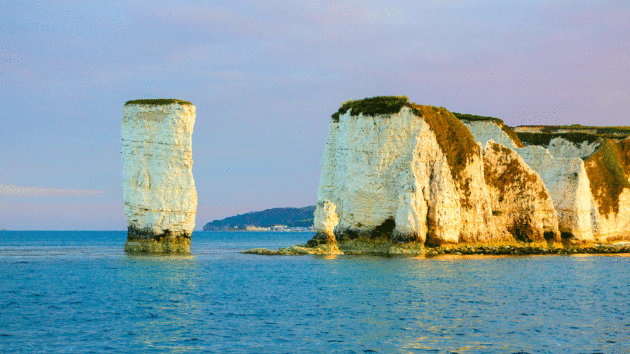
The iconic Old Harry Rocks, off Studland Bay, Dorset. Photo: Alamy Stock Photox
The Channel Islands and French coast are generally more protected from the southwest by the bulk of Brittany, with numerous rivers, headlands and islands to tuck into or behind, but it all becomes more exposed out towards the northwestern corner of the Cherbourg Peninsula.
Strong tides are a common feature of this area, with potentially dangerous races on the English coast off Peveril Point, St Alban’s Head and Portland. The Alderney tidal race is similarly notorious but in the right conditions may be harnessed to great effect, as can the tidal streams between the Channel Islands and the French coast. There are big tidal ranges towards the southeast corner around St Malo.
Channel crossings should avoid or take account of the Casquets TSS, which lies N/NW of the Channel Islands. The Saint-Brieuc windfarm is a prominent feature off the French coast.
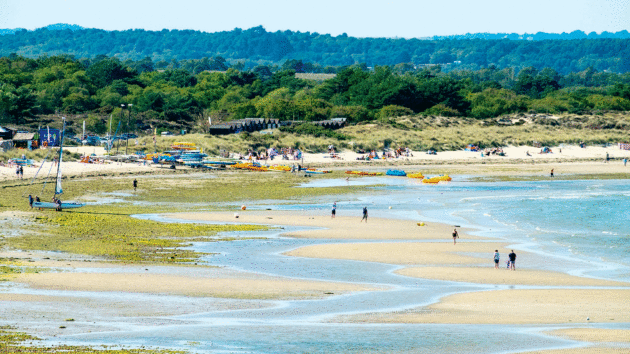
Picturesque Studland Beach offers great shelter from westerlie. Photo: Grant Nixon / Alamy Stock Photo
N or NE 3 to 5, occasionally variable 2. Smooth or slight at first. Showers. Good, occasionally moderate.
Leaving the Isle of Wight behind us, the variables had brought shifting southerlies together with patchy showers. Sea area Portland now welcomed us with more persistent rain and Studland Bay, usually our first choice, looked decidedly unappealing.
With the likelihood of northeasterlies to come we would be much better off in Poole Harbour. But we wanted to check out the seagrass protection moorings in the Voluntary No Anchor Zone in Studland, so fetched on into the bay for a closer look.
Disappointed by the 8-tonne limit, no good for our 13 tonnes, we took note before running up the Swash channel towards the narrows at the chain ferry crossing. The tide was still ebbing so it was a slow approach, with plenty of time to monitor the loading and unloading of vehicles onto the ferry, the aim always to pass through with maximum time and minimum adrenaline.
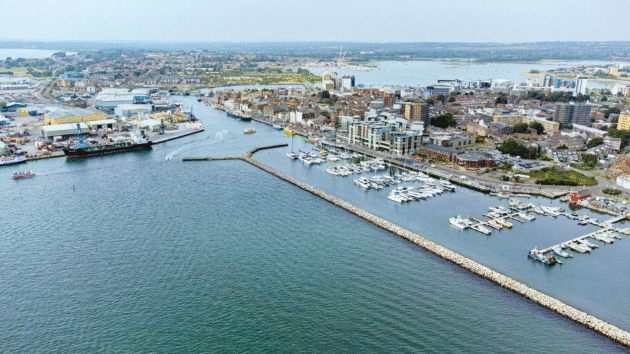
Poole harbour and marina has much to offer both small and large vessels. Photo: Britpix / Alamy Stock Photo
We’d been fancying exploring up South Deep but there wasn’t yet enough water, so we anchored in the entrance under Brownsea Island in a bit of a pool at the junction with Blood Alley Lake.
It was very comfortable, with lovely views westwards. Laziness won the day and we stayed put to enjoy a dramatic sunset through the rain clouds and then a very peaceful night’s sleep. It was interesting to watch a few shoal-draught boats cut across to anchor in Whiteground Lake, which was the perfect spot, given the forecast.
Poole Harbour has much to offer craft of all shapes and sizes, with a choice of marinas or more secluded anchorages. In smaller, shallower-draught vessels, there are numerous ‘lakes’ and channels to explore, including up the River Frome to the historic market town of Wareham.
Brownsea Island provides a woodland habitat for red squirrels and is a special place to visit, with information about access available on the National Trust website. Amongst other things, Poole is also home to the RNLI HQ and the Old Lifeboat Museum which celebrates the many years of lifeboat history here.
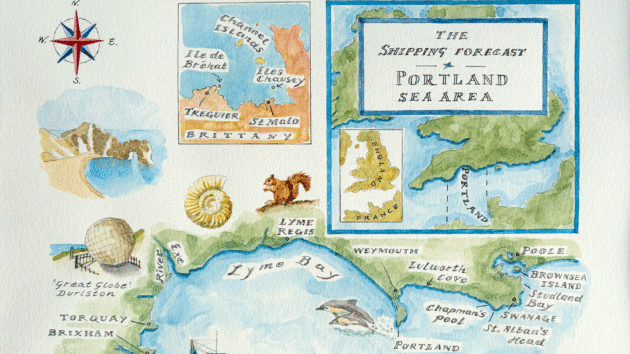
Photo: Joanna Martin, Curlew Cottage Design
N or NE 3 to 5, becoming variable 2 for a time in north. Slight or moderate, occasionally smooth in north. Fair. Good.
There were plenty of reasons to pause here for a while but, on this westward leg of our Round Britain, we were very happy to be benefitting from the early season northeasterlies. We upped anchor the next morning, a bit ahead of schedule, as soon as they filled in. Downwind to Old Harry Rocks past the now sunlit loveliness of Studland Bay, with its excellent shelter in the more usual westerlies.
So many happy memories came to mind, of its beach, its pub, its scenic walks, of playing in dinghies and wading in the shallows on the search for razor clams, visits at the beginning or end of Channel crossings, as well as voyages west or homeward bound.
From Studland it is only a long summer day sail to the visitor moorings in Braye Harbour, Alderney, making sure to plan timings to arrive with minimal tidal flow. Strong flows in the Swinge or the Alderney Race can catch out the unwary.
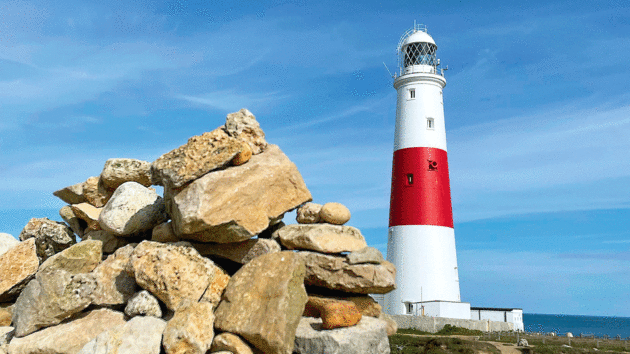
The new Portland light is an iconic landmark on any passage westward. Photo: Neil Singleton
Full of old world charm, Alderney can be a whole holiday in its own right, especially with children. Or it’s a stepping stone to the other Channel Islands or onward to the North Brittany coast. This is a bountiful cruising ground that rewards multiple visits over many years. Any other season and the northerly winds could be carrying us there.
But now we had a different mission. On towards Peveril Point, we gybed out a little too far and into a contrary current. We might not have noticed except that boats inside us were gaining on us remarkably well. Gybing back in brought better progress and closer views into Swanage and along the cliffs towards Anvil Point. Then it was a lovely broad reach, close in towards St Alban’s Head.
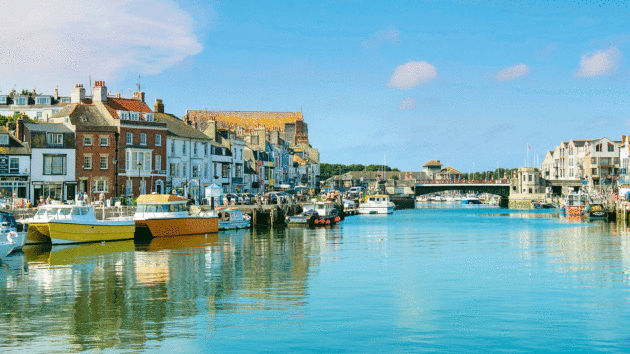
Buzzing Weymouth has a plethora of pubs and eateries. Photo: Realimage / Alamy Stock Photo
It was the weekend and there were plenty of other boats enjoying the smooth seas and sunshine. We were not the only ones heading for Chapman’s Pool where we were looking forward to meeting Dorset friends.
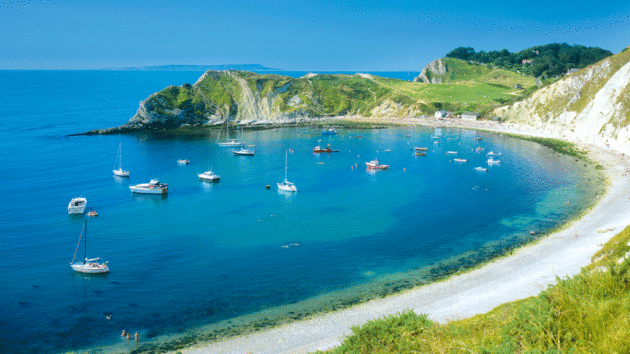
Conditions were just right for Lulworth Cove as well. It could have been a day to tuck into the famously enclosed bay, then go ashore and stretch our legs up over the top: past the folded rock layers at Stair Hole and along the coast path to Durdle Door’s limestone arch, enjoying the views and the striking geology of this World Heritage Site.
Maybe lunch at the café or supper at the pub. But we guessed that on such a lovely day it was all likely to be absolutely packed and we opted for a less crowded spot.
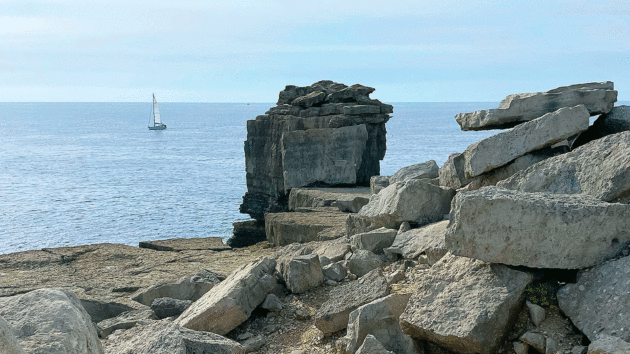
The view from the base of Portland Bill lighthouse. Photo: Neil Singleton
Chapman’s Pool
With its high cliffs and rocky shoreline, the anchorage at Chapman’s Pool looks slightly daunting on approach, but it’s worth it in such settled conditions for the stunning scenery and memorable walks on the adjacent coast paths.
We weren’t the first in but we found space and depth to anchor and then enjoyed the entertainment of all the comings and goings. A large gaggle of mountain bikers were enjoying their picnic lunches beside the boathouse. I didn’t fancy the steep climb back up!
The water was still pretty nippy but, once our friends arrived, the gorgeous weather demanded a dip and we all braved it, if only for a quick circumnavigation of the boat and back out. Then the first cockpit barbecue of the season, reminiscing about past visits together, with dogs and kids, finding ammonite fossils along the shore.
As the walkers and cyclists headed home and left us in peace, there was only the slightest movement as an occasional residue of distant swell reminded us how lucky we were to have it so good.
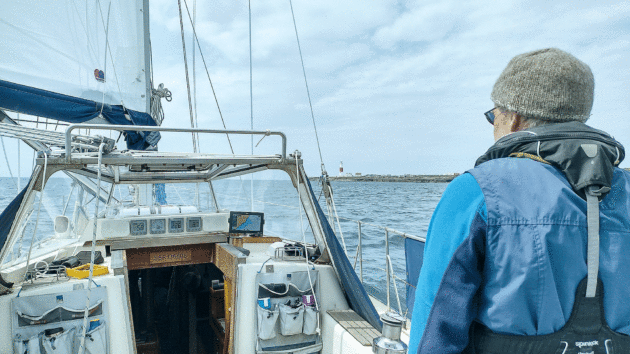
Approaching Portland Bill close in on the first of the favourable tides. Photo: Neil Singleton
Variable, mainly N, 2 to 4, becoming NE 4 or 5 later. Slight or moderate. Fair. Good.
A problem under the high cliffs of Chapman’s Pool was no mobile phone reception and no VHF. So, we were happily oblivious of the firing schedule until we emerged and set course for Portland.
We were swiftly chased off southwards by the Lulworth Range safety boat. Our new course set us out into a more adverse tide, but with every ‘whoompf’ of firing we were glad to be clear. As well as carrying the sound, the cool morning wind off the land was being accelerated down the valleys and we had a strong enough breeze to need a second reef in the main.
Weymouth and Portland are old friends, but the forecast was good for Lyme Bay. We might have headed in to the visitor pontoon on Custom House Quay to enjoy Weymouth hospitality. Or we might have anchored off Castle Cove, under the northern arm of Portland harbour breakwater, for guaranteed entertainment
from all the foilers and dinghies whizzing about.
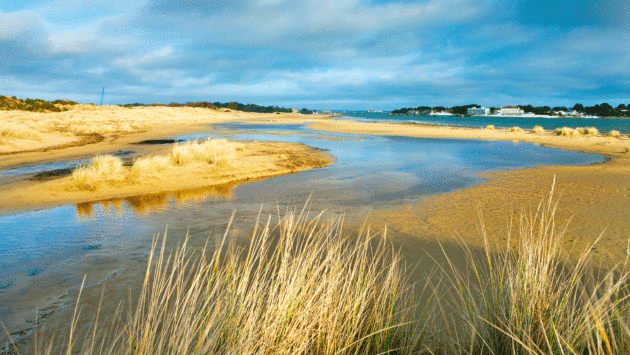
Shell Bay looking towards Sandbanks. Photo: Adam Burton / Alamy Stock Photo
Instead, we cut in close to the east side of the Bill and picked up the favourable current southward, following the 10m contour down to the point. The accelerated northeasterly had moderated and the sea was completely benign. It would be easy to forget how tumultuous it can be here.
As the wind dropped away further to a gentle breeze, we hoisted our light wind cruising chute and made dreamy progress westwards, diverging from the long, low curve of Chesil Beach where a distant cruise ship was making stately progress. A pod of 20 or so common dolphins came to check us out, as they often do across Lyme Bay.
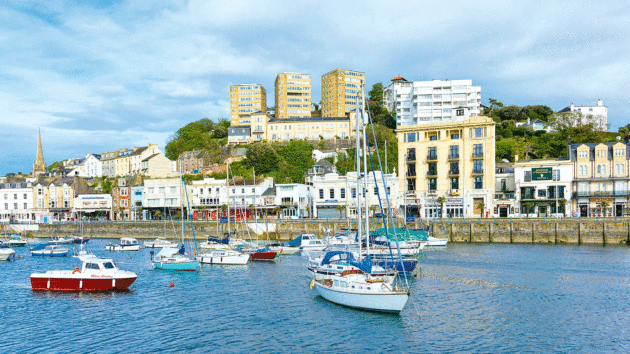
Torquay has good rail connections. Photo: incamerastock / Alamy Stock Photo
We weren’t going fast enough for proper play but they seemed content to mooch along with us for a while. To our north was the tempting possibility of a stop at Lyme Regis. The conditions would have been perfect to anchor off there, east of the historic Cobb.
It would also have been a good time of year to walk towards Axmouth along the Undercliffs National Nature Reserve path. The lush and exotic rainforest-like microclimate may still have been pungent with wild garlic.
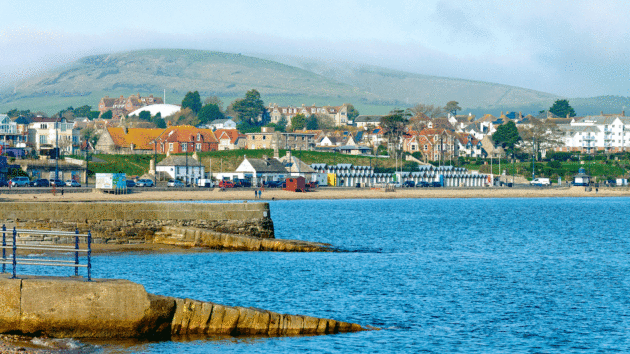
In westerly winds Swanage is a good alternative to Studland. Photo: Peter Lane / Alamy Stock Photo
But the gifted northeasterly wasn’t the moment to pause, either there or in Torquay or Brixham. Torquay offers a sheltered marina, right in the middle of town, at the heart of the English Riviera.
A walk up the hill is rewarded by great views and a welcome at the Royal Torbay YC. Brixham marina sits within the still busy fishing harbour, abundant in maritime heritage, tucked away from the prevailing westerlies under Berry Head National Nature Reserve. Both are usually good options at the beginning or end of a Lyme Bay crossing, but we were determined to make as much progress down Channel as possible before our luck ran out.
With the strengthening forecast we chose to head on into the night. As a huge, hazy, pink sun slowly dropped behind the rugged outline of the Devon coast, the variable wind at first chastised our decision, backing NW and then SW for a time.
But then it forgave us, settling and strengthening from the north. We picked up speed over the kindly sea and as darkness shrouded the coast we crossed into sea area Plymouth.
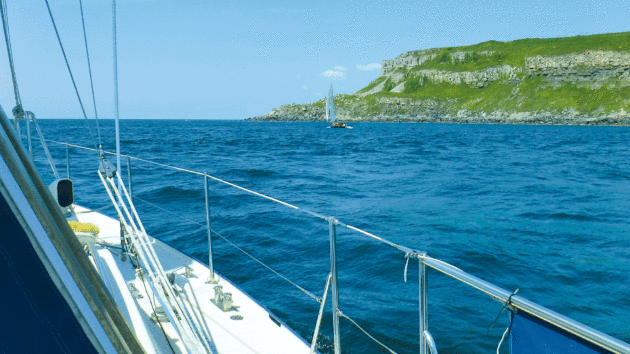
A fellow yacht also enjoys the sunshine and smooth seas as they sail past Anvil Point.
Cruising the Portland area – Getting around
Marinas and crew changes
On the English coast, there are marinas with good nearby rail connections in Poole, Weymouth and Torquay. Southwestern and Great Western railways connect Poole with Weymouth and link to Exmouth, Teignmouth, Torquay and Paignton. Elsewhere along the coast there are good bus services, including the Jurassic Coaster between Lyme Regis and Poole.
On the French coast there are rail connections from the tidally restricted marinas at Granville (HW+/-3hrs), St Malo (+/-2.5hrs to lock-in basin or greater access over tidal cill), and Paimpol (+/-2.5hrs to lock-in basin). This section of French coast offers many other marinas and numerous anchorages as well as access to the Brittany canal system via the River Rance.
In the Channel Islands the principle marinas are on Guernsey (St Peter Port) and Jersey (St Helier), with many other anchorages available throughout the islands.
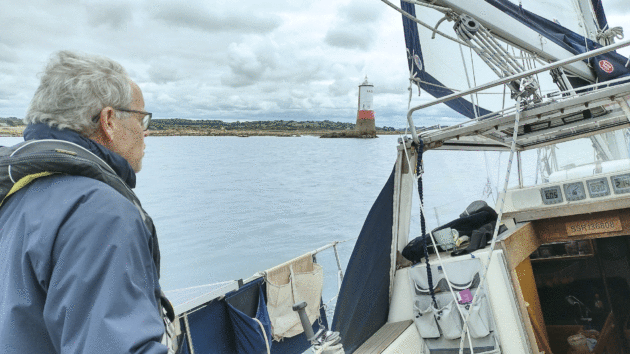
David takes Tinfish past La Corne on the way up to Tréguier
Ferries connect Poole with Guernsey, Jersey and St Malo www.condorferries.co.uk. Alderney Ferries run to Guernsey and Cherbourg https://alderneyferryservices.co.uk.
There are flights to Alderney and Guernsey from Southampton and to Guernsey and Jersey from Exeter. Cross-Channel exit/entry formalities have been changing over time, as have the regulations around travelling with pets. Before you go, check the latest at www.theca.org.uk.
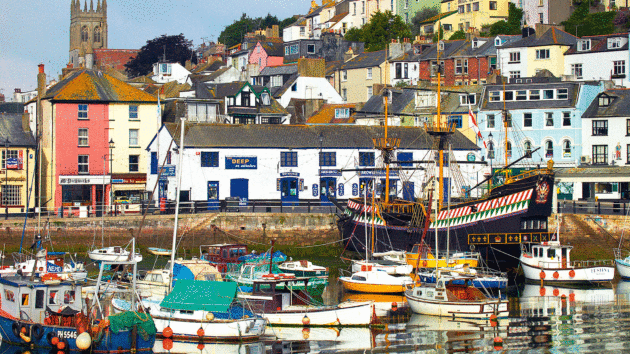
Brixham harbour has a rich maritime history. Photo: Guy Edwardes Photography / Alamy Stock Photo
Pilotage information
The Shell Channel Pilot (Imray) gives good guidance on passagemaking and Channel crossings and details the harbours on both coasts. Royal Cruising Club Pilotage Foundation’s Channel Islands, Cherbourg Peninsula and North Brittany is an essential companion to that area. The Cruising Almanac (Imray) is very helpful, as is Imray Tides Planner app.
Article continues below…

Sailing to the Channel Islands planned for you
Not all of us have the luxury of leisurely cruising, with many of us having to make do with two…
Sailing the Shipping Forecast: Coastal cruising from Stonehaven to Berwick-upon-Tweed
The Forth sea area runs from just north of Stonehaven on the East Aberdeenshire coast southwards to Holy Island off…
Places to Stop
On the English side, Poole is an extensive playground all of its own, but elsewhere this bit of coastline can feel a bit scary. The tidal races demand careful navigation and passage planning, and in onshore wind or swell the long curve of Lyme Bay can seem too far between places of shelter.
But in settled conditions there are several interesting places to anchor and explore. Smaller, shoal-draught boats can really make the most of options like Bridport, Axmouth, Teignmouth or the Exe.
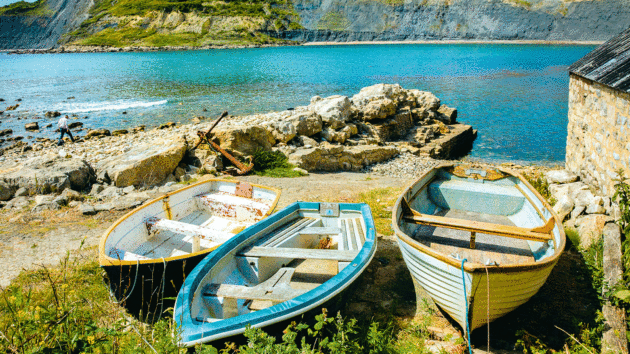
Chapman’s Pool proved tempting enough for a quick dip. Photo: Steve Taylor ARPS / Alamy Stock Photo
The Channel Islands present tidal challenges but are a delightful cruising ground where life exists at a slower pace from a bygone age. Walking around Herm, Alderney or Sark you’ll witness quiet lanes and glorious vistas, thought-provoking remnants of a war-torn history, and quirks like a volunteer-run railway or horse-drawn carriages. Even the bigger islands feel relaxed and charmed.
On the French coast, the possibilities are endless: There are fortified harbours, like St Malo, with long histories and much to discover; or exposed archipelagos, like Îles Chausey, to challenge tidal planning and pilotage skills; or rivers, like the Tréguier, leading you inland to ancient Celtic trading hubs; or islands, like Île de Bréhat, to anchor under, swim off and stroll ashore.
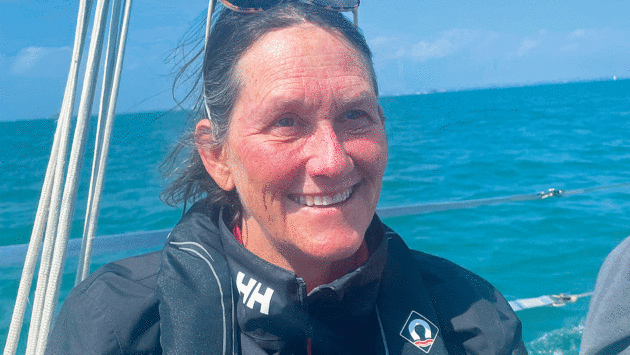
Jane and David Russell have been cruising together for more than 30 years, including a 5-year circumnavigation with their first Tinfish, a 37ft 1964 steel Piet Hein
Swanage
Protected from the prevailing westerlies, Swanage offers a good alternative anchorage to Studland. Tuck in close to the shore, west of the pier, making sure you are well dug in. It’s a nice walk southwards to Durlston Head and the Great Globe – an enormous sculpted stone sphere made in the late 1800s.
Braye Harbour, Alderney
Braye is an excellent first stop in the Channel Islands. Approach from NE. There are numerous visitor moorings, well protected from prevailing westerlies under the long Admiralty Breakwater.
Or anchor clear of the moorings. It does get busy in the summer holidays but for good reason. It is a gem, with crystal-clear water and white sand.
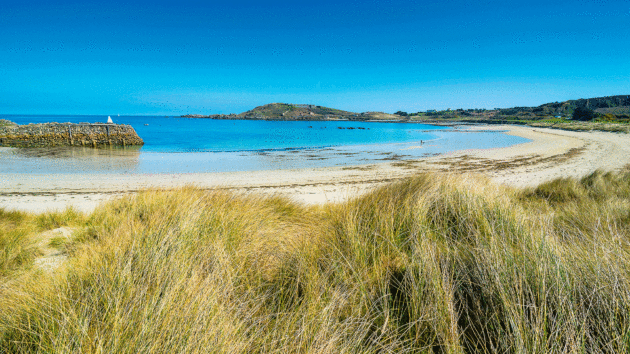
Alderney’s glorious beaches, including Braye Bay, pictured here, makes the island a great choice for family holidays. Photo: robertharding / Alamy Stock Photo
St Malo
Lock into Port Vauban and moor under the old walled city of St Malo, which dates back to the 12th century and was sympathetically rebuilt after the damage of World War Two. Walk the ramparts or head to the beach and the seawater lido. When the tide is out, visit the Fort National.
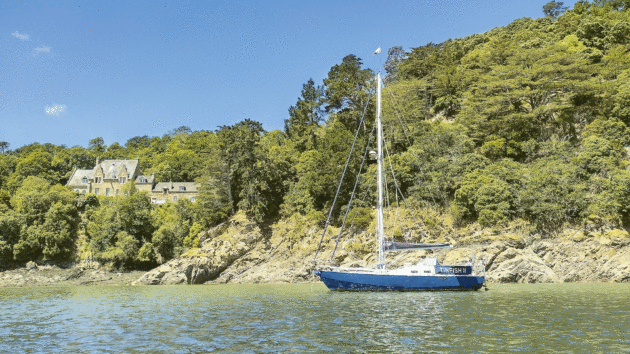
Anchored under the chateau just downstream from Tréguier.
Tréguier
The well-marked passage upriver on the tide to the lovely medieval town of Tréguier takes you into the cosy embrace of the Breton countryside. Head for the marina or anchor in tranquility under the chateau and dinghy up to this old trading post of Breton potatoes for Welsh coal. The cathedral holds relics of Welsh/Breton Saint Yves.
Enjoyed reading this?
A subscription to Yachting Monthly magazine costs around 40% less than the cover price, so you can save money compared to buying single issues.
Print and digital editions are available through Magazines Direct – where you can also find the latest deals.
YM is packed with information to help you get the most from your time on the water.
-
-
- Take your seamanship to the next level with tips, advice and skills from our experts
- Impartial in-depth reviews of the latest yachts and equipment
- Cruising guides to help you reach those dream destinations
-
Follow us on Facebook, Twitter and Instagram.
Note: We may earn a commission when you buy through links on our site, at no extra cost to you. This doesn’t affect our editorial independence.