


Spending winter in the tropics is a dream, but cruising the Caribbean may test your ability to handle unexpected gear failures.
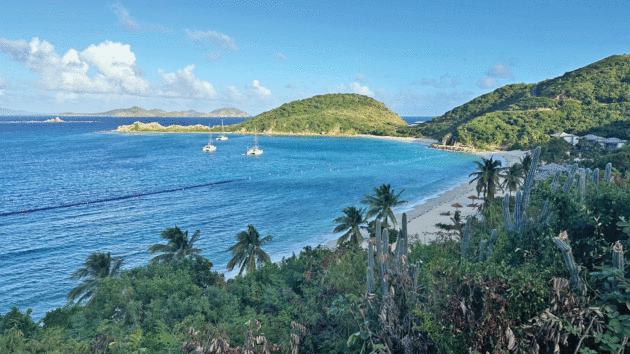
During the spring of 2024, a friend of mine delivered my 41ft Moody sloop from Annapolis to American Yacht Harbor Marina (AYH) in Red Hook, St Thomas, US Virgin Islands – an open-ocean adventure covering over 1,600 miles. AYH is about 35 minutes from the airport, but only a short walk from the ferry terminal that carries passengers and workers to nearby St John, as well as to Tortola in the British Virgin Islands (BVI).
A few days after my arrival, I was enjoying my morning coffee in the cockpit when I was startled by a loud crash, accompanied by a splash of warm seawater on my lap. I jumped up only to discover an egret floating just inches from my boat, a small fish in its mouth.
Relieved that there had not been a collision with another boat, I heard several other loud splashes. It was obviously time for the pelicans to enjoy their morning buffet too!
One of the first sailing trips of my spring visit to the islands was with two folks who owned a nearby catamaran, who came out with me as crew. With a 15-knot tradewind blowing from the east, we pushed out into the washing machine of Atlantic and Caribbean cross-currents that mix together in the waters between St Thomas and St John just outside Red Hook harbour.
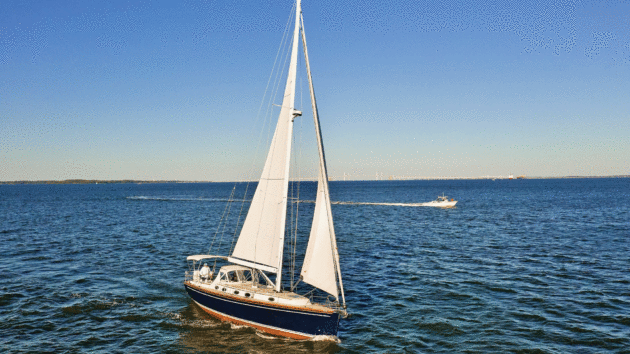
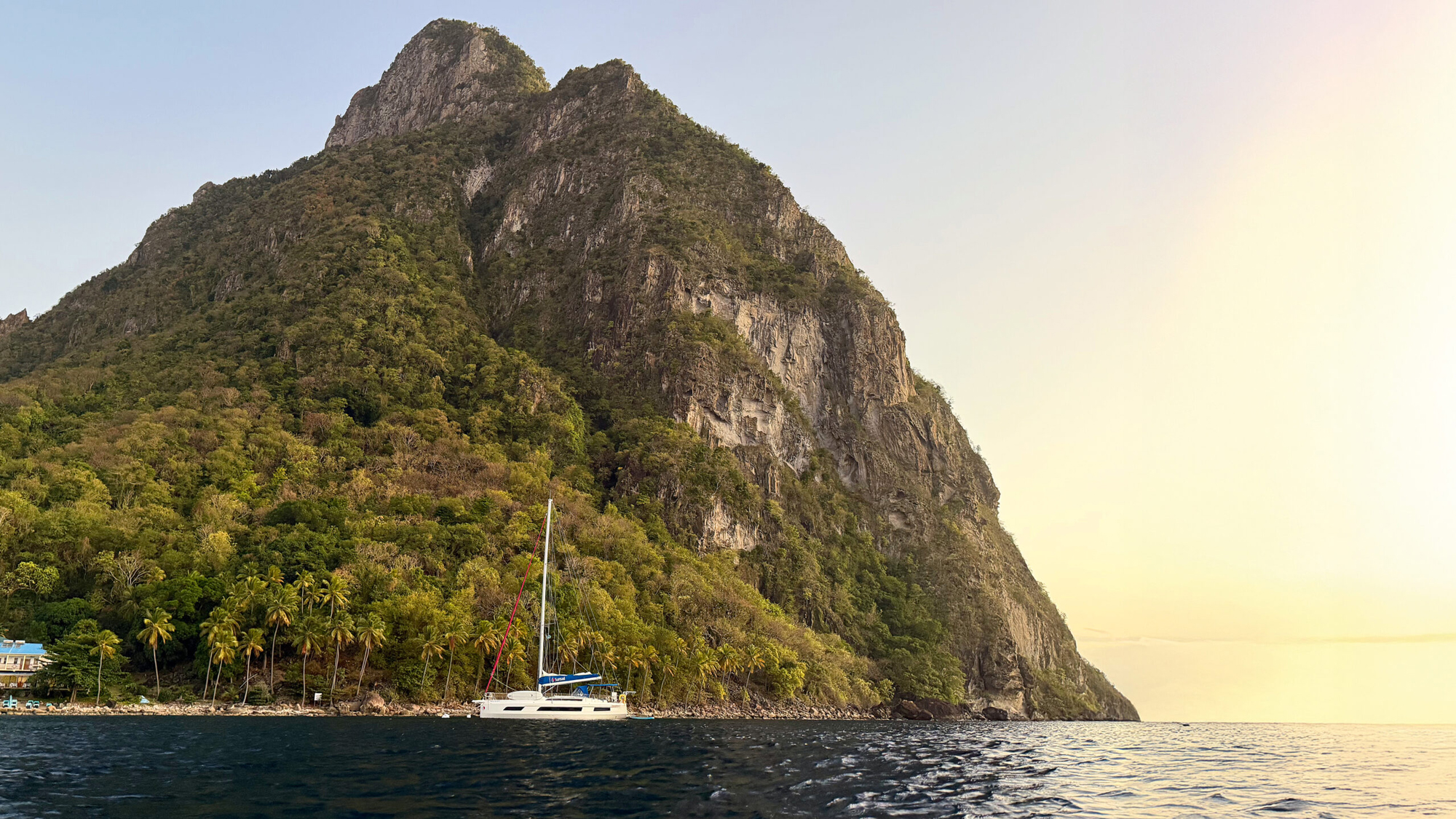
Moody 41 Classic Second Wind experienced several hiccups during her cruise around the British Virgin Islands, which taught owner Stuart a number of important lessons. Photo: Stuart H Newberger
Bouncing around as the boat headed north of St John towards Tortola, we flew along nicely until the wind shadow of the hills of St John dropped our speed and we crawled along past the remains of Caneel Bay resort, which had been destroyed in the double hurricanes of 2019, before turning back.
At a local shop in Red Hook I found a used inflatable dinghy that had been patched up and cleaned. A bargain at $900. But I needed to put something comfortable on the bare floor, so I took a taxi into the heart of St Thomas and picked up some yoga mats and mesh plastic coverings at the local cash and carry to patch together a fairly comfortable floor for the rig.
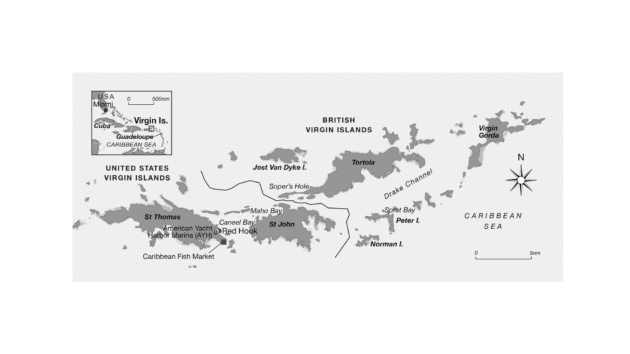
Photo: Maxine Heath
The dink was then delivered to AYH and, voila! I had a tender. Two friends arrived at Red Hook and we shoved off from AYH the next morning. Our first destination was a mooring buoy inside Maho Bay, located within the vast National Park of St John.
The ‘previously-owned’ dinghy I had purchased clearly had a very slow leak, so I needed to fill it up after each use with a small electric pump. But on the plus side, the Torqeedo electric dinghy engine I had purchased in Annapolis was super quiet and easy to mount. In Maho Bay we beached the dinghy and enjoyed a beautiful day of swimming.
Casting off from the mooring buoy the next morning, we motored across the narrow channel and pulled into Soper’s Hole in the west end of Tortola
to clear BVI customs and immigration. Using the Sail Clear app downloaded on my phone, the boat and my crew were easily pre-registered into the BVI.
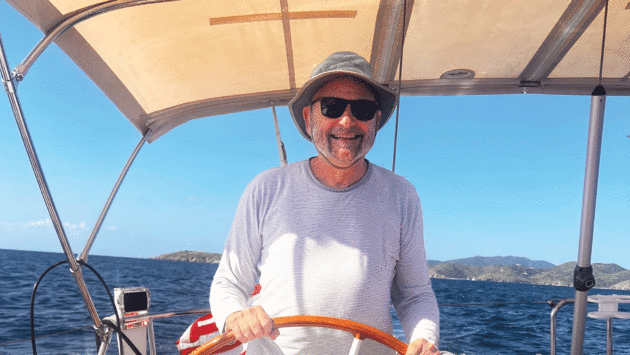
Stuart H Newberger is a retired international lawyer, author and coastal skipper. Photo: Stuart H Newberger
Towards Peter Island
After a night moored at Norman Island, we next tacked our way east through a heavy chop to Peter Island. After motoring into Sprat Bay behind the protective seawall, we backed into the newly rebuilt marina at this exclusive five star resort, destroyed by the dual hurricanes of 2019. Thank goodness for my bow thrusters, as the brisk wind was still blowing hard even in the harbour.
To round out the BVI experience, we sailed back across Drake Channel into the main harbour of Jost Van Dyke (JVD). Known as the party spot of the BVI, JVD lies to the northwest of Tortola. Its famous bars/restaurants – Soggy Dollar, Foxy’s and Pusser’s, among others – have been the scene of much debauchery.
But first, we had to grab a mooring buoy so that we could take the dinghy up to a restaurant. After several successful mooring experiences in other harbours, this should have been an easy manoeuvre.
Boy, was I wrong. With a bit of breeze pushing the boat around and some miscommunication between me at the helm and the crew up on the bow, we somehow managed to move forward over the docking line after it was attached to the mooring buoy. Not fatal as such. But as I gently guided the bow – and gave the bow thrusters a light touch to help it along – the line somehow was sucked into the bow thruster!
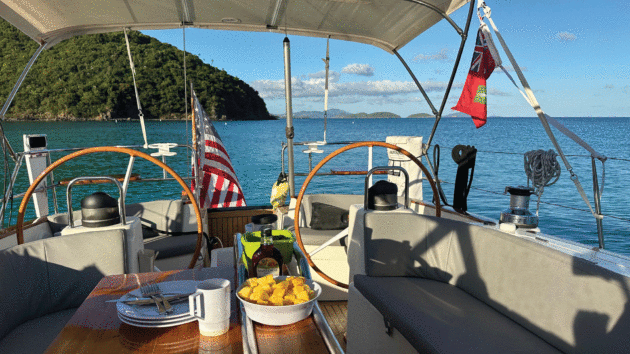
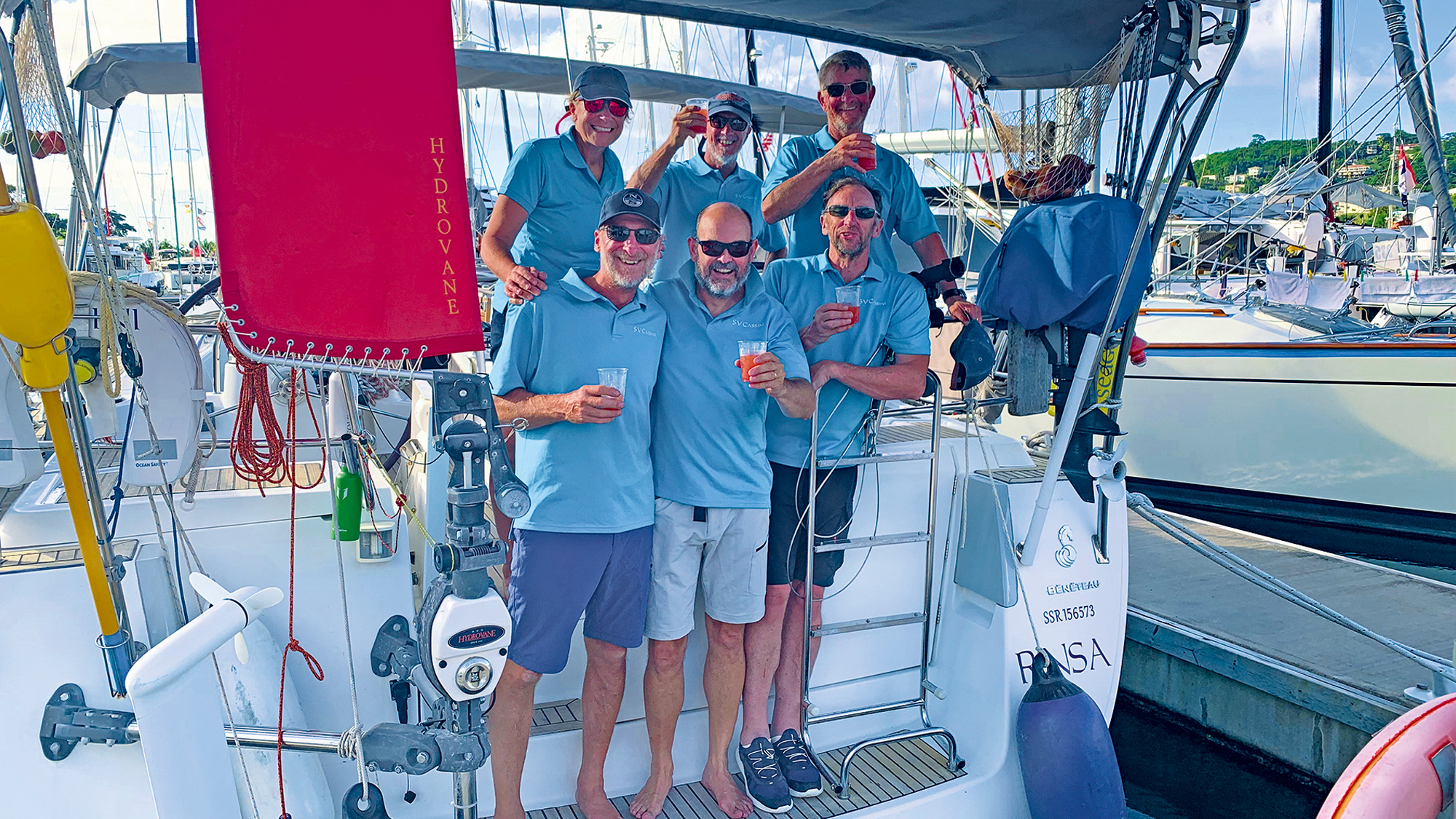
Dinner is served in Maho Bay. Photo: Stuart H Newberger
I ran up front and saw that the line was apparently stuck under the bow. I quickly secured a second bow line so that we had a safe and secure anchorage.
Grabbing my mask, fins and snorkeI I jumped into the warm, blue water. Swimming quickly up to the submerged line at the bow, I discovered that the first bow line was wrapped around the port side bow thruster prop.
Making it worse, the bow thruster door that drops open when it is in operation was half shut – jamming the line in the half-open door.
Pulling out a serrated knife, I attempted to cut the line. But the line had wrapped itself around the port side prop of the bow thruster, and no matter how much I hacked, I could not reach deep enough into the half-closed door to make any progress. After an hour of frustration, I simply cut the first bow line free from the mooring ball, with the second holding us firmly. The bow thrusters were now out of action.
After getting back to St Thomas I managed to hire a local diver. He could not cut away the trapped dock line because the thruster door was clamped too tight. We then dialled up my delivery skipper in Annapolis on FaceTime, who explained how to access the thruster mechanism underneath the V-berth.
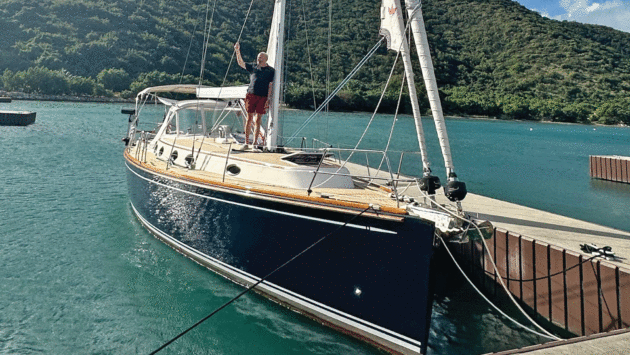
Tying up at Peter Island Marina. Photo: Stuart H Newberger
Life without bow thrusters
After much effort from both of us, we managed to drop the thruster door and cut away the tangled line. So far, so good.But the port side prop had disintegrated. We then spent another sweaty hour trying to manually lift the door into the closed position.
But the thruster had either jammed, tripped a fuse or burned out. Despite this frustration, we enjoyed a farewell dinner at the Caribbean Fish Market. Life was still good – even without bow thrusters.
A new crew then arrived. We set off east again and after a night tied up at St John, we headed back to the BVI. After docking at Peter Island, I noticed that the electric Jabsco head was making a weird grinding sound. I’d never had a problem using this head for over seven years. Until that morning.
Given that it’s the only head on the boat, it was fortunate that we were at a marina with modern toilets and showers. But no mechanics were available in the BVI to handle this problem, so we had to return to Red Hook to get this investigated.
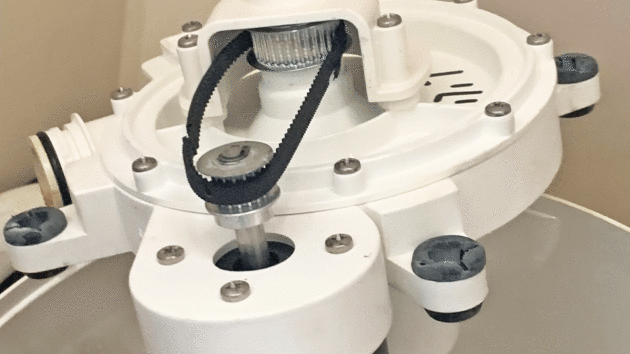
The broken belt revealed inside the Jabsco electric head. Photo: Stuart H Newberger
Local mechanic Joe Bushneck noted that the black belt that drives the electric head was worn. This was a cheap part that had snapped after seven years of heat, cold and use. But he couldn’t locate a replacement anywhere – in either the US or BVI!
Finally, a contact of mine at North Point Yachts in Annapolis, located the part – but in Florida! They had it air-shipped to their office, and then sent to my home in McLean, Virginia. My wife Marcy then pushed back her own trip to St Thomas by one day so she could bring this critical part with her.
But there was now another boat issue – the fridge had stopped working. A repair man determined that the computer chip ‘brain’ for the fridge had frizzled out. Fortunately he had a spare in his truck – only $600!
By April it was time to bid farewell to this memorable winter sailing adventure. Afterwards I wrote a list of ‘lessons learned’ that are posted on the main cabin door and shared with any friend considering a winter in the tropics.
Article continues below…
How to survive (and enjoy) a Caribbean charter with three under five!
Amid a cold and wet winter, a last-minute Caribbean getaway proved the perfect tonic for Theo Stocker and family
Your guide to navigating Caribbean island customs and immigration while sailing
There are great pilot guides written by the likes of Doyle and constantly updated online resources like Noonsite, noforeignland and…
Cruising the British Virgin Islands: Lessons Learned
Preparation is rarely wasted
Spend the extra time at your home port getting the boat truly ready – not just for the delivery trip, but also for the duration in the tropics as well as the trip home. Have your boat mechanic do a thorough boat check well before departure and bring spare parts.
Spare parts cost real money
Do not assume you can always find various boat parts, even in the most affluent, populous islands, such as the US and British Virgin Islands. It took me a lot of time and effort to get my hands on a minor part for the electric head.
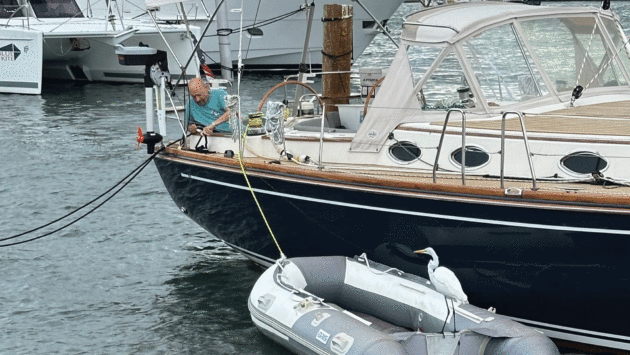
Stu introduces himself to his newest crew member – an egret. Photo: Stuart H Newberger
Pick your spot carefully
Investigate the best marinas for the winter season. It is not just about price: security, facilities, fuel, water and electric access are key components. And do not forget to check the location of the nearest grocery store, local eateries, laundry service, pharmacy, propane fill-up, and availability of local transport to get around.
Can you call for help?
Identify a reliable boat mechanic on day one and make them your new best friend. Having a reliable mechanic a text message away will make a huge difference to your existence.
A competent boat cleaner is also a plus. The boat takes a lot of abuse.
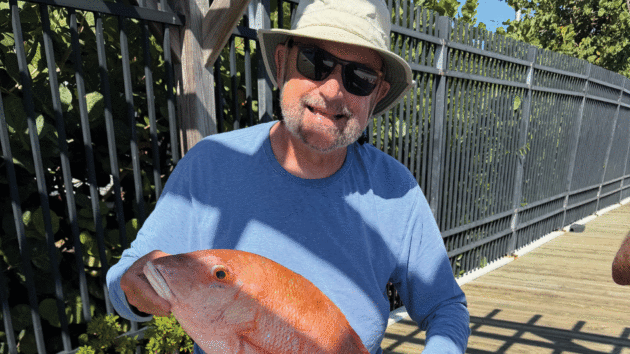
Enjoying the tropics no matter what issues the boat throws your way. Photo: Stuart H Newberger
Don’t miss out
Do not forget to enjoy the tropical experience, despite all the worry and energy a boat owner puts into the vessel. Even when a part is unavailable, or the mechanic is busy with five other jobs, or the wind is too strong or the rain will not stop, just remember it is much better than being back up north in the cold.
Conclude each day with an adult beverage in hand and a nice meal in your belly as you gaze into the beautiful sunset. That is the memory you want engraved into your soul.
Enjoyed reading this?
A subscription to Yachting Monthly magazine costs around 40% less than the cover price, so you can save money compared to buying single issues.
Print and digital editions are available through Magazines Direct – where you can also find the latest deals.
YM is packed with information to help you get the most from your time on the water.
-
-
- Take your seamanship to the next level with tips, advice and skills from our experts
- Impartial in-depth reviews of the latest yachts and equipment
- Cruising guides to help you reach those dream destinations
-
Follow us on Facebook, Twitter and Instagram.
Note: We may earn a commission when you buy through links on our site, at no extra cost to you. This doesn’t affect our editorial independence.