


With a combined age of 140, two intrepid ex-dinghy racers sailed in the Yachting Monthly Celtic Triangle Race 2025
The Yachting Monthly Celtic Triangle is a single- or double-handed offshore race from Falmouth to Kinsale (Eire) to Treguier (Brittany) and back to Falmouth.
For me it was a new challenge: I’d never sailed south of Ireland and never raced on a yacht, though my crewmate Steve Leigh and I were both seasoned dinghy sailors competing in our younger days on the Javelin open circuit.
Steve, who keeps his bilge-keeled Westerly Konsort in Blakeney, on the Norfolk coast had sailed as far as St Malo, so for us both, the race seemed to combine adventure, racing (more like cruising without engine) and travel to foreign parts.
Getting to the startline
It proved to be a daunting, uphill climb just to get to the start of the race, with the biggest hurdle being self-doubt. Being firmly in the Ancient Mariner class with a combined age of 140 years, I began to wonder if we were fit enough. Could we cope with sleep deprivation? With anything the sea could throw at us?
Our race was to be Category 3, the least onerous of the World Sailing Offshore Special Regulation (OSR) categories, but still demanding enough. My Starlight 39, Ossian, was built in 1990, before the European RCD, so didn’t have the required certification. However, the race committee kindly spoke to Stephen Jones, her designer, who confirmed her seaworthiness.
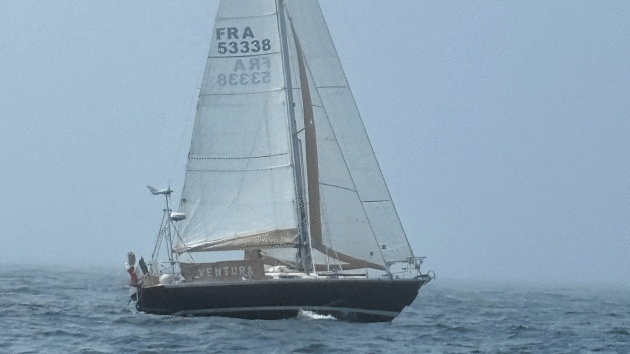
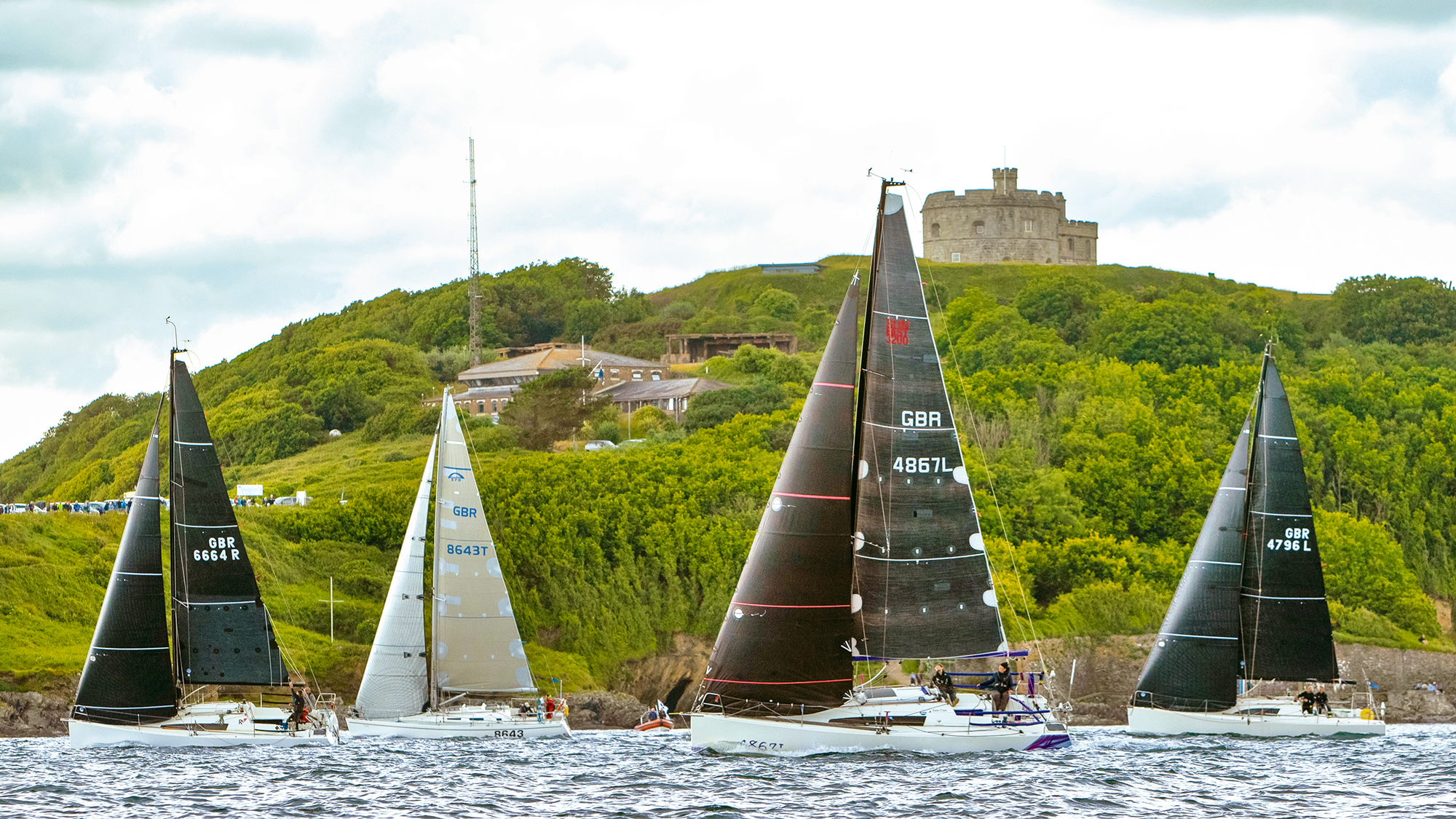
‘The memory of suffering & hardship fades. Opportunity & excitement beckon’. Photo: Tim Greenaway
The required OSR checks revealed that my powder fire extinguishers were sorely out of date. I replaced them with ‘Fire Safety Sticks’, which are new generation extinguishers that discharge nitrogen combined with a potassium salt which works on most types of fire and leaves the cabin cleaner compared to some other types of extinguisher.
Fortunately, I’d asked sailmaker Murray Caldwell of MC sails to put a deep third reef in our new main which removed the need for a trysail. We had hanked-on jibs on an inner forestay, and felt the boat could handle heavy weather.
The OSR particularly focuses on preventing MOB and so we added extra pad-eyes in the cockpit and companionway, as well as at the mast and foredeck, with additional fixed tethers at various points.
Steve and I attended the obligatory two-day offshore personal survival course at the Welsh national sailing centre at Plas Menai. It was an invaluable course about surviving heavy weather with some racing tips too, although getting in a liferaft in a warm swimming pool doesn’t really compare to
a storm-lashed Celtic Sea.
Ossian is based up on the Clyde at Rosneath, so as well as the two weeks for the race we had to find time away from life’s other responsibilities to bring the boat south to Falmouth and later return home.
After sailing down to Anglesey in the benevolent easterlies of early May, and leaving the boat at Port Dinorwic Marina, it was a shock to return to a forecast of unrelenting south-westerly gales later that month for Steve’s first ever sail on the boat.
So his was a baptism of fire as we set off across the Caernarvon Bar headed for Arklow with a heavy swell running in the lull after a passing front the day before.
We made excellent progress on the ebbing spring tide pushing SW down the Irish Sea. Beating into Force 5 or 6 winds, we were hoping to round the southern end of the sandbank off Arklow on Ireland’s east coast, but our optimism was soon tempered when the tide changed and pushed us to the north end of the sandbank, where we found ourselves going backwards in 4 knots of current. We motored the remaining 10 miles, arriving at 0200.
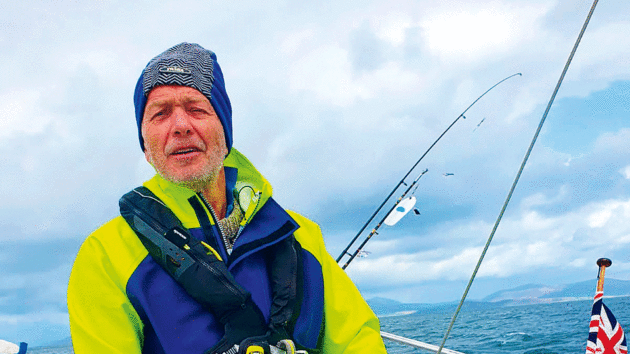
Tim learnt to sail in an old wooden Enterprise with his mother who’d sailed Merlin Rockets on the Thames in London as a student in the 1950s. He has raced Javelin dinghies on the Open circuit here and abroad, and has cruised yachts for 25 years. Tim now owns a Starlight 39. Photo: Tim Greenaway
One of the race requirements is to complete a 125-mile qualifying passage with your crew. We’d given ourselves a week to make the start on 8 June, anticipating a pleasant cruise via Kilmore Quay and the Isles of Scilly. However, a series of vicious fronts were forecast, so 25 hours after arrival in Arklow, we woke at 0300 and set sail for Falmouth, 230 miles away.
Being battered by Force 6-7 winds on the nose for 24 hours was hard going. In the dark and dozing off-watch, I was woken by the bilge alarm. Befuddled,
I checked the seacocks and the stern gland and went back to sleep.
Not long after, the alarm went off again. Fighting the urge to ignore it I struggled up and tried to think logically. Yes, taste the water! Not salty, so lifting the inspection hatch I discovered the virtually new flexible water tank was empty.
Later the wind turned north in the Bristol Channel and we ran down under starlit skies, dodging the fishing fleet off Land’s End. 36 hours after leaving Arklow, we were moored up at Port Pendennis Marina, Falmouth. Exhausted, doubts crept in. Should we compete or not?
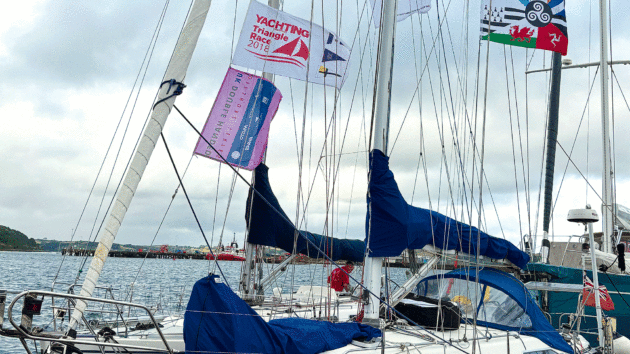
Ossian flying the YM Triangle Battle flags in Falmouth. Photo: Tim Greenaway
On the startline
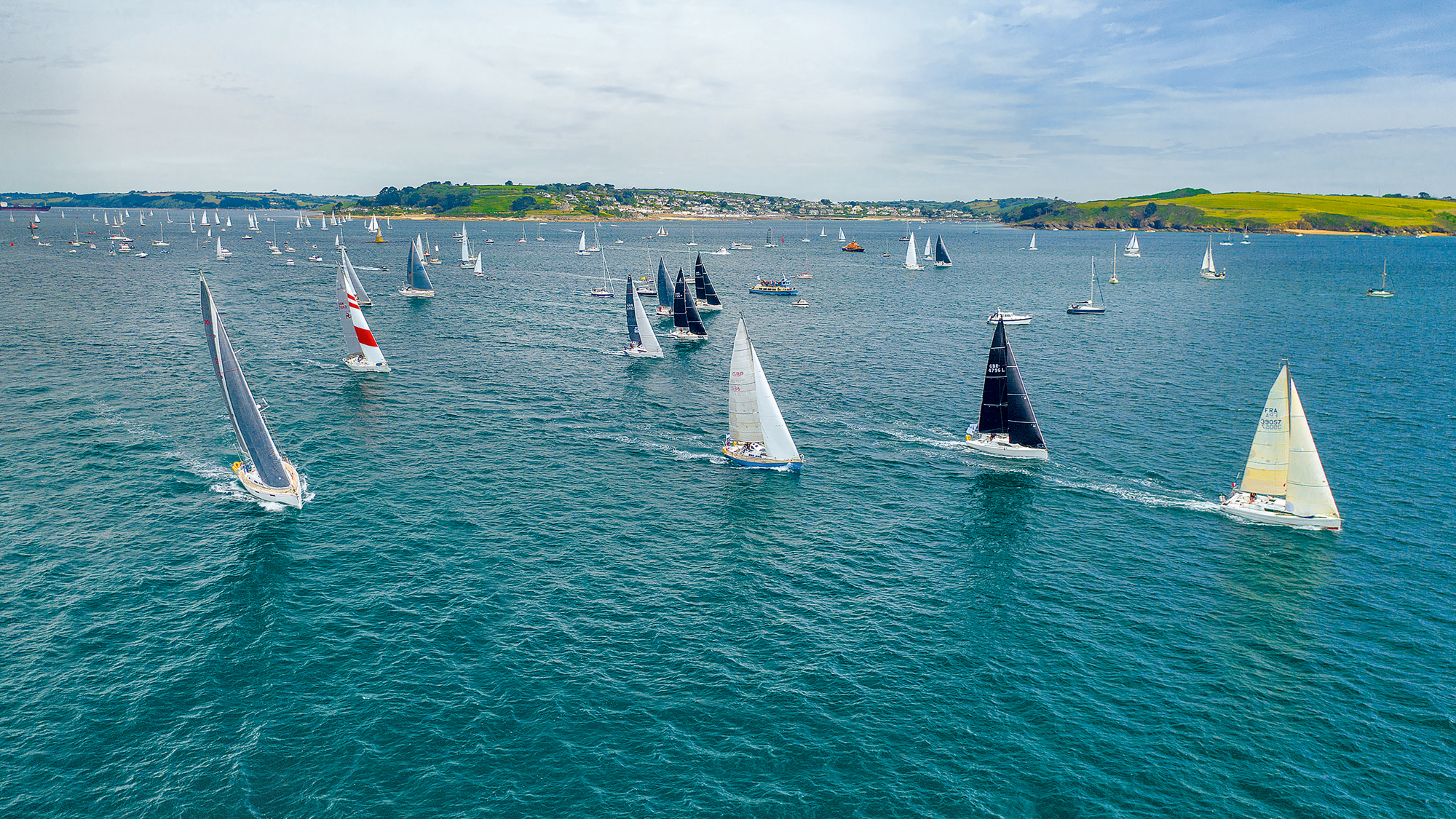
The memory of suffering and hardship fades. Opportunity and excitement beckon. Five days later, with a new water tank from Vetus, we lumbered over the line at Pendennis Point, somewhat fortuitously, almost in pole position and had a cracking first leg to the Manacles East Cardinal.
We then failed to tack inshore out of the adverse current and, slightly demoralised, arrived at Land’s End at midnight. We set off beating north into a WNW wind, squeezed between the no-go zone of the Traffic Separation Scheme (race rules forbid crossing TSS) and the lee shore of the north coast of Cornwall.
It was frighteningly dark but the glow of our plotter was some comfort at the helm until the wind died just off the Longships lighthouse.
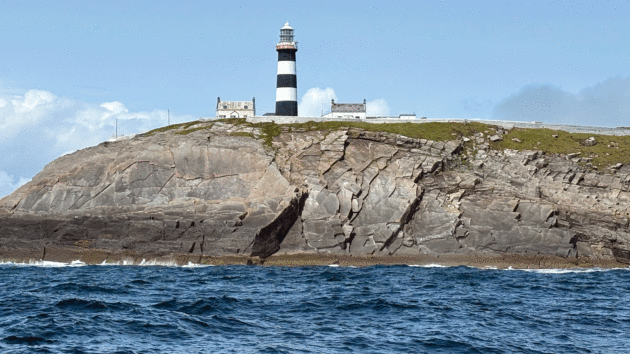
The Old Head of Kinsale lighthouse marks the passage. Photo: Tim Greenaway
To make matters worse, we could see the lights of a fishing boat very close. Desperately flashing our searchlight at him and onto our mainsail we somehow escaped as the wind filled in again.
An uneventful fetch in rolling seas saw us arrive at dawn off Kinsale Head 32 hours after setting off. Kinsale gave us a warm welcome and a lavish three-course prizegiving dinner. The vice-commodore took us on a fascinating historical tour of Kinsale, while Jack, a local marine electrician, was kept busy on several boats. Our autopilot kept dropping out and he showed us on our Victron battery monitor that our batteries were shot.
On the history section of the app it was recording less than 10V much of the time, despite running the engine periodically to top up. Naively I’d just been relying on the BMD showing more than 50% of the charge left, assuming it meant the batteries were healthy.
Second leg
Three days later, we set off on the second leg, rounding a turning mark off Galley Head, 25 miles to the west before heading southwards to leave Bishop Rock off the Isles of Scilly – again avoiding all TSS.
I’d not flown our cruising chute for two years and never gybed it, so we waited for daylight, losing more ground to our nearest rivals, before puzzling out which line went where and how to get the snuffer rigged safely. (For the third leg we ditched the snuffer, which made it easier to manage launch and recovery.)
Faster boats flying spinnakers seemed to opt for a tight passage between the TSS west of Scilly and the islands, whereas with our slow pace we anticipated adverse tides, so we went outside both shipping zones and headed for the northeast tip of the Ouessant TSS.
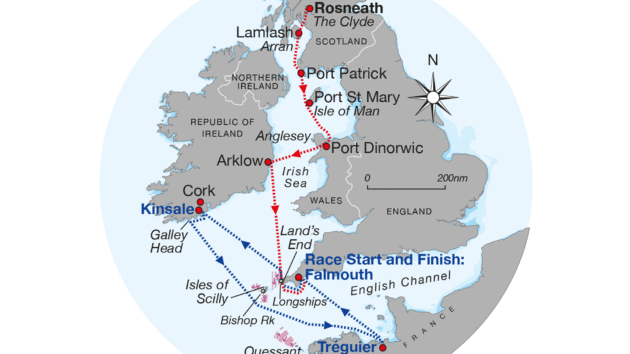
The route. Photo: Maxine Heath
Light westerly winds, took us for the next 24 hours along the north Brittany coast as we dodged ships in the dark. At daybreak on the third morning, several boats in our class appeared on AIS, apparently converging on the finish line some 30 miles away. Annoyingly, the wind chose to die, and within hours the tide, which runs strongly here, would turn against us. All around us on VHF boats were wondering whether to retire.
Retire? After 300 miles we weren’t about to give up. We dropped the ‘chute’, now flapping uselessly, and set the sails for light wind sailing. We nudged forward, the tide still with us, watching the zephyrs of wind on the water come and go.
As the tide turned and our VMG to the finish line dropped to 0.1 knots, our resolve weakened.
We imagined the rest of the fleet ashore relaxing in the French sunshine perhaps enjoying pâtisserie and café and messaged them on WhatsApp: ‘Ossian here. What would Bill Tilman or Knox-Johnston do? We’re 3.5 miles away and the wind is teasing us. We could put down an anchor and 110m of chain and rode… and wait for the tide to turn… or give in and retire. Straw poll decides…’
Messages came back: ‘Hang in there. Will keep a beer for you. You can do it!’
Encouraged, we stemmed the tide for six hours and drifted over the line at 16.07 BST – low water slack. We motored up the divinely beautiful river to Treguier to a completely unexpected welcome, with hooters and foghorns blowing.
With so many retirees, we came fourth in our class, though with a shocking elapsed time for the leg!
Club Nautique de Treguier pulled out all the stops with a hog roast, croissants for breakfast, and the town took us on a procession led by a traditional Breton bagpipe marching band through the medieval streets round the cathedral into the cloisters for a welcome speech from the mayor, followed by canapes and crémant, local cider and crudité.
The final leg
All too soon we were leaving the quiet still waters of the river. Ahead of us the committee boat radioed the presence of dense fog in the river mouth. We crossed the line with no one else in sight. Offshore, the fog cleared quickly.
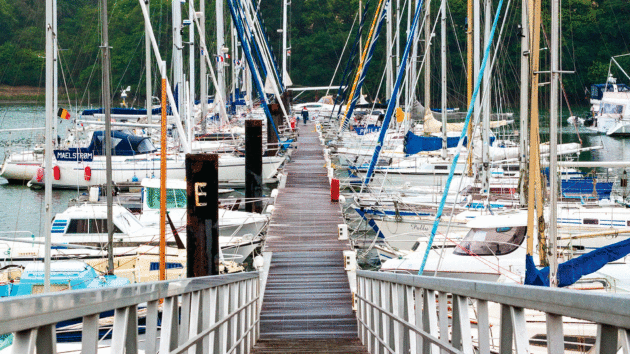
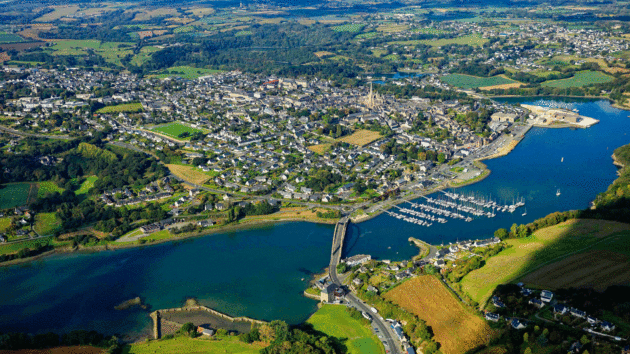
Treguier marina. Photo: Valery Voennyy / Alamy Stock Photo
A star-studded night, calm seas and a perfect reach under cruising chute made for champagne sailing, the cargo ships obligingly altering course for our shoal of yachts racing for home. As the sun rose the wind went very light, disadvantaging our slower boats – the fast fleet already moored up, as we ghosted across the line at 0630 at Falmouth’s Black Rock buoy.
We’d logged 740 miles. Somehow, we came fourth in our class (third among the double-handers) and were awarded a Special Prize for Perseverance for our heroic stand at the end of Leg 2.
A special camaraderie developed over the event. An initial wary assessment of the other boats gave way to shared tales of success and setbacks as the race progressed. I recall being welcomed at 0400 by a lone competitor who’d stayed up to take our lines in Kinsale; on helpful tips and advice from hardened offshore racing crews; on hearty handshakes and proffered beers; on a deepening friendship with my co-skipper.
The unsung heroes of this race are the yacht club volunteers who worked tirelessly to ensure things ran smoothly. The entry conditions are rigorous but go to show the emphasis placed on safety.
Are there downsides? The time commitment is significant. The costs: moderate but good value. The emotional and practical burden on our families (the other unsung heroes). Would we do it again? In a flash. To paraphrase Hippocrates, ‘Life is short… opportunity is fleeting’. But the elation was immense, the quiet glow of accomplishment, the richness of experience.
Article continues below…
The Yachting Monthly Celtic Triangle Race is back for 2026!
The Yachting Monthly Celtic Triangle Race is back for a second year in a row after it was resurrected in…
Yachting Monthly Celtic Triangle Race 2025: The entry-level offshore race
Have you ever wondered what it would be like to push yourself and your boat a bit harder than you…
Lessons Learnt
Ensure you meet the OSR
Give yourself plenty of time to meet the OSR: fulfilling the requirements means your boat is much safer, especially if cruising alone.
Be organised with training
Making sure you’ve done the appropriate training: first aid; SRC radio, Offshore Personal Survival. Make enquiries early about Insurance for racing; apply to RORC for an IRC (International Rating certificate).
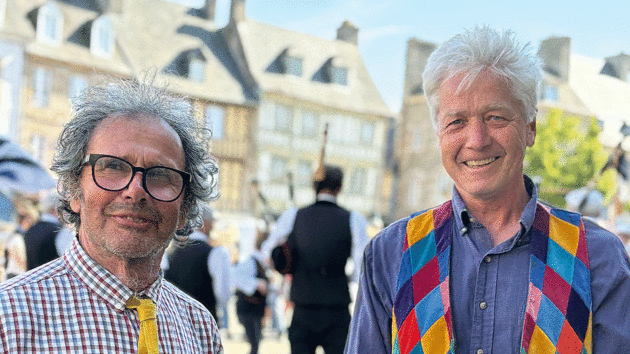
Co-skipper Steve Leigh (L) and the author Tim (R) celebrating in Treguier. Photo: Tim Greenaway
Choose your crew wisely
If sailing double-handed, think carefully about someone you get on with and that you’re confident can sail the boat single-handed.
Practice makes perfect
Give yourself time to practise sail setting and sail changes, reefing, flying the spinnaker/cruising chute, practising MOB drills, operating autopilot, using the plotter, VHF etc – especially if your co-skipper is new to your boat.
We hadn’t practised starting a race and had the wrong sail settings. In the relatively light winds of Legs 2 and 3, flying a spinnaker made a big difference. Learning how to use both with confidence beforehand would have helped our performance.
Stay alert for problems
The autopilot malfunctioned. Don’t assume when you’ve fixed one problem (failing lead-acid batteries) there might not be other causes (ram leaking hydraulic fluid).
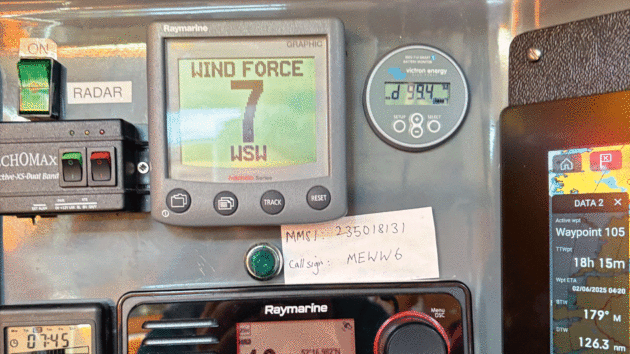
Many hours were spent at the chart table. Photo: Tim Greenaway
Autopilot is essential
Fitting a new Raymarine linear drive for the return home made for much less stressful passages. The amount of hand-steering we had to do during the race was very tiring.
Enjoy the camaraderie
Racing offshore adds an extra dimension to cruising. The camaraderie that develops while sailing in a fleet was a pleasant surprise.
Enjoyed reading this?
A subscription to Yachting Monthly magazine costs around 40% less than the cover price, so you can save money compared to buying single issues.
Print and digital editions are available through Magazines Direct – where you can also find the latest deals.
YM is packed with information to help you get the most from your time on the water.
-
-
- Take your seamanship to the next level with tips, advice and skills from our experts
- Impartial in-depth reviews of the latest yachts and equipment
- Cruising guides to help you reach those dream destinations
-
Follow us on Facebook, Twitter and Instagram.
Note: We may earn a commission when you buy through links on our site, at no extra cost to you. This doesn’t affect our editorial independence.