


Celebrating 100 years of the BBC Shipping Forecast, Jane Russell takes us on coastal cruises through the forecast sea areas, exploring the special places on offer
Coastal cruises in Wight
Wight must be the most familiar sea areas for a huge number of sailors, whether cruising or racing, staying coastal or crossing the Channel.
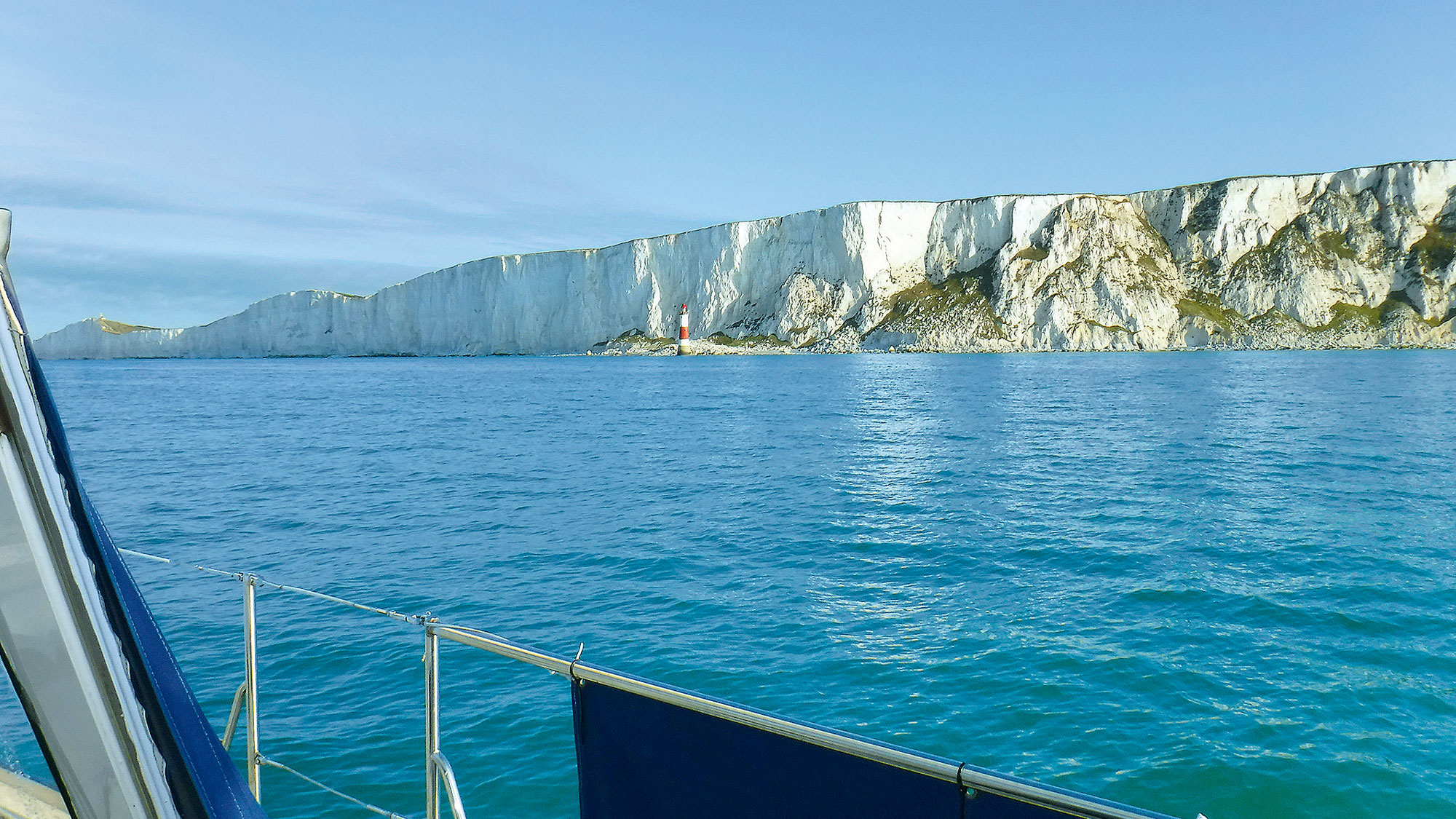
On the English coast, it runs between Beachy Head and the western side of Bournemouth, including the Solent and Isle of Wight itself. It splays out towards the French coast from the Somme to Cap de la Hague on the northwest tip of the Cherbourg Peninsula, including the Baie de Seine and entrance into the Seine river.
Generally open to the prevailing westerlies, and with a narrowing and shallowing sea floor, sea state in this section of the Channel can deteriorate quite quickly, particularly with wind against tide. The Isle of Wight does shield the Solent from swell, and the Cherbourg peninsula gives some protection to the French coast, but wind against tide can still create nasty seas.
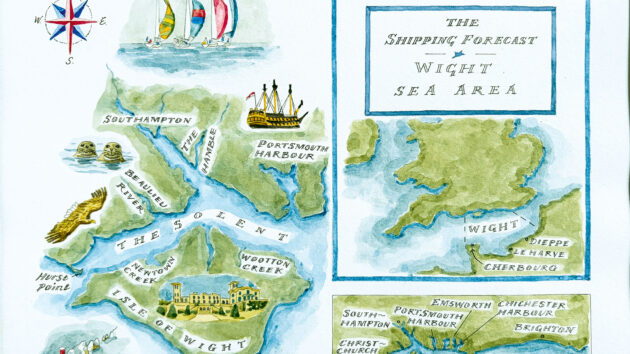
Photo: Joanna Martin, Curlew Cottage Design
Tides run strongly at the headlands on the English coast, into the Seine estuary and across the top of the Cherbourg Peninsula. They are also significant within the Solent and adjacent natural harbours. However, they are all well documented and can be harnessed to good effect.
South of Beachy Head, the Dover TSS shipping lane extends eastwards, but for the rest of the Wight sea area there is no mid-Channel TSS to take account of.
Nevertheless, shipping is condensed and there are several busy routes. The Rampion Windfarm is a dominant feature between Beachy Head and Selsey Bill, and there are windfarms along the French coast off Le Treport, Fecamp and Courseulles-Sur-Mer.
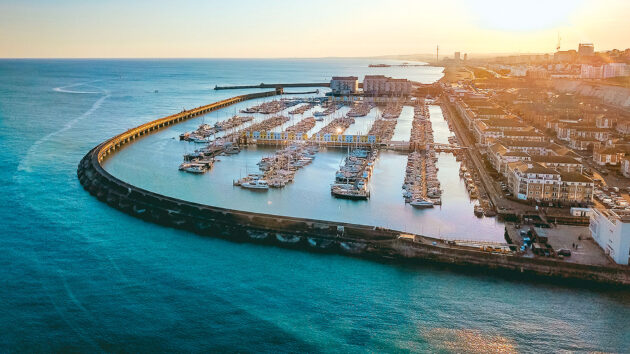
Early season meant Brighton Marina had plenty of room. Photo: 2021 Jack Parker UK/Shutterstock.
Variable, mainly NE at first, 2 to 4. Smooth or slight. Fair. Good.
Early one morning, while it was still dark, we crept quietly past Beachy Head into the Wight sea area. We had had a lovely run from Dungeness but the wind was now dropping and becoming more fickle. Close in, we picked up the start of the westerly setting ebb which helped us along the coast, past Newhaven and on towards Brighton.
With our 2m draught the Brighton marina entrance is one that we take slowly, with an eye on the depth sounder, but there were a couple of hours of ebb to go and all was well. It was still early season and there was plenty of space inside. For us, Brighton is a place for seeing family and stocking up in the big marina supermarket.

Sailing past Horse Sand Fort and into the Solent, keeping an eye out for ships and ferries. Photo: Jane Russell
But if it had been our first time we would have caught a bus into town to enjoy the regency grandeur of the Royal Pavilion. Then we would have wandered along the beach front and explored The Lanes, a maze of little streets and alleyways with quirky shops and eateries. It’s a good place to get lost for a while.
Variable becoming NE later, 2 to 4, occasionally 5. Smooth or slight. Mainly fair. Moderate or good.
Heading west from Brighton we needed to buck the tide to Selsey Bill, aiming to be at the Looe Channel close to slack there, but with enough flood left to get us into Chichester Harbour.
With a moderate breeze off the land it was a smooth passage but we stayed close along the shore to avoid the worst of the adverse current. Past Shoreham, where we raced our Firefly, past Littlehampton, where our first Tinfish, with her shallower draught, had been built.
As we approached The Looe channel off Selsey, inside the Owers, the wind dropped to a gentle breeze and, mindful of the time, we briefly used the engine to help push us through. Then it was an easy reach up towards West Pole on the channel into Chichester Harbour.

Visitor anchoring dues are payable to Chichester Harbour Conservancy, here looking towards Bosham, where King Canute is thought to have rebuked the tide to demonstrate his limitations. Photo: Ian west / Alamy Stock Photo
We hardened up gradually, keeping a good eye on the chart and the depth sounder, the last of the flood helping us in through the entrance between Hayling Island and the Winner sands.
We decided to carry on up to the mid-stream visitor pontoon at Emsworth. Depths on the pontoon looked a bit borderline but a call to the harbourmaster reassured us. In fact there was a deeper hole off the west side of the pontoon and we were comfortable there.
We took the dinghy to the gated pontoon on the edge of the drying channel. That gave us more tidal access than we thought, which turned out to be good news after a lovely supper at the sailing club.

Fort de l’Ouest and the entrance to the harbour at Cherbourg. Photo: Julian Crumly / Alamy Stock Photo
E or NE 4 to 6. Smooth or slight at first, otherwise slight or moderate. Showers, turning thundery later. Moderate or good, occasionally poor later.
Chichester Harbour is another of our happy places. We often anchor at East Head or, if that’s feeling too exposed, in the Thorney Channel at Pilsey Island or on the south side of the channel just west of the junction below Itchenor. Visitor anchoring dues are payable to Chichester Harbour Conservancy but help with conservation and maintenance of navigation.
Other times we have headed out from here across the Channel to Cherbourg. From Dover and Boulogne we had also enjoyed Dieppe and Saint Vaast before circling back to the Solent. On our first Tinfish we came down the Seine from Paris to Honfleur and then Le Havre, and we would love to make a return trip. But now we had westward progress to make on our Round Britain, and winds were staying in the east.
With a fresh breeze behind us we headed out past Hayling Island against the last of the flood, soon picking up the westerly set through the Solent. It was a day for easy sailing with just the genoa, past the Winner buoy off the shallows into Langstone and close round Horse Sand Fort.

Emsworth is a dinghy ride from the mid-stream visitor pontoon but don’t get caught out by low water. Photo: Rick Buettner / Alamy Stock Photo
We were now keeping an eye on the Portsmouth channel and over our shoulder in case of ships and ferries taking us by surprise. We weren’t heading into Portsmouth this time but it is certainly worth spending a couple of days there.
The Historic Dockyard is an extraordinary collection of ships and exhibits including Nelson’s Victory, Henry VIII’s Mary Rose and the iron warship Warrior. There’s really too much to see in just one visit, but it’s a pleasure to return for more.
Article continues below…

A guide to cruising England’s East Coast rivers
The East Coast is an acquired taste for sailing and, after fossicking about the creeks and swatchways of the estuaries…
Sailing the Shipping Forecast in the Dover sea area: ‘Dover marina is a good place to pause’
Sailing the Shipping Forecast: Dover Dover sea area is a relatively small but significant wedge of water between Deal and…
Isle of Wight options
Away to port was the anchorage at Priory Bay and the entrance to Bembridge – not the right choice for us in the fresh northeasterlies but usually a snug and very popular haven with walks ashore. The entrance channel meanders and shifts but there is good information on the harbour website.
Now across the shipping channel and passing close to Ryde Sands, we watched the Southsea-Ryde hovercraft cross ahead of us in its own swirl of mist, so retro yet still so cool.

Bustling Cowes is a Mecca for sailors visiting the Isle of Wight. Photo: Chris Harris / Alamy Stock Photo
Further on, the car ferry turned across our stern on its way into Wootton Creek on the Isle of Wight. Anchoring off there would be too exposed in these winds but it would have been fun to see friends at the Royal Victoria Yacht Club. Nor would Osborne Bay give us shelter today, as it so often does, anchored under the facade of Osborne House.
There are so many options in the Solent, usually dependent on who we’re meeting up with. We might have headed up to the harbourmaster’s visitor pontoon on the Hamble. Or we could have decided to stop off in Cowes, or further up the Medina at the Folly Inn. From there it is a gentle stroll up to Victoria and Albert’s church, St Mildred’s.
Perched on the hill overlooking the river, it is a peaceful and contemplative spot. Uffa Fox, the famous boat designer, is buried here. His Second World War airborne lifeboat is just one of many other innovative boats exhibited in the Classic Boat Museum located in Cowes.

The recently reintroduced white-tailed eagle can be spotted in this area. It is the UK’s largest bird of prey. Photo: H Lansdown / Alamy Stock
Bucolic Beaulieu
On the north side of the Solent, the Beaulieu River is another favourite, and we usually tie up on one of the visitor moorings above the first bend. Here we are in the heart of the North Solent Nature Reserve with its rich birdlife and inquisitive grey seals, who have sometimes decided to snooze in our dinghy.
Ashore at Gins, the yacht club welcomes visitors, and from there it’s a pleasant walk along the lanes to the 18th century shipbuilding village of Buckler’s Hard, with its fascinating museum and Master Builder’s pub. We usually go up to the hard by dinghy, or there are pontoon visitor berths at the marina. However, it’s wise to pre-book.
We were making good use of the easterly wind and westerly setting tide which would take us to Newtown Creek before turning against us. We whooshed past Cowes, keeping well clear of the Red Funnel ferries, then gybed the genoa and carried on down the western Solent.

Sunset over visitor moorings in beautiful Newtown Creek on the Isle of Wight. Photo: Jane Russell
The tide still ebbing, we motored in through the narrow entrance to Newtown Creek on the Isle of Wight, turning east and carrying on past most of the visitor moorings to a well-protected anchoring spot just round the corner in Clamerkin Lake.
This early in the season, we had this bit of the creek to ourselves. Later in the year it’s where the seals gather and sing their mournful songs.
When the tide times are right for it we dinghy to the quay and follow the footpath up to Newtown, once a busy mediaeval town but now a quiet village with National Trust visitor centre.
Or for a longer leg stretch we go ashore on the Hamstead side and walk the wooded coastal path to Yarmouth. Even when it’s busy in high season Newtown Creek is still a magical place to be, although wind against tide can create perplexing dances around anchors, with each boat behaving differently.
We’ve had a few ‘pyjama parties’ in the night, fending off as necessary.
N or NE 3 to 5, occasionally variable. Smooth or slight at first, otherwise slight or moderate. Showers. Good, occasionally moderate.
Heading on westwards with the first of the westerly current, we passed the familiar sailing hubs of Lymington and Yarmouth. As with so many places in the Solent, the sheer density of boats in both often feels to us a kind of madness.

Jane on passage.
But a stop at Lymington Town Quay is perfect for seeing local friends. And Yarmouth is a very interesting old town with a sometimes surprising history. Yarmouth Castle, which dates back to the 16th century, overlooks the harbour and is a very short walk from the marina.
We seemed to have found the occasional variables and motored through Hurst, keeping close around the castle and along the shore into the North Channel. A moderate southerly breeze then filled in, shifting southwesterly and back again, and we reached and fetched across Christchurch Bay, David volunteering to stay wet at the helm as the rain showers came through.
Christchurch Harbour, off to starboard, was not a place for Tinfish, but we remembered it fondly from visits on our friends’ trimaran. With more northeasterlies forecast, Studland Bay wasn’t a sensible option for us this time either, so we decided to make our way to Poole. As we passed Bournemouth we left the Wight sea area and crossed into the Portland zone.

Newtown Creek on the Isle of Wight is magical even in high season. Photo: Jane Russell
Places to stop
Perhaps part of its charm, this section of the UK coast can feel very hectic with waterborne traffic of all varieties.
On summer weekends or during race weeks, particularly over high tide, much of it is transformed into a multicoloured sailscape, with boats of all shapes, sizes and speeds, cruising through or on a mission to the next mark. Add to that the commercial shipping and, for those who are used to a quieter life, the competition for space on the water can be quite stressful. And yet it is possible to find some very special spots where nature thrives and time slows down for a while.
In the east of this sea area, Newhaven, Brighton or Shoreham harbours give access to the South Downs National Park with its chalk grassland habitats and rare treasures such as the Adonis blue butterfly.

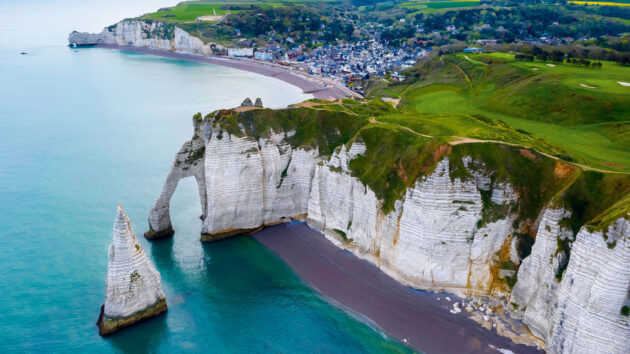
Dieppe is a useful and easy-to-enter point of entry for France. Photo: Hemis / Alamy Stock Photo
West of Selsey Bill, the natural harbours of the mainland coast and Isle of Wight provide a good selection of moorings and anchorages, many of which are located within the Areas of Outstanding Natural Beauty (AONB) of Chichester Harbour and the Isle of Wight.
The Beaulieu River, Lymington and Keyhaven lie within the New Forest National Park. Coastal footpaths connect to inland footpath networks.
White-tailed/Sea Eagles
One of the more recent surprises here on the English coast are the re-introduced white-tailed eagles, also known as Sea Eagles. Now beginning to breed successfully, you might spot scruffy looking youngsters pulling at carrion on the shore, or majestic adults carving the air above. They are enormous – the UK’s largest bird of prey.
Dieppe
A useful port on the French coast with a straightforward entrance and a marina that welcomes visitors. Ferries may be manoeuvring, so call port control for permission to enter. It’s a pleasant walk through town up to the ancient castle and museum, with great views over the town and adjacent coast.

Honfleur’s medieval charm makes it an intriguing stop off. Photo: Martin Thomas Photography / Alamy Stock Photo
Le Havre/Honfleur
These two very different harbours are both gateways to the River Seine. Le Havre is a modern marina with all-weather, all-tide access to visitor berths, and a crane for stepping/unstepping masts.
Honfleur is a picturesque medieval town with a lock entrance and visitor berths in the heart of the old port.
Cherbourg
This major commercial port is an excellent first or last stop on the French coast with all-weather, all-tide access, straightforward formalities and a choice of either pontoon visitor berths or anchorage outside the marina but within the well-protected harbour. There is an excellent maritime museum within walking distance of the marina www.citedelamer.com/
Enjoyed reading this?
A subscription to Yachting Monthly magazine costs around 40% less than the cover price, so you can save money compared to buying single issues.
Print and digital editions are available through Magazines Direct – where you can also find the latest deals.
YM is packed with information to help you get the most from your time on the water.
-
-
- Take your seamanship to the next level with tips, advice and skills from our experts
- Impartial in-depth reviews of the latest yachts and equipment
- Cruising guides to help you reach those dream destinations
-
Follow us on Facebook, Twitter and Instagram.
Note: We may earn a commission when you buy through links on our site, at no extra cost to you. This doesn’t affect our editorial independence.