


The highest-grossing nature documentary of the decade premiered a year ago and has united one small corner of the marine industry behind the ocean recovery movement
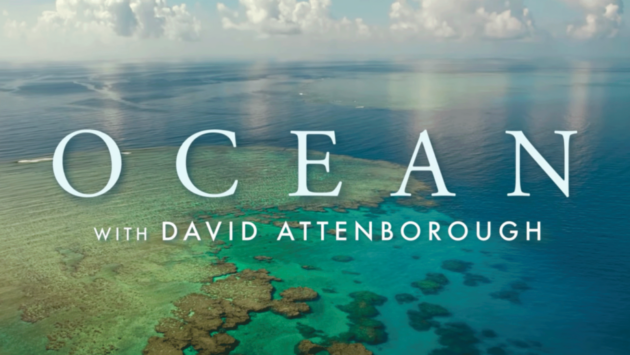
The ocean is our planet’s life support system, covering over 70 per cent of the Earth, constituting over 90 per cent of its habitable space, producing more than half the oxygen we breathe, and regulating our climate. So when British national treasure and now centenarian, Sir David Attenborough, makes a film that unequivocally points the finger at a problem – the fishing industry – and calls for a controversial solution – a ban on bottom trawling in Marine Protected Areas – the world takes notice.
And it seemed to work. The reaction was immediate. Almost exactly a year ago, in June 2025, the UK Government took to the international stage at the UN Ocean Conference to announce a proposal to ban bottom trawling across approximately 30,000 square kilometres of sea, spanning 41 offshore marine protected areas (MPAs) in English waters.
But 12 months later, it’s all gone quiet.
Ever-cautious, DEFRA announced in September 2025 that they were not committing to ‘blanket bans’ across all MPAs, but looking at features on a piecemeal basis. Nobody has confirmed when a final decision on extending bottom trawling restrictions in MPAs will be made, with consultation responses ‘still under review’.
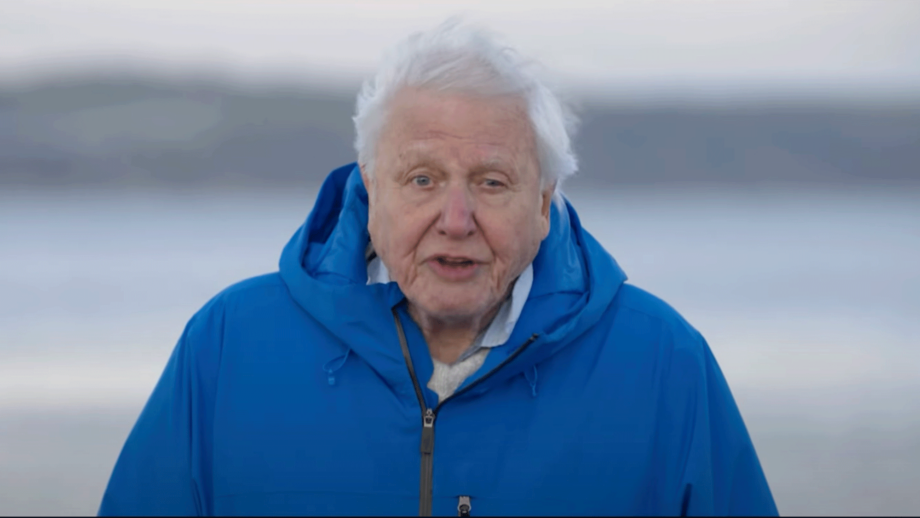
Silverback Films and Open Planet Studios with Arksen & 10% for the Ocean produced Ocean with David Attenborough. Photo: Altitude Films
Marine industry support
A ban on bottom trawling in Marine Protected Areas is controversial and is strongly opposed by the fishing lobby, but it is gaining support in parts of the marine industry. Arksen, the luxury travel and boatbuilding brand was one of the main backers of the film, while Premier Marinas, owned by one of the largest grant-giving charities in the world, put on a private showing of the film in early June at the Odeon cinema, Port Solent. They then hosted a Q&A session that could have gone on for hours longer.
Upon its release a year ago, the film’s shocking underwater footage of destructive bottom trawling – not to mention the aerial footage displaying the unnatural straight lines of ploughed seabed – were lauded by one of the most controversial and outspoken environmental journalists in the business, George Monbiot, who praised it as being the film he had waited his whole career to see. By contrast, he declared that the BBC’s earlier underwater productions with Sir David, such as Blue Planet II and Blue Planet Live had “exemplified the organisation’s perennial failure of courage” to point the finger at the principal cause of the ocean’s destruction: the fishing industry.
He continued: “The government’s own figures show that fishing costs us far more than it makes: it estimates that the proposed ban on trawling in half of England’s MPAs will cost UK businesses and public bodies £7.8m, while delivering “benefits from enhanced environmental protection” of approximately £3.1bn.”
Opposition from fishing industry
Meanwhile, the voice of the fishing industry in the UK, The National Federation of Fishermen’s Organisations (NFFO) responded to the film’s premiere by insisting that modern practice cannot be compared to the destructive practices of earlier generations of trawling around the UK’s coast.
“The film makes claims about the impact of bottom trawling that are not recognisable in Britain’s modern fishing fleet. There is no point in denying that this fishery has had problems in the past, but much the same can be said of many things that we consider successful today. David Attenborough started his path to fame and fortune by filming expeditions to capture wild animals to be exhibited to the paying customers of London Zoo. Both presenter and zoo have distanced themselves from their pasts. Both have gone on to become beloved national treasures, all previous transgressions long forgiven and determinedly forgotten. The same should be true for our trawler fleet.”
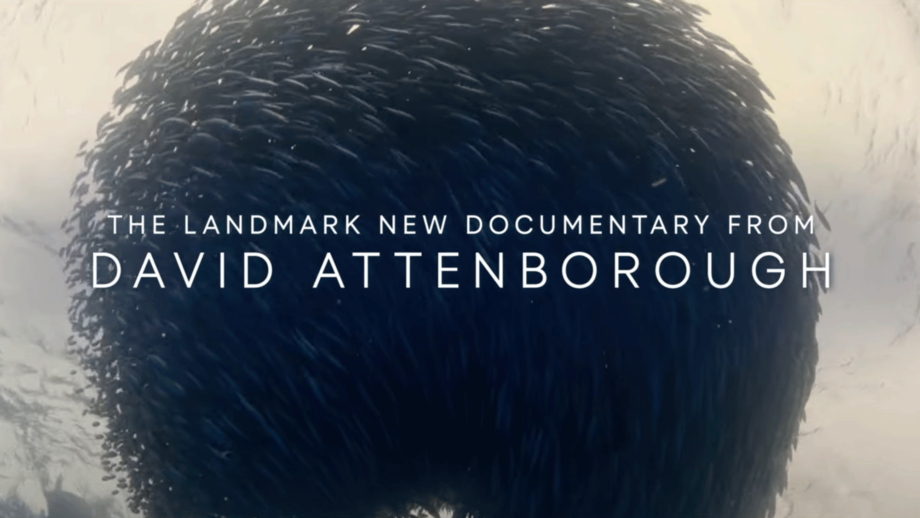
Silverback Films and Open Planet Studios with Arksen & 10% for the Ocean produced Ocean with David Attenborough. Photo: Altitude Films
The strategy behind the film
At the recent screening of Ocean at Port Solent, Tiana Fletcher, a spokesperson for the charity 10% For the Ocean, which is the Founding Producer and Executive Director of the film, said:
“Ultimately what we want to encourage is more sustainable fishing nets and line-caught fishing. This film is not about preaching to anyone about not eating fish by any means. This is about demanding better of those that are doing our fishing and asking for there to be better practices in place, because ultimately the fishermen also want this. They want a fish population in a few years’ time to be able to still provide us with the necessary food that we need.”
“We’ve actually taken this film and we’ve shown it at Number 10 Downing Street, and we were told, ‘Right, OK, we are banning bottom trawling.’ We are now a year on from that conversation, and we have still not banned bottom trawling.
“We have to ultimately show politicians that the public, as in you and I, care enough about this. That we want to stop bottom trawling so that we have a healthy fish population in 10 years’ time for us all to eat. So actually that’s why we’re thinking this film is so important, not just to show those people in power, but also more broadly we need the education of everyone that this is going on.
“This is the first time anyone has seen any [bottom trawling] footage like this. It’s so hard to see below the surface of the ocean and see the damage and destruction that is being allowed. But we’ve also shown this in Iceland, and they’ve said that they are proactive around banning bottom trawling, so we’re starting to make movements and make change. These marine protected areas are what we’re trying to implement at the moment, so 30% [of the seabed around the coast of the UK].
The other speaker at the event was Jasper Smith, CEO of Arksen, one of the other executive producers of the film and also part of the charity 10% for the ocean. He told the audience:
“I was just with Coast, an organisation up in Arran in Scotland and although they’ve designated a marine protected area, there is still illegal fishing taking place within that area.
“But who’s policing that? Who’s monitoring that? I can tell you: it’s the local community. So the local community are reporting the challenges of illegal fishing in that area because we’re testing and we’re piloting how to actually effectively monitor this. We’re using AIS, but ultimately it’s actually coming down to the local community, which is why this film is so important: to encourage other communities to do the same thing. So what we want to do is really empower you guys [in the sailing and boating world] to take the knowledge that you’ve learned here to your community and encourage this to be put in place.”
Evidence that a ban on bottom trawling works
“It is vital that bottom trawling be curbed to protect UK seas,” says Dr Daisy Brickhill, Communications Director at the charity Oceana UK.
“Several of the government’s proposed bans were ‘whole-site’, in other words, they protected the entirety of the MPA. This is in contrast to a piecemeal approach only banning trawling from ‘features’ such as reefs.
“The fact is that this ‘whole-site’ protection confers extraordinary benefits that should not be overlooked. Research carried out in Lyme Bay, off the Dorset coast, showed that when reef features alone were protected, the abundance of marine life did increase: by 15%. But in areas where the entire seabed was protected across the whole site, that figure was 95%.
“In Lyme bay this abundance of life meant that there was an average rise in earnings of £1,452 per boat per month for lobster potters and other static gear fishers as the ocean recovered.”
10% for the Ocean describes its work as curating, convening and accelerating projects that “Reframe the Ocean as a Climate Solution”. Their goal in funding this film was to unite people who care about the ocean behind the push for expanded protection from fishing and in particular fighting for an end to destructive bottom trawling.
The NFFO: “The narrative promoted by Ocean with David Attenborough is a story about a fishery of the past. If we are going to continue sustainably producing food from the sea, a diverse fleet is essential. Bottom trawling is a relatively small, but important, part of that in the UK today. Is this true everywhere in the world, though? Of course not. We in the fishing industry should not shy away from acknowledging problems where they exist and calling for them to be resolved. Quite aside from the protection of the marine environment simply being the right thing to do, it is commercial common sense.”
Further extracts from the Q&A with Tiana Fletcher (from 10% for the ocean) and Jasper Smith, CEO of Arksen
Marine protected areas (MPAs) in the UK and worldwide:
TF: “Eighty countries have actually signed up to the treaty to hit 30 by 30 [30% of sea areas protected by 2030]. It hasn’t yet been ratified in the UK, so if you can write to your local MP and push them to, just let them know that it’s of importance to you, every little really does help.
“In the UK, so it’s extraordinary on one hand we’ve protected 38% of our waters through marine protected areas. The issue is that only 1% of that 38% is protected and only 1% of that 1% is highly protected. So whilst we’ve got these paper parks, and we’ve put in place the paper protection, we’ve allowed all forms of commercial and destructive fishing practices to happen. So the framework’s there, but it just requires the lobbying and pushing to turn them from paper parks into actual protected areas.”
JS: “Many countries in Europe have done quite well, Spain has done well, Portugal has done well. France less so. It’s quite difficult for France because of the way their fishing industry works and how much clout they have. The States has done an appalling job. The largest marine protected area in the world is in Hawaii, so Trump’s busy trying to unwind that at the moment. South Americans have done pretty well, so Chile’s done an exceptional job, Argentina’s done well. One of the guys who was involved in this is a guy named Enric Sala. I think he and his team have been responsible for putting about 7.5 million square kilometres of MPAs over the last sort of few years.”
Not all MPAs are created equal…
JS: “A marine protected area can just mean that one fish species is protected or a type of seagrass is protected or it’s just bottom trawling that’s banned. It doesn’t actually mean that it’s necessarily a no-take zone, which is ultimately what we really would like to achieve.
“If you look at Jersey: 23% of their coastline is under a marine protected area, but actually only 0.3% of that is a no-take zone. So actually there’s still quite a lot to do. Even within that 23% that’s marine protected area, they’re still bottom trawling, but it’s just that a certain type of species they’re not allowed to fish and things like that.”
One topic addressed in the film is krill fishing in the Antarctic…
JS: “The fleet of ships filmed fishing for krill in the Antarctic is actually Norwegian [the ship names were pixelated on screen]. Norway has a subsidised fleet, so the government pumps in money to the industry [krill fishing in the Antarctic] to actually build the vessels. A lot of those are actually built in Taiwan. So when you look at that fishing ecosystem, it’s been designed over decades to be very, very hard to police. So on the one hand there is this demand for fish food, pet food, supplements and on the other side of that, you’ve got massive subsidy. That’s just making it so profitable. Currently because of the subsidies, the fines are actually less than the profit of the catch, so that it’s still profitable for these fishermen to break the rules.”
Seeing things from the fisher’s perspective…
TF: “This can be kind of difficult as a topic, particularly with fishermen, because if you put a no-take zone in place and they can’t fish from there, then there’s challenges in terms of how they’re supposed to support their lifestyle. There are a huge number of very professional fishermen and fishers all over the world that can make their living in a very fair way. And so none of this is about demonising fishing. But there are bad actors. It’s really about just ensuring that in our marine protected areas destructive bottom trawling and destructive gear is not used. Ocean with David Attenborough really is a film about abundance and how to create abundance back into the ocean. There’s a lot in this film that’s quite depressing, particularly for the young generation, but the work that is going on is truly important and appreciative work to protect our seas.”
About 10% for the Ocean…
TF: “We are working with a gentleman called Carlos Duarte, and he’s considered the world-leading marine biologist, and he has come up with these 7 ocean recovery ‘wedges’. For example, recovery wedge 3 is ‘protect more species’. So one of the things we’re doing at the moment is looking to ban whaling. So I know it was mentioned in the film that we banned whaling, but actually most people don’t know that actually still three countries—Norway, Iceland, and Japan—are about to go out for yet another whaling season, which is shocking, frankly, and it’s for no reason other than for sport because no one’s really consuming it anymore. It’s so high in dense mercury content that it’s actually really toxic for humans to eat. So why we still have whaling going on is beyond me. So what 10% for the Ocean will do is build coalitions with all the organisations around that, whether that’s the policy that’s required, whether that’s the boots on the ground to make the storytelling aspects that are required to translate that to the broader public. It can be all aspects of the objective of reaching that goal, where we see that there’s gaps within the funding of that.
“And other things we’ll look to do is, for example, coral reef restoration. So the way a lot of traditional funding has worked is people are replanting coral reefs, which is an absolutely brilliant thing to do. But the problem is with that approach, is you’re missing the fact that if you haven’t got an adequate marine protected area in place, you can still continue to bottom trawl in that area, which damages the replanting that you’ve done.
“We’re heading into an El Nino year, which means we’re about to lose a lot of the genetic coral, and one of the things we’re doing is creating a coral biobank so that we can store some of the genetics, so that for those corals that we lose, we can then replant at some point. But if we don’t manage the climate and the temperature increase, that will just be bleached in a couple of years’ time because coral is so fragile.
“What we’ve identified is: no one organisation can tackle what is such a global issue. It requires coalitions around it. So that’s how we allocate our funding to the specific organisations and the specific actions that are required to reach the overall objective.”