




Greet the spookiest season with tales of witches, sirens, seabirds, and the shipwreck that changed the marine safety game
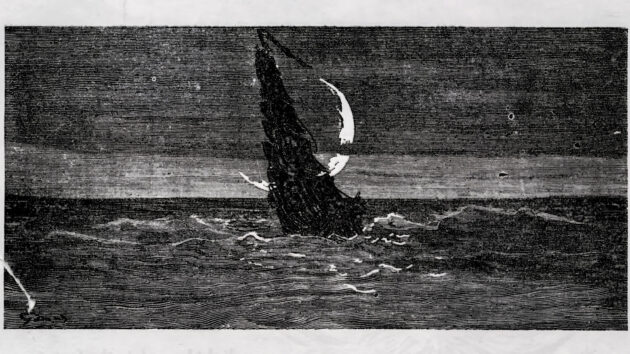
Seafaring folk have always been among the most superstitious.
It you’ve ever night sailed on a moonless night, with a pitch dark sky above and fathoms of black water on every side, it won’t be hard to understand why.
Before GPS and smart-navigation systems, seafaring tended to be a more chance endeavour based on rudimentary navigation and, more often, guesswork.
Most sailors went to sea out of necessity, knowing they might die or disappear. Often, they couldn’t swim.
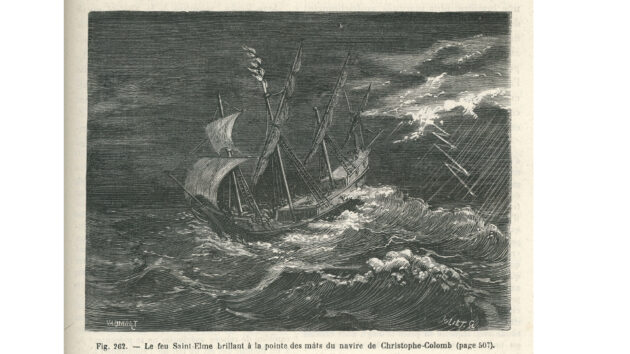
St Elmo’s fire shining on the mastheads of Christopher Columbus’s ship. Illustration from “Les Merveilles de la science ou description populaire des inventions modernes” written by Louis Figuier in 1867. Photo via Alamy
Over centuries, countless superstitions and folk beliefs developed in response to the danger and intense uncertainty of life at sea.
Many, from the unluckiness of the colour green to the ban on bananas, were grounded in practical reality.
Others simply offered a sense of comfort, even control, before the ocean’s total indifference to our humanity.
For Halloween (or Samhain, depending on your persuasion), we’re taking a closer look at some seafaring folk magic and spooky stories to find out what they can tell us about seafaring through the ages.
Witches, Knots, and Crosses
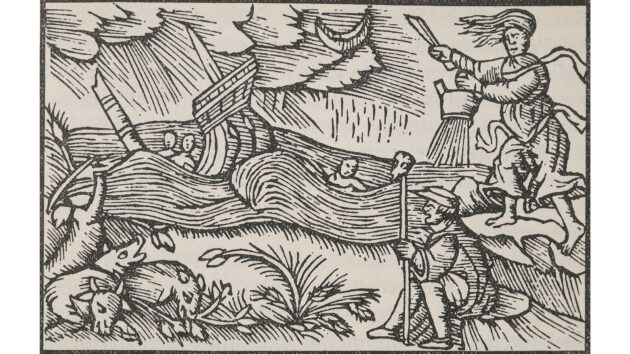
The witch unleashing the storm, engraving from the History of the Northern Peoples, by Olaus Magnus, Archbishop of Uppsala (1490-1557), Rome, 1555. 16th century. Photo by DeAgostini/Getty Images
Two of our editors recall being told the European maritime superstition warning people to crush or puncture used eggshells so that witches cannot use them as tiny boats.
According to this popular folklore belief, first documented in Reginald Scot’s Discoverie of Witchcraft (1584), witches “sailed” in the eggshells to sink ships, summon storms, and curse sailors.
More likely, they might’ve simulated a shipwreck in shallow water in a form of sympathetic magic.
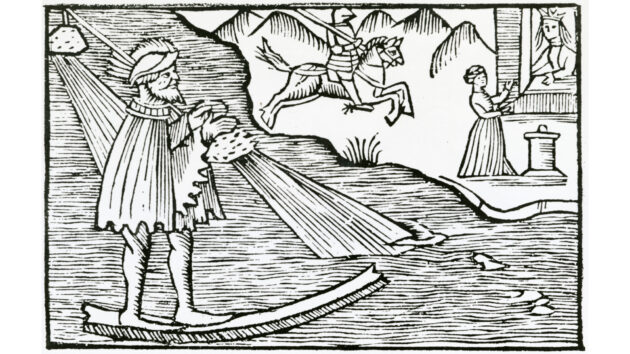
16th century depiction of witchcraft. Photo by Universal History Archive / UIG / Getty Images
Witches were also known to help sailors, including through knot magic.
Wind knots have popped up in folk traditions across Northern Norway, Shetland, the Isle of Man, and the south coast of England, explains anthropologist, folk singer, and practitioner of folk and herb magic Hannah Sanders.
Knots could tie in energies to release at a later date, be it an oath, a blessing, a promise, an intention, a curse– or the wind.
A witch might tie in winds gathered from the cardinal directions, perhaps from a mountain top, to be released at a sailor’s request.
Sailors could also purchase these charms to take on voyages, and would untie them to call up the desired conditions: 1 knot for a breeze, two knots for a half gale, three for a storm.
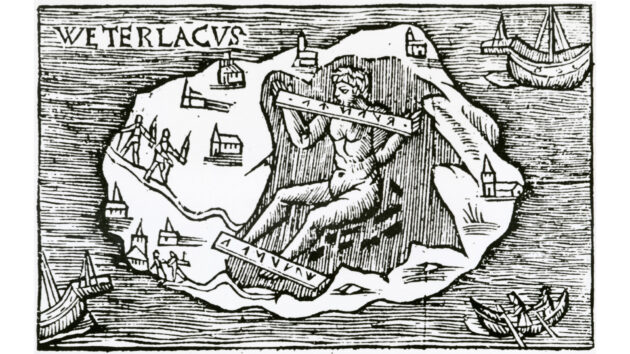
16th century depiction of witchcraft. Photo by Universal History Archive/UIG/Getty Images
Knot-based magic may have taken hold with sailors, in particular, because it drew on skills and materials in their existing vocabulary.
For many sailors, knot and ropework was also a social pursuit and a question of identity.
‘The isolation of the sea was such that the sailor’s inability to read and write was an almost intolerable hardship,’ writes Clifford W. Ashley in his seminal Book of Knots.
Sailors turned to whatever was already onboard (in this case, rope) as a pastime and a form of social interaction.
‘The interest of seamen in knots was widespread and intense, and often decidedly competitive,’ says Ashley.
‘Complicated knots were explained under ledge of secrecy; often a knowledge of one knot was bartered for another.’
They also acted as a sort of CV, a calling card, combining beauty and utility.
Often, ‘a sailor was judged by his chest beckets and his bag lanyards.’
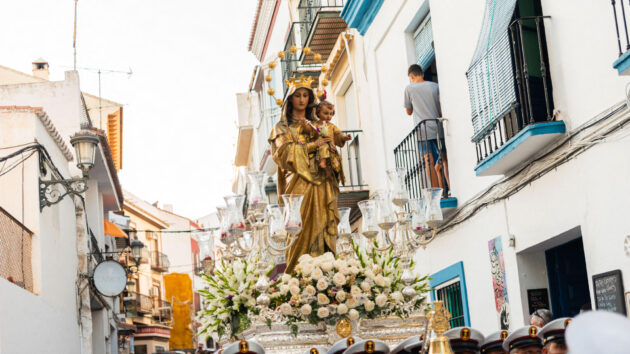
The celebration of the Catholic ceremony of transferring the holy figure in Nerja, Spain. Photo via Alamy
Folks superstitions were often supplemented by faith, and the maritime tradition also counts innumerable seafaring saints:
Variations of Stella Maris, the Madonna di Porto Salvo, Our Lady, Star of the Sea, whose votives received offerings from sailors’ wives praying for their husbands’ safe return.
St. Nicholas of Myra (saint of seafarers, sailors, and fishermen), St. Anthony of Padua (patron saint of shipwrecks), and St. Christopher, the saint of boatmen, sailors, travellers, and in modern times, surfers.
Also St. Elmo, otherwise known as St. Erasmus, who’s “fire” around the mast, actually caused by the electrical discharge in a lightning storm, was thought to be a sign of divine protection.
But of course, not every encounter at sea was a good omen.
The Siren and the Shearwater
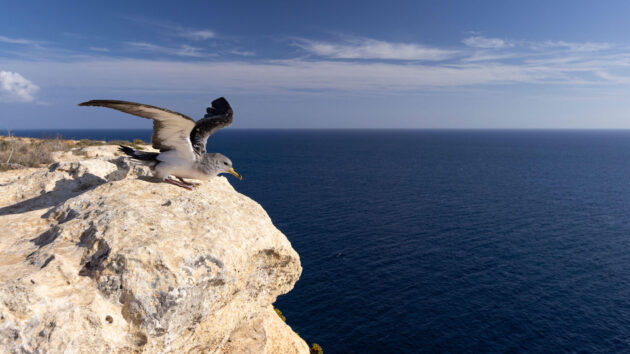
Scopoli’s shearwater Calonectris diomedea, adult being released from clifftop, Malta, October. Photo by Oliver Smart via Alamy
The Odyssey’s story of the sirens, with their human heads and the bodies of a bird of prey, is one of the oldest and most diffused seafaring myths.
In the Mediterranean islands, many believe their song was actually inspired by a shearwater’s cry.
Specifically Scopoli’s shearwater (calonectrics diomedea), whose haunting call lies between a beckon and a child’s wail.
You’ll know the story: Circe warns Odysseus that when he hears the siren’s song, he will be tempted to jump into the water to join the piles of human bones already lying scattered on the seabed.
Odysseus stuffs his crew’s ears with wax and lashes himself to the mast, desperate to hear the forbidden call.
But what’s the big attraction? What is it about the song that is so alluring, and at the same time so dangerous?
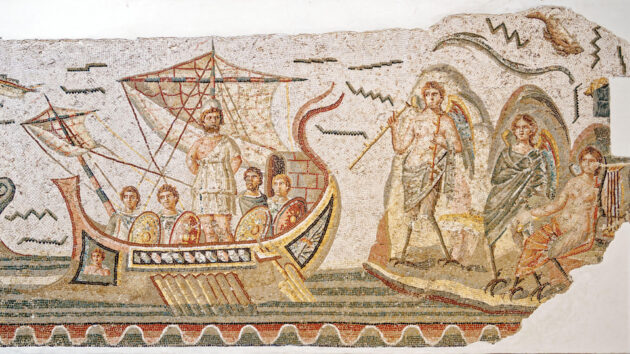
3rd-century ancient Roman floor mosaic depicting Odysseus tied to the mast of his galley ship to resist the Sirens at the Bardo National Museum. Photo by Ion Mes via Alamy
‘It’s knowledge,’ says Oxford historian Diane Purkiss in a lecture on Mer-mythology.
‘The siren’s song isn’t valuable because it’s beautiful, but because it contains everything that has ever happened, everything that is happening, and that will happen.’
The episode therefore embodies the quintessential seafaring dilemma: the fine line between discovery and danger.
Like the sirens, subsequent iterations of mer-creatures reflect, ‘the fear, and also the longing, that animated sailors in that period where going to sea was both a livelihood, almost a mode of self-expression, and at the same time a horrendously dangerous career,’ says Purkiss.
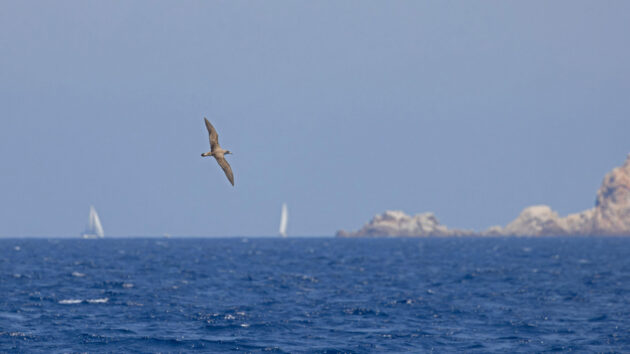
Scopoli’s Shearwater (Calonectris diomedea) Sardinia July 2026. Photo by Robin Chittenden via Alamy
Curiously, in Viking mythology the shearwater’s cry had a different effect.
Rather than come hither, their call meant sail the other way.
Islands where where shearwaters nested were believed to be haunted my trolls or malevolent spirits.
These differing interpretations of the same call underscore the fine line between curiosity, fear, danger, and desire, as well as the uncertainty of life at sea.
The last time I heard it was on a moonless night while at anchor in Lavezzi, site of the one the Mediterranean’s most famous maritime tragedies.
The Shipwreck of the Semillante
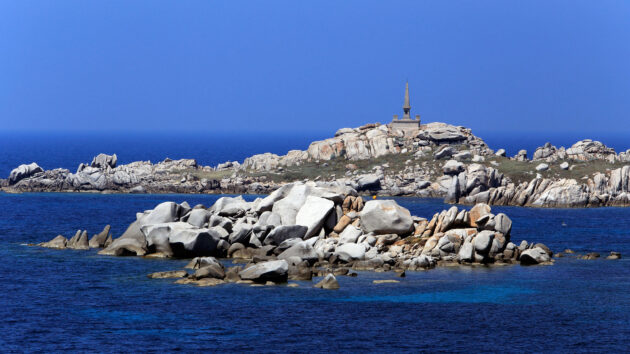
Monument in the the archipelago of Lavezzi Islands located in the mouths of Bonifacio in Corsica, France. Photo by Jean-Marc Lallemonde via Alamy
This not-quite-ghost-story was told to me by environmental guide and all-around island sage Umberto Segnini of the Econauti.
An Elba native, he has spent decades working around the Mediterranean islands and regularly guides in Lavezzi national park.
The story dates to the Crimean War.
The frigate La Sémillante, part of the French Imperial Navy, was sailing from Toulon to Crimea with troops and supplies onboard when it passed through the Bouches de Boniface.
Around noon on 15 February, 1855, it wrecked on against Roche du Briquet, southwest of Lavezzi, shattering into pieces with no survivors, and barely any ship left to speak of.
Among the 773 crew members that perished, the average age of its crew was 16. Many had never seen the sea.
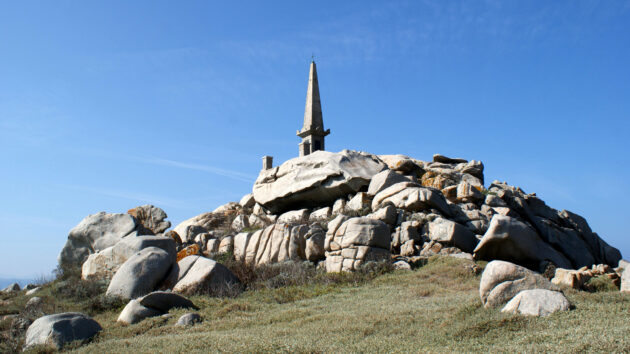
Memorial to the wreck of the frigate La Semillante, Lavezzi island, Corsica, France. Photo by Tiffany Lacey via Alamy
The official version and the folklore have different explanations for how the boat ended up in the infamous straight.
According to the French National Maritime Museum, the vessel was caught in a hurricane, found itself in difficulty, and drifted into the Strait without sails.
Other sources name a possible rudder loss, fog, and other failures.
The popular version maintains that her captain wanted to pass by the lighthouse of Lavezzi, a feat requiring both maritime skill and daring (or recklessness).
Think of it as the Mediterranean version of rounding Cape Horn.
This reading resembles the story of the Flying Dutchman, whose foolhardy captain sailed his crew straight into a storm, prompting a curse that would condemn them all to sail the oceans for eternity, without ever setting foot on land.
Like in the story of the Flying Dutchman, more than an accident or a pilotage necessity, it puts the tragedy down to a matter of ego and irresponsible leadership.
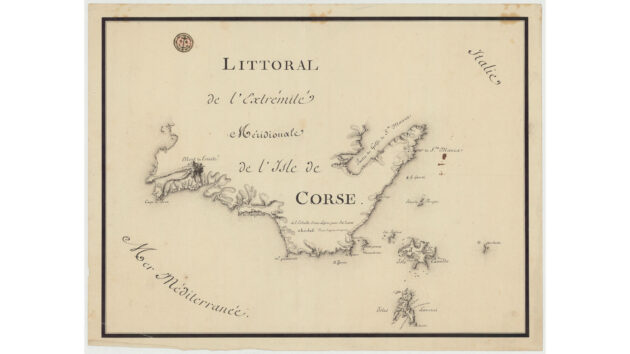
A 18th-century manuscript map of the southern coast of Corsica, showing the Strait of Bonifacio and the Lavezzi Islands, in the Mediterranean Sea, near Italy. Photo by piewages/AWU via Alamy
Lavezzi had a single resident at the time of the wreck, a leper who guarded the island.
As the Semillante shattered on swells of pink granite, storm conditions left him unable to reach the main island to call for help.
He spent four wretched days of hearing screams mix with the wind and the roaring waves, the air thick with death, salt, and the seagull’s cries.
The birds feasted on the entrails of soldiers while they were still living.
Any officers who still had shots in their arms put their fellow soldiers out of their misery before ending their own lives.
By the time the storm abated enough for the leper to get to Boniface, it was too late to call for help.
The suffering he witnessed had driven him mad and left him unable to speak (though according to the popular version, his leprosy had left him mute even before the wreck).
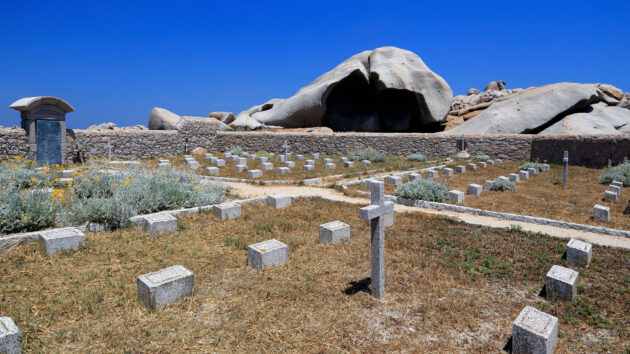
The archipelago of Lavezzi Islands located in the mouths of Bonifacio. Marine cemetery shipwrecked ship La Semillante. Corsica France. Photo by Jean-Marc Lallemonde via Alamy
Today, in a cemetery just metres away from the beach, the crew (or what’s left of it) lies buried in unmarked graves.
Most of the bodies were found in parts, rather than whole corpses.
The only identifiable remains belonged to a chaplain and the captain, who now enjoys a commemorative plaque.
It’s peaceful in summer, with its backdrop of small pleasure craft and bathers.
Immortelle and other mediterranean shrub grow throughout the cemetery. A memorial to the wreck presides over the island.
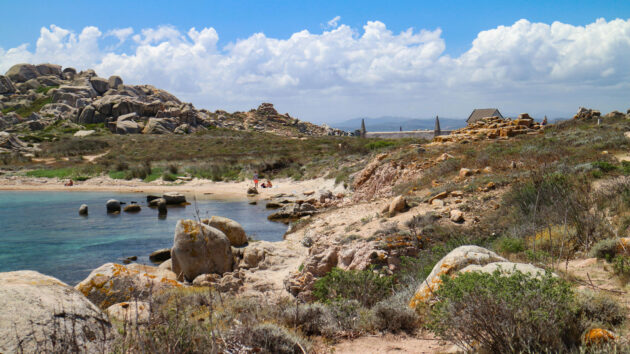
Maritime cemetary of “La Sémillante” French frigate sank on 15 February 1855 during the war of Crimea. Photo by Roland Bouvier via Alamy
The tragedy did prompt change, however.
At the time of La Semillante, lifeboats, lifejackets, and safety measures were hardly a consideration.
Its aftermath brought a greater awareness of the need for coastal rescue systems, and for safety measures on board.
Modern marine mysteries

The moon provides a fair amount of light at sea. Photo: Richard Langdon
Modern sailing may have little to do with the ocean-going of centuries past, but it still has its fair share of spookiness and superstition.
Many are still fascinated by the madness of lighthouse keepers and solo sailors, by stories of modern ghost ships found empty and drifting.
Scientific discoveries and continued exploration are giving rise to new mythologies.
As our awareness and understanding of the ocean’s surface grows, it is the deep sea that now presents a great unknown, a new frontier.
Whether or not it holds monsters, one thing’s for certain: the world’s oceans and seas will never run out of mysteries.
Enjoyed reading about sailing superstitions?
A subscription to Yachting Monthly magazine costs around 40% less than the cover price, so you can save money compared to buying single issues.
Print and digital editions are available through Magazines Direct – where you can also find the latest deals.
YM is packed with information to help you get the most from your time on the water.
-
-
- Take your seamanship to the next level with tips, advice and skills from our experts
- Impartial in-depth reviews of the latest yachts and equipment
- Cruising guides to help you reach those dream destinations
-
Follow us on Facebook, Twitter and Instagram.
Note: We may earn a commission when you buy through links on our site, at no extra cost to you. This doesn’t affect our editorial independence.